What a plastic bottle printer does on the floor
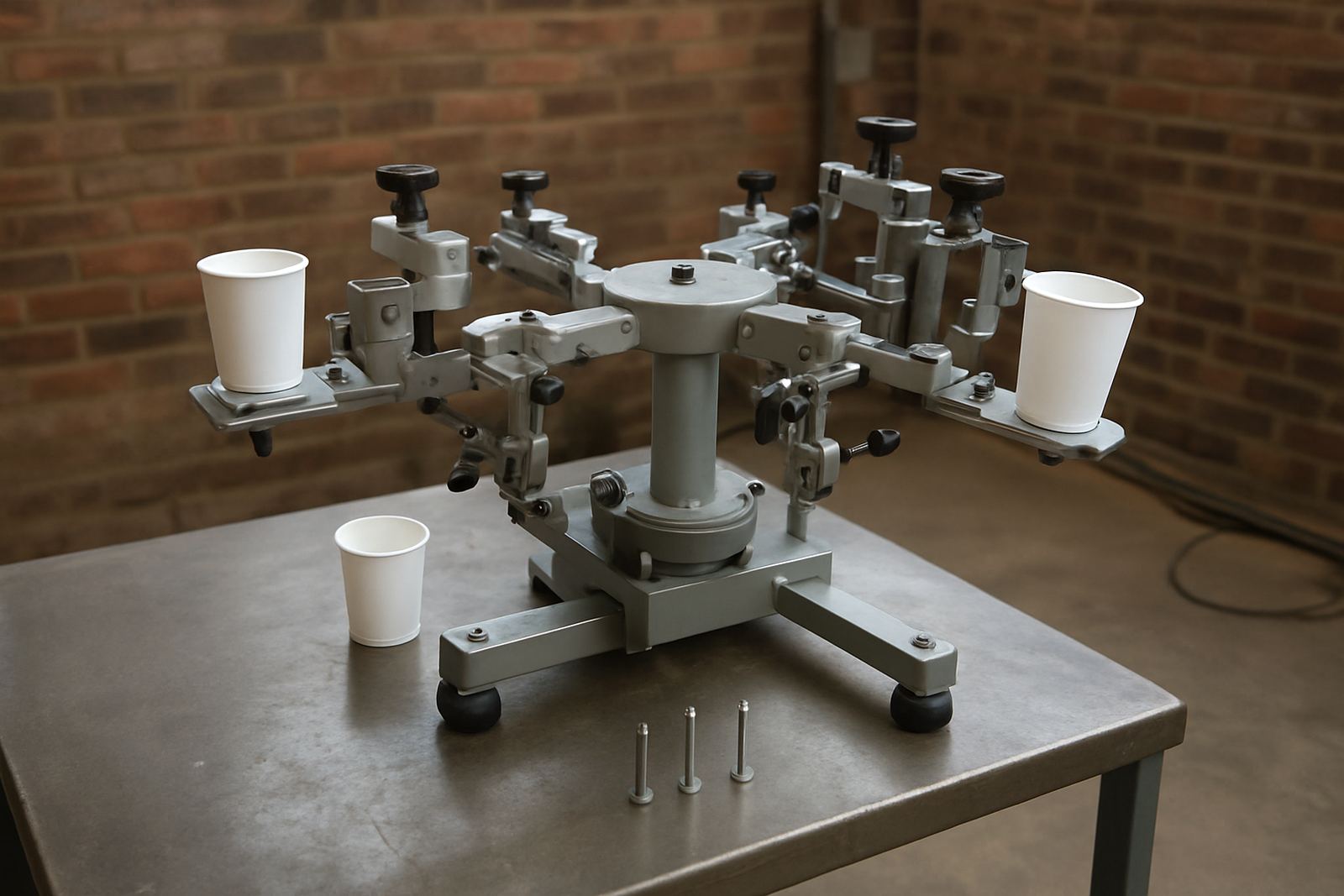
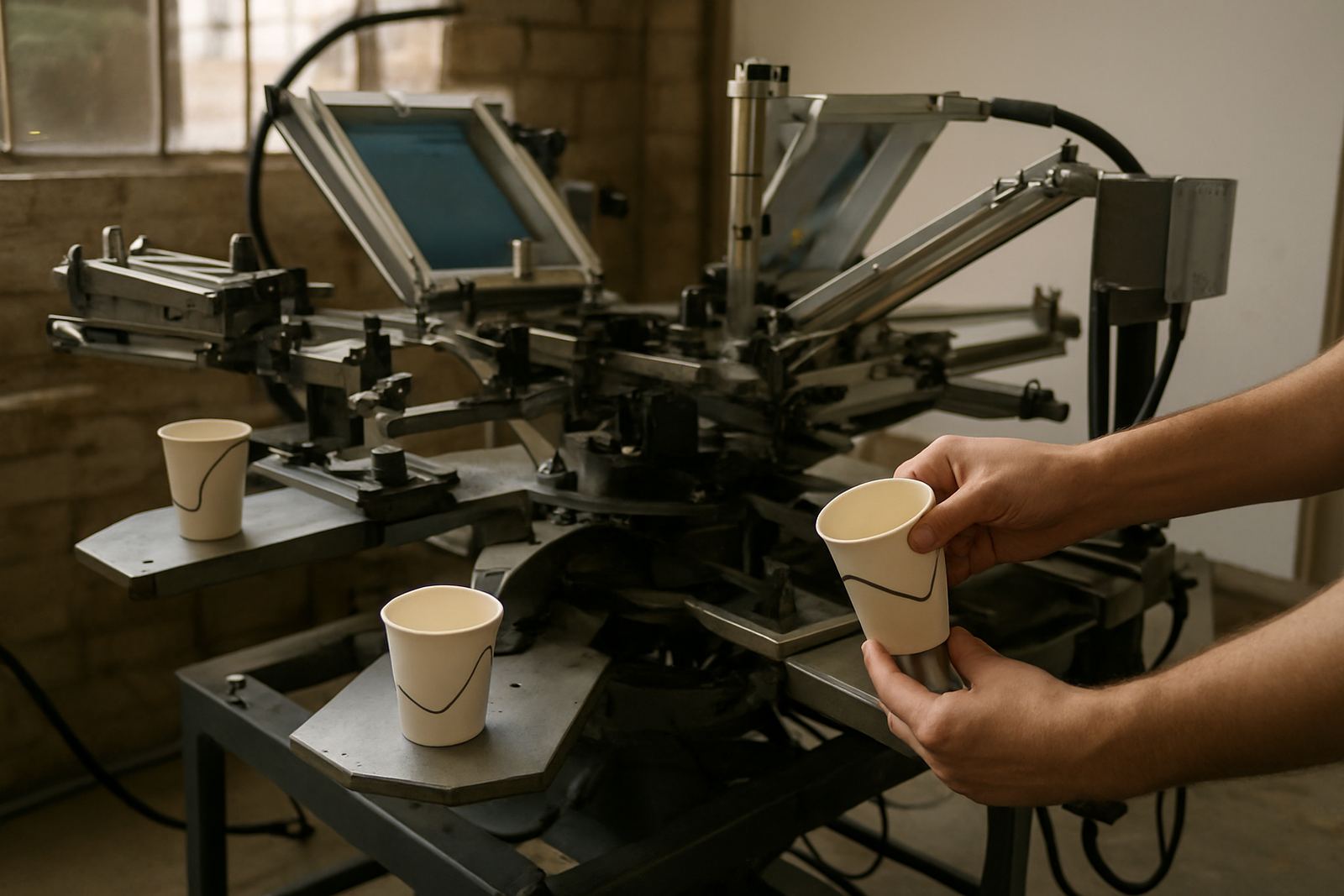
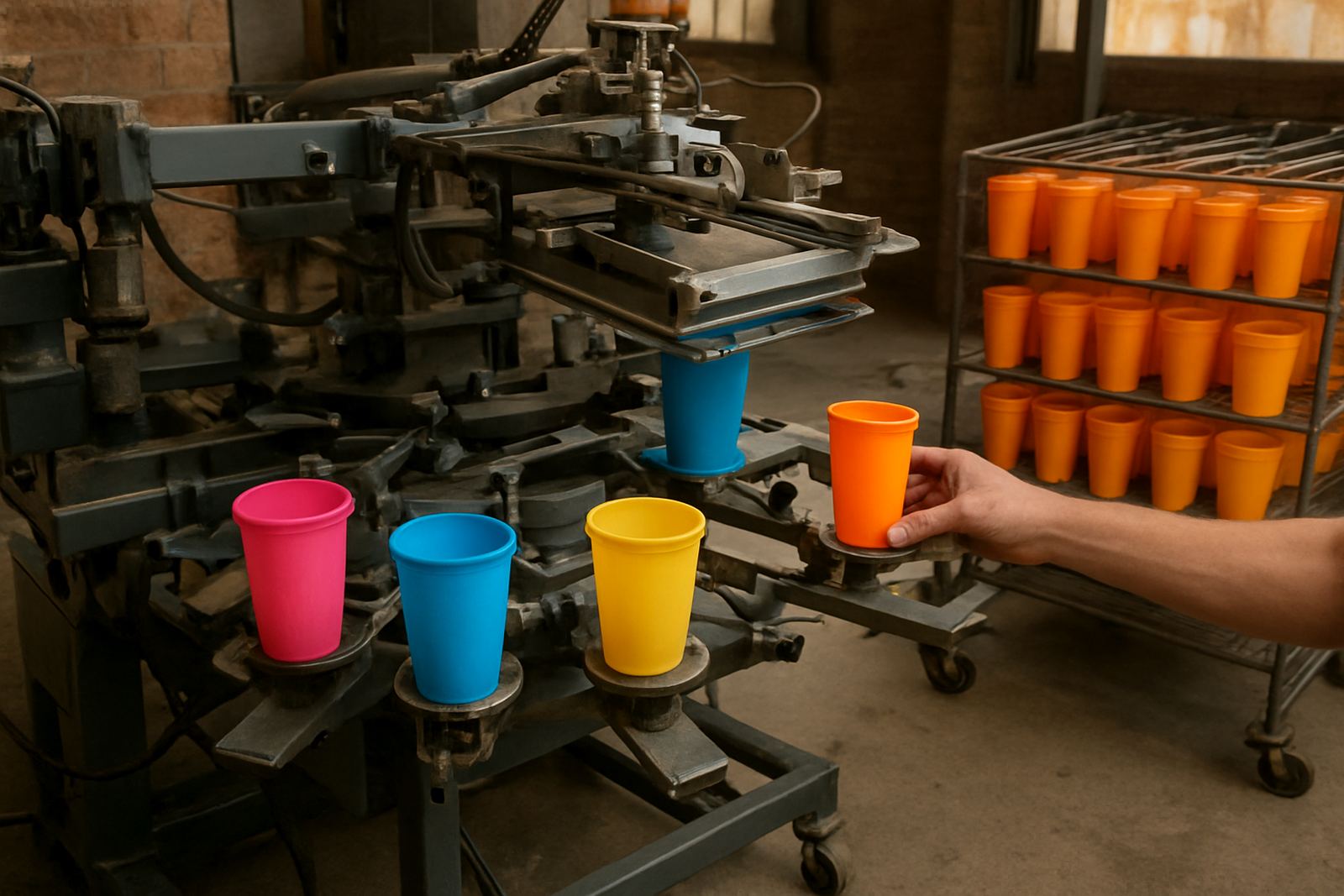
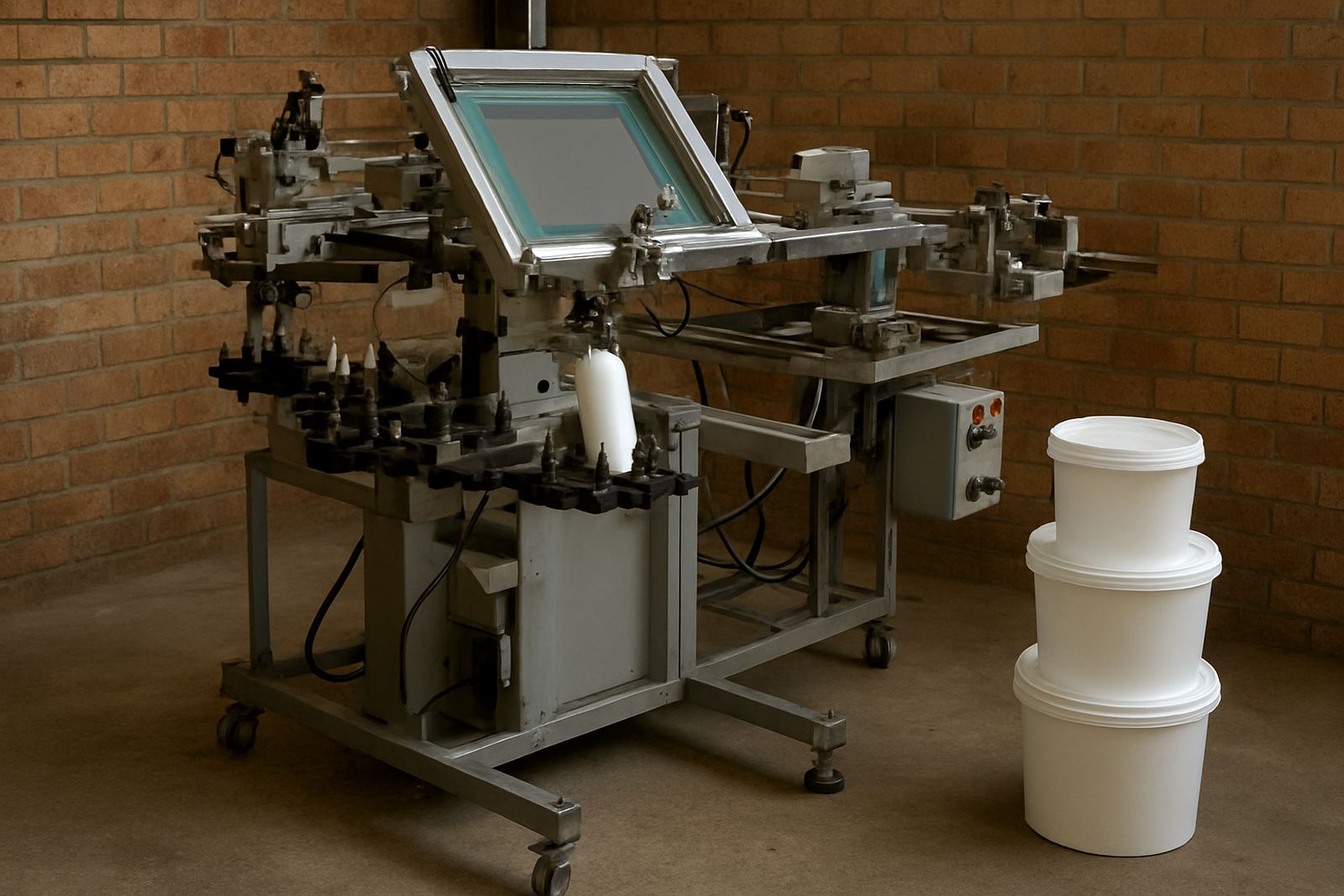
This machine is built for direct screen printing on cylindrical plastic containers, mainly PET and HDPE bottles, cups and tubes. It holds the container steady, rotates it through the print cycle and lays down ink with a controlled print stroke so the image stays aligned from bottle to bottle. For businesses in Johannesburg, Durban, Cape Town and nearby industrial areas, that means faster branding without relying on hand work that varies from operator to operator.
It is commonly used for product names, volume marks, warning icons, batch identifiers and full wrap graphics. The press can be set up for one colour or multi colour work depending on the job spec, screen count and drying method. On straight sided bottles the print area is predictable. On slight taper bottles, good setup and a proper jig matter even more.
- Suitable for round PET and HDPE containers
- Handles bottles, jars, cups and tubes with similar diameters
- Works for short runs, repeat jobs and contract branding work
- Useful where print durability matters during handling and transport
Sizes, format options and bottle ranges
Not every workshop needs the same frame size or table length, so the machine is normally supplied in a format matched to the container diameter and production target. Smaller machines suit sample work, cosmetics, personal care packs and specialist food containers. Larger formats are better for higher volume bottling lines where the team needs a steady rhythm and less changeover time.
When checking size, focus on the bottle diameter range, print length and maximum container height. If you print on multiple pack sizes, the machine should allow quick adjustment on the support points and bottle drive. A good setup also helps with lighter bottles that flex under pressure, which is common with thin wall PET.
- Typical print diameters: 20 mm to 120 mm, depending on setup
- Typical print length: 30 mm to 250 mm on standard cylindrical work
- Container height range depends on the loading arm and screen frame clearance
- Can be matched to manual loading or semi automated production flow
Where it suits best in South African production
This product suits businesses that need practical bottle branding in busy production areas. It is used by packaging houses, contract decorators, cosmetic fillers, chemical packers, promotional product suppliers and bottle finishing operations. In Gauteng, many clients want dependable output even during load-shedding windows, so the machine choice should match the power available on site and the backup plan you already use.
Coastal sites in Durban and Cape Town often ask about corrosion control and storage conditions because humidity can affect screens, frames and pneumatics if care is poor. Inland sites in Pretoria, Midrand and Aeroton usually focus more on floor space, air supply and keeping changeovers tidy. Municipal rules also matter when you are fitting extract fans, compressors or drying equipment, so the installation should be planned around the building services already approved for the site.
- Cosmetics and personal care bottling
- Detergent and cleaning product containers
- Water, juice and specialty beverage bottles
- Promotional and private label packaging
Installation, power and compressed air needs
Correct installation makes a real difference to print quality and service life. The machine must sit level, the bottle support points must track true, and the print head should be set so the screen makes even contact across the container wall. For most sites, a single phase or three phase supply may be used depending on the exact machine configuration and the ancillary equipment around it. If there is an in line dryer or curing section, power demand rises and needs to be checked before delivery.
Compressed air is usually needed for movement, clamping and some print functions. Clean, dry air matters because water in the line can cause erratic movement or valve wear. If your site runs a compressor already, the tank size, duty cycle and filter set must be checked against production hours. For factories in Aeroton, Johannesburg South and Midrand, we often also check access routes, forklift space and whether the floor can take the machine mass without shim work.
- Level floor and stable machine position
- Suitable electrical supply matched to the machine rating
- Dry, filtered compressed air at the required pressure
- Enough space for loading, screen changes and bottle handling
Care, screen life and routine servicing
For steady output, the machine needs regular cleaning, bearing checks and alignment checks. Ink build-up around the print station should be removed before it hardens, otherwise the bottle track starts to drag and the image can shift. Screens also need proper reclaiming and storage so mesh tension stays usable for the next job. On busy sites the same machine may run several bottle diameters in a week, so changeover notes should be written down and kept near the line.
Preventive maintenance is cheaper than waiting for a breakdown during a rush order. Check drive parts, clamps, belts, sensors and air fittings on a planned cycle. In humid coastal areas, keep spare screens and consumables in a dry cupboard rather than next to the wash-up area. If you are running coloured work, good colour setup and registration checks help reduce waste and reprints, which saves time and ink.
- Clean the print path and bottle guides after every run
- Store screens flat and dry to protect tension
- Inspect air lines, sensors and moving parts weekly
- Keep a small spare parts list for common wear items
What to confirm before you place an order
Before ordering, check the bottle material, diameter, height, wall thickness and the exact print area needed. If you only have sample packs, send a physical bottle or a technical drawing with measurements. That makes it easier to match the right jig, screen size and print stroke. You should also confirm whether you need one colour printing, multi colour work, or just a single wrap mark for product identity.
It helps to know your daily target and whether the machine will run one shift or longer. That decides whether a basic setup is enough or whether you need added support such as quicker screen changes, operator training or production optimising. If your site is in a municipality with strict noise or ventilation rules, mention that before installation so the layout can be planned properly. The more details you give upfront, the less rework later, and that keeps the line moving.
- Bottle type, size and material: PET or HDPE
- Print area, colours and expected daily quantity
- Power supply, compressor details and floor space
- Need for setup support, training or ongoing servicing
Key facts
| Machine type | Cylindrical screen-printing machine for plastic bottles |
|---|---|
| Suitable materials | PET and HDPE bottles, cups and tubes |
| Print format | One colour to multi colour, depending on setup |
| Typical diameter range | 20 mm to 120 mm, setup dependent |
| Typical print length | 30 mm to 250 mm |
| Support options | Installation, operator training, spares and maintenance |