Roodepoort Bottling Brief For High-Speed Sauce Packs
The client was a food packaging business in Roodepoort filling squeezable sauce bottles for local retail and foodservice orders. Their main aim was simple enough to say, but hard to get right in production: the print had to stay readable on a curved bottle, and the bottle had to remain easy to grip when the line was busy. Labels were slowing them down, and they wanted a direct print that would not peel at the edges in cold rooms or humid storage.
The brief focused on handling speed, clear product details, and repeatability across multiple bottle sizes. We worked around the shape of the pack, the slightly flexible container wall, and the need for consistent registration from the first run to the last. The project had to suit a practical Gauteng factory setup, with no room for long stoppages or fiddly changeovers.
- Client type: food packaging and sauce filling operation
- Town: Roodepoort
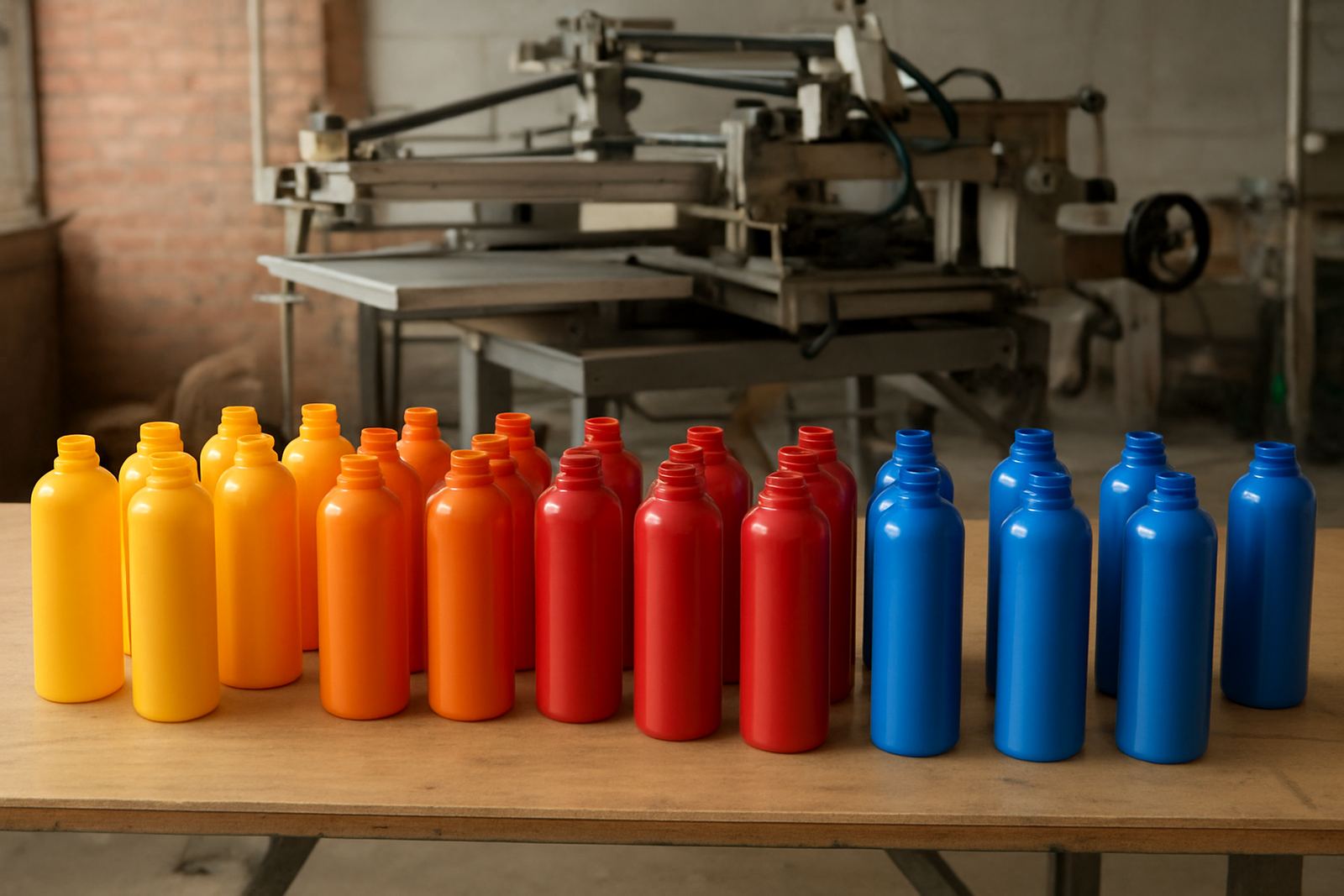
- Pack style: squeezable cylindrical sauce bottles
- Priority: legibility, grip, and fast line handling
Print Constraints On A Squeezable Cylindrical Bottle
The bottle material and shape created the main constraints. Because the container was designed to squeeze, the print had to sit cleanly without cracking under normal handling. The round body meant the artwork had to be set for cylindrical screen printing, not flat application, and the container finish needed careful testing so the ink would hold during packing, transport, and fridge storage.
There was also a production constraint around speed. The team needed bottles that could pass through packing quickly, with enough clarity on the front panel for product name, flavour, batch details, and branding. In a sauce line, a smudged print can slow everything down, so our setup had to be stable, and the screen tension had to stay right across repeated runs. We also allowed for the sort of day-to-day interruptions that happen in South African factories, including load-shedding recovery and shift changes.
- Curved surface required accurate wrap positioning
- Squeezable wall needed ink flexibility
- Print had to stay clear after fridge and warehouse storage
- Fast handling meant minimal setup delays
What We Supplied For The Roodepoort Run
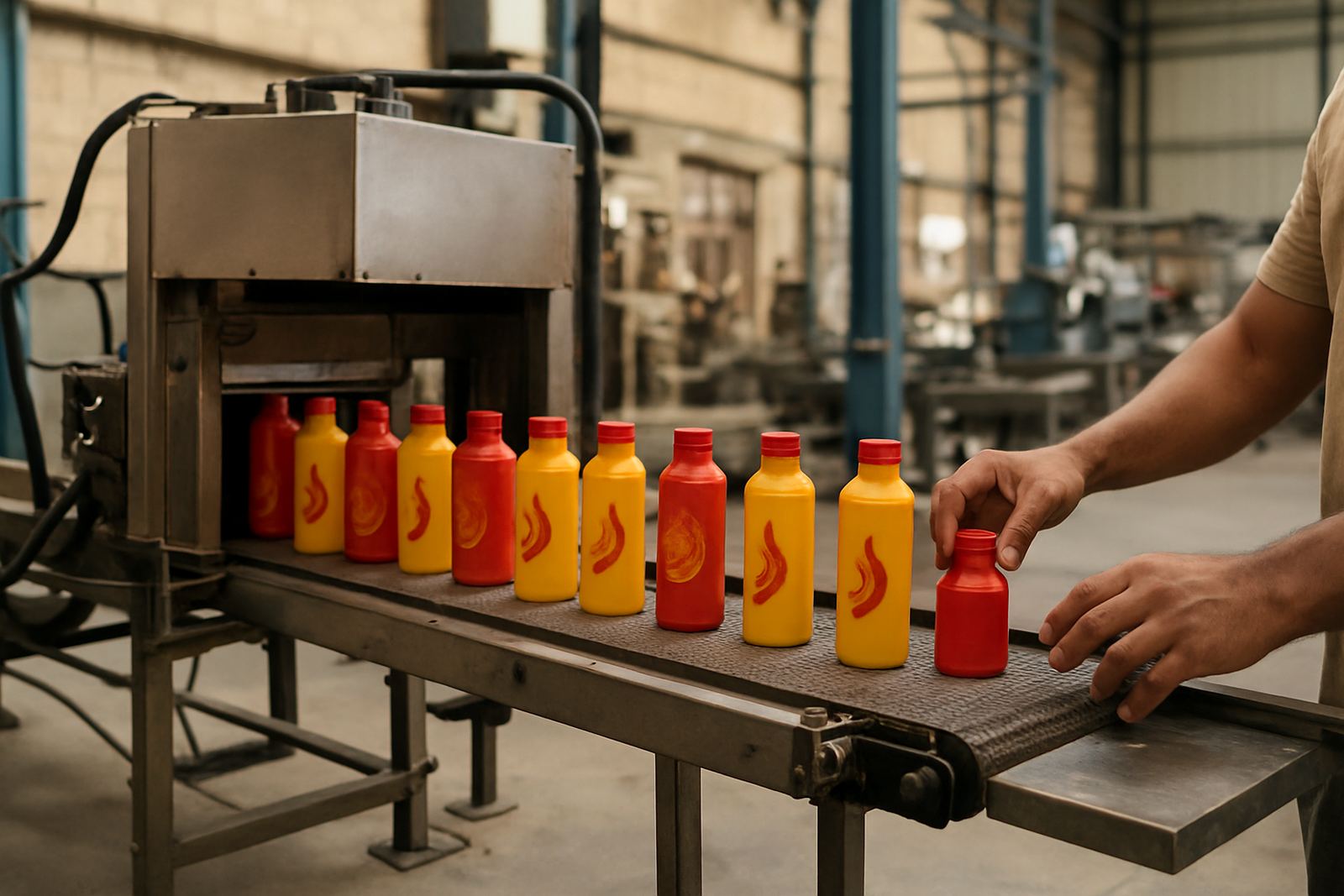
We supplied a cylindrical screen-printing machine matched to the bottle diameter, along with print screens prepared for the artwork and production pace. The setup included the practical items needed to get the job moving properly: screen making, colour setup help, and operator guidance on registration and cure checks. We also looked at the line layout so bottles could feed, print, and dry without unnecessary movement.
The work was done with production in mind rather than theory. That meant helping the team choose the right screen mesh, checking the contact point, and setting the print stroke to suit the bottle shape. A small adjustment at this stage makes a big difference later, especially when bottles are being packed in batches and there is no time to stop for rework. Johan van der Merwe handled the technical sales side and Anele Dlamini assisted with the installation and first-run checks.
- Cylindrical screen-printing machine for bottles
- Custom screens for the sauce bottle artwork
- Colour setup help for clear, high-contrast print
- Operator guidance for first batch changeovers
- Site setup support for smoother packing flow
Installation And Training Over Two Weeks
The project ran over two weeks from final checks to first production output. In week one, we completed site setup, installation, and machine alignment at the Roodepoort premises. We then ran sample prints to confirm placement and legibility on the squeezable bottle body. Once the test pieces were approved, we moved into operator training so the team could handle screen changes and daily checks themselves.
Week two focused on refining the line. Farieda Jacobs worked with the operators on production training, while Sibusiso Nene set up a simple maintenance routine for the machine and screens. That included cleaning intervals, inspection points, and what to watch for after a power interruption. The team wanted a process they could repeat shift after shift without calling for outside help each time there was a minor issue, which is fair enough.
- Week 1: installation, alignment, and test prints
- Week 1: artwork position confirmed on bottle curvature
- Week 2: operator training and production handover
- Week 2: maintenance routine and changeover steps
Production Results In Packing And Shelf Appearance
Once the setup was dialled in, the benefits showed up in packing speed and finished appearance. The bottles moved through the line faster because there was less handling than with adhesive labels, and the printed copy stayed sharp on the curved surface. The client could keep batch details readable, which mattered for both retail presentation and internal traceability.
The handling improvement was just as important as the print quality. A clean cylindrical print meant fewer snags during packing, and the squeezable shape remained practical for the end user. On sauce products, that combination matters because the pack has to work in the hand and look good on a shelf. The final run gave the team a more consistent output, with fewer stops for alignment corrections and better print repeatability across the shift.
- Faster packing with less label handling
- Sharper product names and batch details
- Better consistency across repeated runs
- Improved shelf presentation for retail orders
What We Would Do Again On A Similar Job
If we were doing the same kind of Roodepoort sauce bottle project again, we would keep the same order of work. First, confirm the bottle dimensions and grip points. Second, test the print position on actual containers, not just artwork proofs. Third, train the operators on the exact cleaning and setup routine before full production starts. That sequence saves time later and keeps the line calmer.
We would also recommend early planning for maintenance around power cuts and weekend production, because food packaging schedules can change fast. A clear screen plan, spare consumables, and a simple handover sheet go a long way. For bottle work like this, the best results come from practical setup decisions made before the first full run, not after problems show up. That is the kind of project we prefer, and it showed in this one.
- Measure the bottle and confirm the print zone before setup
- Use test runs to check handling and print hold
- Keep spare screens and consumables on site
- Build a simple maintenance routine from day one
Key facts
| Project | Roodepoort sauce bottles |
|---|---|
| Bottle type | Squeezable cylindrical sauce bottles |
| Printing method | Cylindrical screen printing |
| Timeline | 2 weeks |
| Location | Roodepoort, Gauteng |
| Support provided | Installation, training, screen making, maintenance |
| Result | Clearer print and faster handling |