Matched Air Supply For Printing Equipment
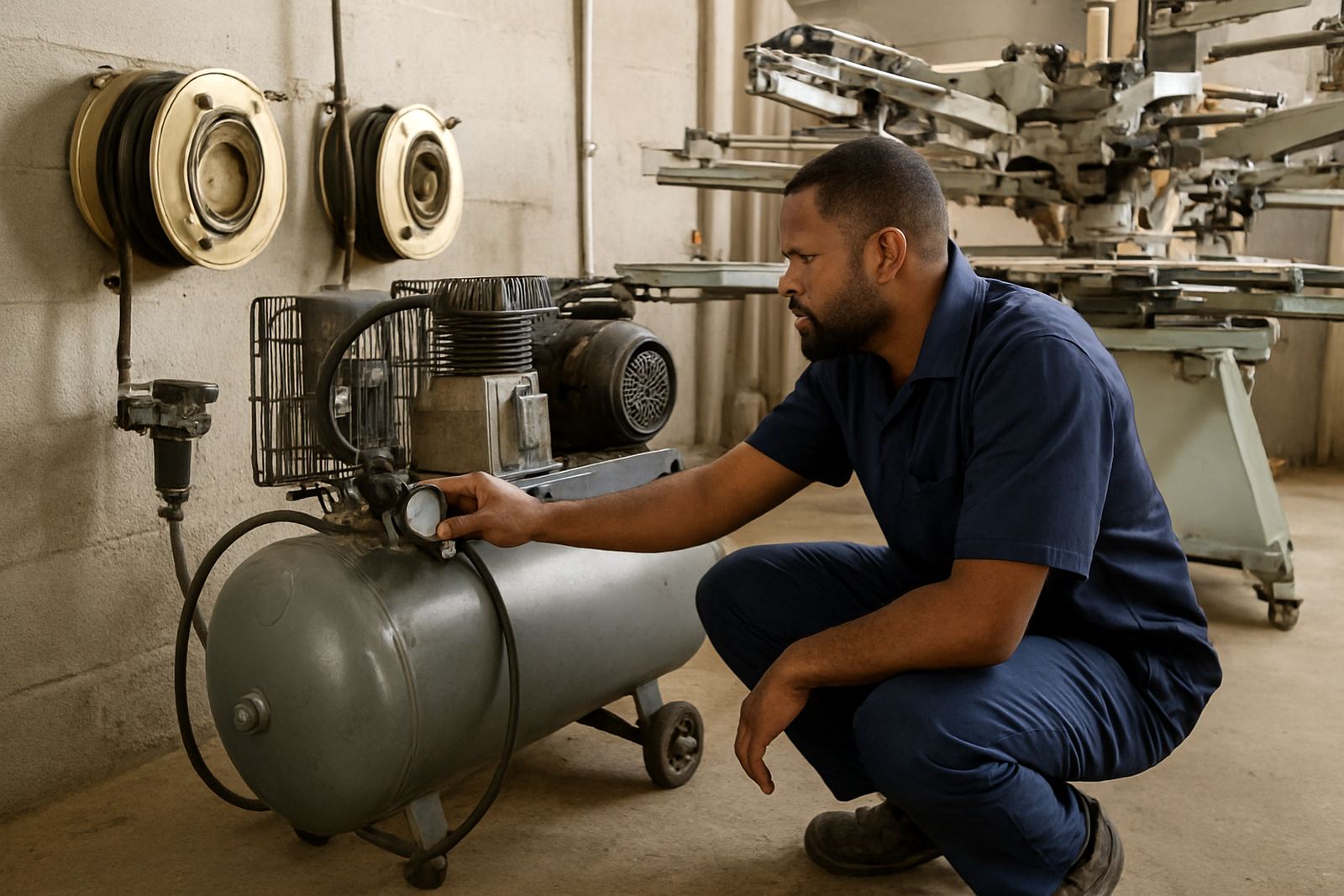
This air compressor package is set up for pneumatic screen-printing equipment and the small accessories that go with it. It gives you a controlled air supply for slide units, clamp actions, lifting cylinders and other air driven parts that need stable pressure through the shift.
For bottle, cup and tube work the biggest issue is not only pressure but consistency. When pressure drops or pulses, print alignment drifts and operators end up adjusting more often. A matched package reduces that problem by pairing the compressor, receiver and control items to suit the load, so the line runs better with less strain on the machine.
We supply packages for workshop use in Johannesburg, Pretoria, Midrand, Durban and Cape Town, as well as outlying sites that need careful planning for install day.
Typical Sizes And Package Options
Package size depends on how many pneumatic functions are in the machine and how often the operator cycles them. A small single-station setup can work with a compact unit, while a faster production line normally needs a larger receiver and higher output so the motor does not run flat out all day.
- Compact package for light production and short runs
- Mid-size package for regular daily printing
- Higher output package for longer shifts and multiple air consumers
- Receiver tank options for steadier pressure during repeated cycles
- Moisture management options for humid coastal sites
As a guide, many print shops choose packages in the 1.5 kW to 7.5 kW range, with receiver sizes from 50 litre up to 500 litre depending on the machine and the pace of work. The right choice is usually based on duty cycle not just motor size, because a small compressor can look fine on paper and still struggle after the first busy week.
Where This Package Suits Best
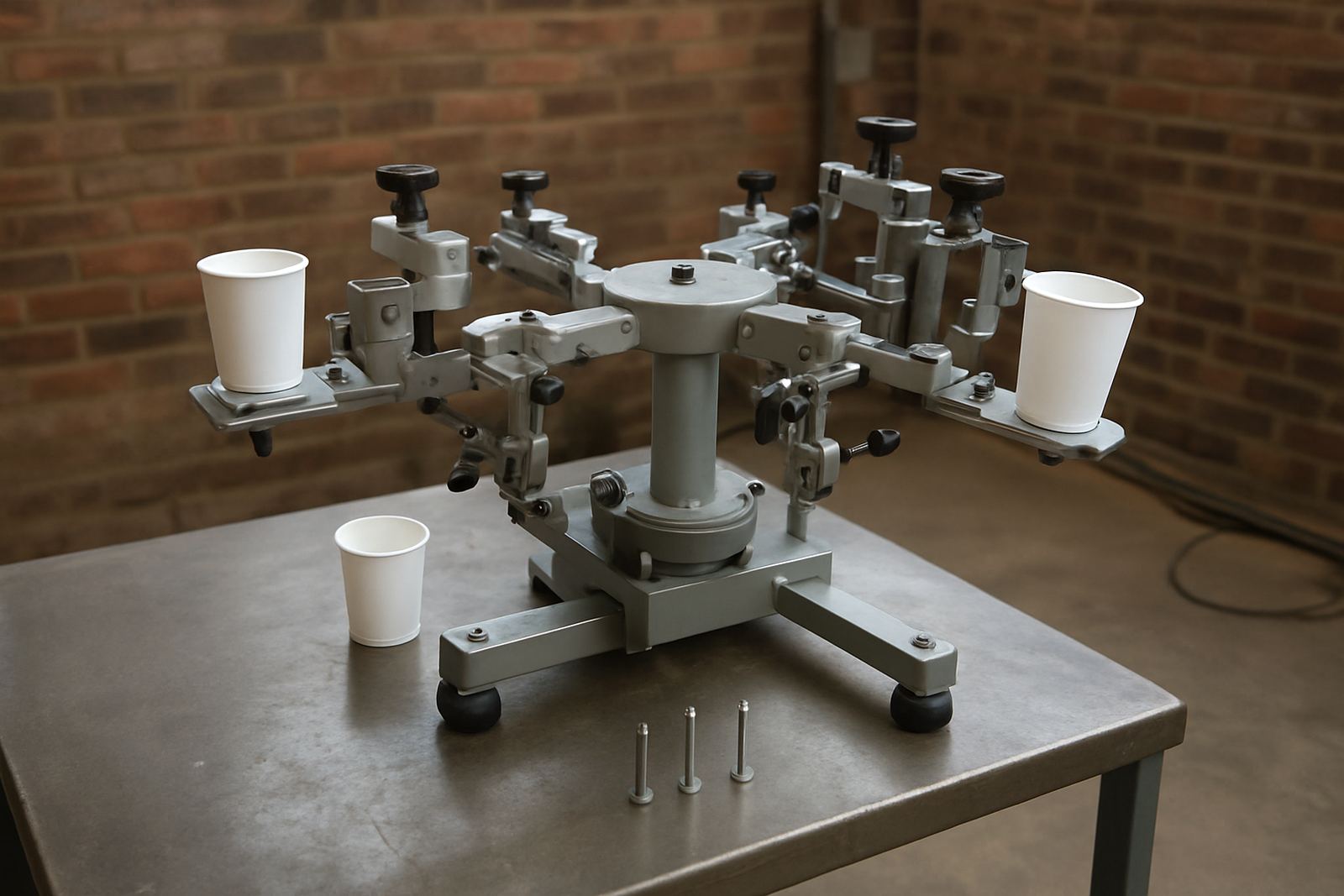
The package suits bottle decorators, promotional cup printers, tube packers and industrial shops that use pneumatic fixtures for screen printing. It also helps where the machine is shared between products, because pressure demand changes once you move from short cans to taller bottles or narrow tubes.
It is a practical choice for businesses that need steady output in shops with load-shedding, warm rooms or long pipe runs across the floor. In coastal areas such as Durban and Cape Town, moisture in the air can collect in the line, so proper filtration and drain points become more important than people expect.
- Bottle and jar printing lines
- Cup and tumbler decoration
- Cosmetic and food tube printing
- Small to medium production workshops
- Sites needing portable but proper air supply
Installation, Power And Site Requirements
Installation starts with confirming the machine air demand, the available floor space and the power supply on site. Most packages need a stable 220 V single phase supply for smaller units, while larger packages may require 380 V three phase depending on the selected compressor and start current.
Allow for a firm level floor, enough ventilation around the unit and a clean route for air lines. Keep the compressor away from overspray, dust and wash down areas if possible. If the install is going into a production room with poor power quality or frequent interruptions, we can plan the setup around a suitable changeover strategy and practical restart procedure.
Gas is not required for the compressor itself, but if the printer uses any heat or curing equipment nearby, that must be planned separately to keep the area safe and compliant.
Care, Servicing And Daily Checks
A compressor that gets basic care will usually last far better and cost less in downtime. The main things are air leaks, water in the receiver, blocked filters and worn belts or couplings. Small leaks often go unnoticed until the motor is running longer than it should, which pushes up electricity use and heat.
Daily checks should be simple and quick. Listen for unusual noise, check the pressure gauge, drain any water from the tank and confirm the lines are not rubbing or kinked. On busy sites, preventive maintenance every few months is better than waiting for a breakdown on a Friday afternoon.
- Drain condensation daily in humid conditions
- Check air filters and replace when dirty
- Inspect hoses, regulators and fittings for leaks
- Keep vents clear for cooling
- Schedule service before the peak season starts
We also support breakdown repairs and spares supply for customers who need a quick turn around.
What To Check Before You Order
Before placing an order, check the machine model, the number of pneumatic functions, the expected shift length and the pressure required at the point of use. If the compressor will feed more than one machine, include the full list of users so the package is sized properly.
Also confirm the available electrical supply, whether the room is dusty or humid, and if the site has a long air line run from the compressor room to the printer. A 10 metre line in a neat workshop is one thing, but a 40 metre run with bends and quick couplers can need a different setup altogether. It helps to know if you need silent operation, mobile mounting or a fixed install too.
- Working pressure required in bar
- Air demand per machine or per cycle
- 220 V or 380 V supply available
- Tank size preferred and space available
- Any moisture or noise concerns on site
If you are not sure, our team can help match the package to the printer and the site so you do not buy too small or overspec it.
Key facts
| Product type | Matched air compressor package for pneumatic printing equipment |
|---|---|
| Typical motor range | 1.5 kW to 7.5 kW |
| Receiver options | 50 litre, 100 litre, 200 litre, 500 litre |
| Working pressure | Commonly 6 to 10 bar depending on application |
| Power supply | 220 V single phase or 380 V three phase |
| Use case | Bottle, cup and tube printing, plus pneumatic accessories |