Sizes and layout options for different workshops
Stations are usually set up to suit the floor space and the number of operators. A compact unit works well in a small decorator's room, while a wider layout is better where two people mix at the same time and one person checks samples. In Aeroton and other busy industrial areas, space planning matters because the mixing area should not block movement around the press, drying area or screen storage.
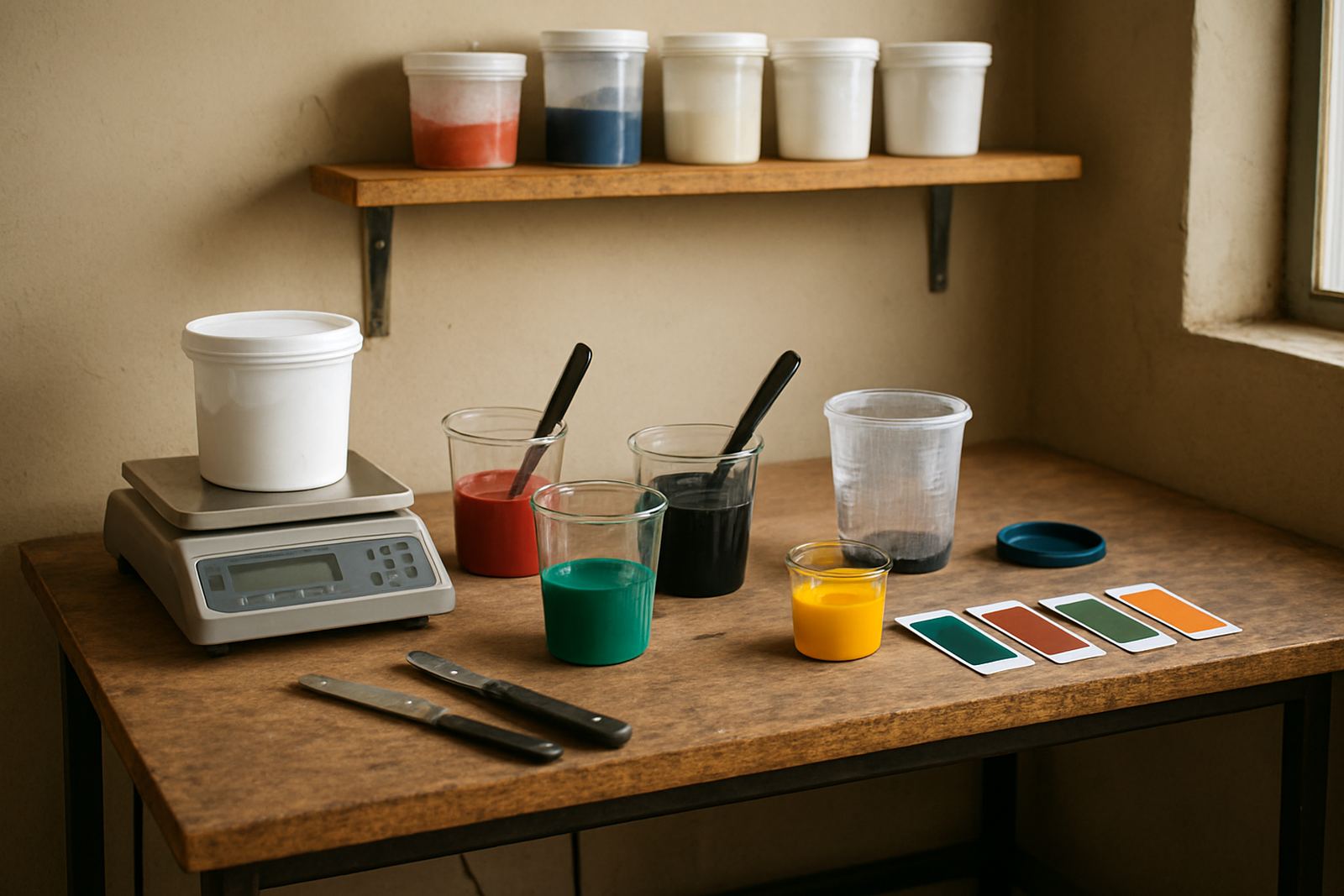
Common working lengths range from 1.2 metres to 2.4 metres, with widths around 600 mm to 900 mm. Bench height is usually set between 850 mm and 950 mm depending on the team and whether standing work is preferred. Some shops choose a wall mounted shelf system above the bench for labelled containers and colour cards, while others need lockable under-bench storage for stock control. If you run multiple products, a split layout can help, with one side for weighing and one side for finishing the mix.
- Compact 1.2 m station for tight rooms
- Mid-size 1.8 m station for general production
- Extended 2.4 m station for higher output sites
- Open shelf or lockable storage depending on site control
Installation, power needs and practical site setup
Most ink mixing stations are straightforward to install, but the room should still be prepared properly. The floor should be level, the area well lit, and the bench placed away from direct dust movement and heavy foot traffic. If the station includes extraction, a small powered fan or extraction point may be needed depending on the inks in use and the ventilation in the room. Where solvent inks are handled, good air movement is important and site rules should be checked first.
Basic units may need no dedicated power at all, while fitted stations can require a standard 220V supply for lighting, extraction or a scale charging point. If you are running in an area affected by load shedding, it is worth planning for backup lighting or a UPS on the weighing side so readings do not get interrupted. Keep the station near water for cleaning, but not where splashes can reach electrical points. On some sites a simple non-slip mat and an easy-clean splash guard make day-to-day work safer, not fancy just practical.
- 220V power where lights or extraction are fitted
- Level floor and easy access to cleaning water
- Ventilation or extraction for solvent based mixing
- Space for scales, stirrers and labelled stock
Care, cleaning and preventive servicing
Ink mixing stations work best when cleaned after every batch. Wipe spills straight away, close containers tightly, and keep lids and tools in their marked places. This reduces skinning on open ink and keeps dust out of the mix. Scales should be kept dry and checked regularly for accuracy, while shelves and trays need a quick clean to stop cross contamination between colours.
Preventive servicing usually means checking fasteners, hinges, lighting, extraction and any mounted fittings before they become a problem. If your station includes a fan or electrical light, test it during routine maintenance and replace worn parts early. In coastal towns, salt air can affect exposed fittings, so stainless or coated parts are worth it. A tidy station also helps with quality checks during production because operators can see the mix labels and batch notes clearly.
- Clean after each colour batch
- Keep containers closed and clearly labelled
- Check scales for accuracy on a routine basis
- Inspect lights, fans and fittings during service
What to check before you order
Before ordering, measure the room and note where the press, wash-up point and storage racks sit. Check how many operators will use the station at the same time, what kinds of inks you mix, and whether you need extraction or lockable storage. If you produce repeat colours for a client base, ask for enough shelf space to hold formula notes and labelled stock.
It also helps to confirm the surface material, bench height and whether the station needs wheels or fixed feet. If the room has uneven floors or shared access with other production areas, fixed feet may be better. For sites in Johannesburg, Pretoria, Durban or Cape Town, installation planning should also consider delivery access, stairs and loading bay limits. Send photos of the room and a rough sketch if possible, it saves time and avoids rework later.
- Room measurements and access points
- Ink types and batch sizes
- Need for extraction, lighting or storage
- Preferred bench height and floor fixing
Specs and order support from Aeroton
Bottle Screen Printers supplies ink mixing stations for practical production use, with support from Aeroton in Johannesburg and installs nationwide. The right setup depends on your print volume, available space and the kind of colour control you need. If you are setting up a new room or upgrading an old mix area, we can help you choose a layout that fits the job and keeps daily prep simple.
For pricing, layout checks or installation planning, contact the team at our contact form. Include your site location, a few photos, and the approximate bench size you have in mind. That makes it easier to match the station to your print room, whether you are in Johannesburg South, Midrand, Pretoria, Durban or Cape Town.
Key facts
| Product type | Dedicated ink mixing station for cylindrical print preparation |
|---|---|
| Typical sizes | 1.2 m, 1.8 m and 2.4 m working lengths |
| Working height | 850 mm to 950 mm depending on operator preference |
| Power requirement | None for basic units; 220V for lighting or extraction fitted units |
| Suitable inks | Water based, solvent and UV where site conditions allow |
| Common features | Weighing area, storage shelves, wipe-clean surface, label space |