When Cleaning Bottle Printing Has to Work Every Shift
Cleaning product containers are usually handled fast, filled in bulk, stacked, transported, and opened in wet areas, so the print has to stay sharp from filling room to retail shelf. That means good ink transfer, stable registration, and a process that keeps working when the factory is warm, the lights flicker, or the shift runs longer than planned. In Johannesburg, Durban, Cape Town and inland sites alike, the real test is whether the print still looks clean after packing, wiping, and a few knocks.
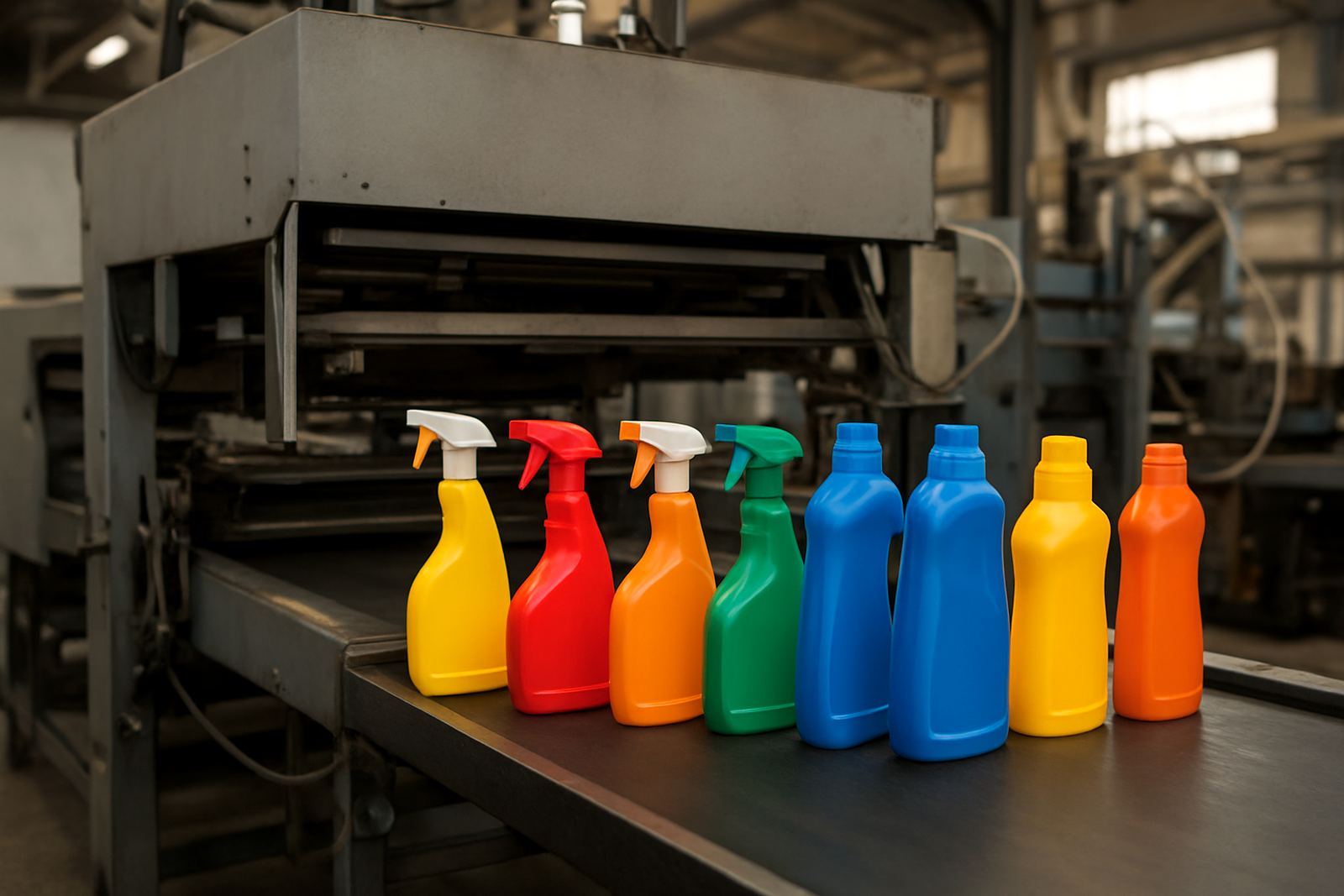
For bleach, detergents, disinfectants, and industrial cleaners, the bottle shape often changes from 250 ml sample packs to 5 litre and 20 litre containers. A cylindrical screen printer gives consistent coverage on round or slightly curved bottles, while the right screen mesh and curing approach help the mark resist handling. If the container surface is slippery or has a mould line, it needs proper setup from the start or you end up with ghosting and patchy colour.
Typical Equipment Set for Cleaning Product Containers
The right setup depends on whether you print short runs for multiple SKUs or higher volumes of one product line. Most cleaning bottle jobs use a cylindrical screen-printing machine, matched screens, jigs or mandrels, and drying or curing equipment suited to the ink system and container material. For plastic bottles, many businesses also ask for screen making support and colour setup help so the line can stay consistent across repeat orders.
- Cylindrical screen-printing machine sized for the bottle diameter and print area
- Custom screens for logos, hazard marks, dosage text, and batch code space
- Drying or curing arrangement for the ink and substrate being used
- Simple feed and discharge tables for handling without scuffing the print
- Cleaning and reclaiming area for screen turnaround
- Spare squeegees, flood bars, belts and consumables for daily use
On sites in Aeroton, Midrand, Pretoria and Durban, we often find that the machine itself is only half the story. Air supply, power stability, floor space and operator access matter just as much, especially where load-shedding or a tight production bay can slow the shift.
Layout Planning for a Neat Line and Fewer Stops
A good print area for cleaning bottles should keep raw containers, printing, drying and packing in a straight enough flow to reduce handling. You do not want operators carrying wet bottles back and forth across the room, because that is where scratches, fingerprints and skipped units creep in. Allow space for infeed, a small reject area, and easy access for the technician when screens or guides need adjusting.
In many South African plants, a practical layout works better than a fancy one. Leave enough room for trolley movement, stackable crates, and a clear route to the filling or labelling section. If you are printing near a washdown area, protect the machine from spray and humidity. Coastal sites in Cape Town and Durban should also watch for corrosion on frames, fasteners and screen storage. A little planning now saves a lot of rework later, nogal.
- Keep the machine close to finished packing so wet bottles are not carried far
- Separate clean screen storage from washdown or chemical mixing areas
- Plan for UPS backup or generator support if the line cannot pause during outages
- Allow enough clearance for screen changeover and maintenance access
Common Mistakes on Cleaning Bottle Jobs
The biggest mistake is treating all plastic bottles the same. HDPE, PET and other common container types behave differently, and surface finish can change ink adhesion quite a lot. Another common issue is asking for very fine detail on a curved surface without testing the print area first. Small text, warning icons and multi-colour logos can all become muddy if the screen count, registration and cure are not matched to the bottle.
We also see production teams underestimating screen prep and operator training. If the screen is made poorly, or the operator is rushing because the shift is behind, even a decent machine will produce waste. Incorrect ink choice is another repeat problem, especially where bottles carry chemical residues or will be stored in humid warehouses. It is cheaper to test a sample run than to scrap a batch of 1 000 bottles after filling.
- Not testing adhesion on the exact bottle material before full production
- Using artwork that is too detailed for the print size
- Ignoring cure time and then stacking bottles too soon
- Skipping maintenance until the machine starts missing registration
- Ordering no spare screens, then waiting on urgent turnaround
Budget Ranges in Rand for a South African Setup
Budgets vary a lot depending on bottle size, volume, print colours and how much automation you need. A small operation printing short runs may start with a basic cylindrical screen-printing setup and manual handling support, while a higher-volume cleaning line may need better feed control, drying capacity and more screens for quick changeovers. In South Africa, it also makes sense to budget for installation, training and spares from day one, not after the first breakdown.
As a broad guide, a starter setup for cleaning bottles can begin around R180 000 to R350 000, depending on configuration and options. A more complete line with stronger output, added setup support and extra tooling can move into the R450 000 to R900 000 range or higher. Ongoing costs usually include screens, reclaiming chemicals, inks, consumables, servicing and a small spares stock. If your site runs close to the coast or in a dusty industrial area, factor in more frequent cleaning and preventive maintenance.
- Starter production line: about R180 000 to R350 000
- Mid-range setup for better throughput: about R450 000 to R900 000
- Training, installation and commissioning should be planned separately
- Keep a monthly maintenance and consumables budget, even if it is modest
Support We Arrange Across South Africa
Bottle Screen Printers works with cleaning product producers from Aeroton and Johannesburg South through to Midrand, Pretoria, Durban and Cape Town, with installs nationwide. We handle machine installation, site setup, operator training, screen making, screen reclaiming, preventive maintenance, breakdown repairs, spares supply, colour setup help and production optimising. That support matters when you are trying to keep a label line moving and the print section must not become the bottleneck.
If you are launching a new cleaning brand or replacing an older setup, we can help you match the machine to the bottle, the print to the surface and the process to your production target. The aim is simple, stable output, less waste and prints that hold up in real use. For technical questions or pricing, send a message through our contact form.
What a Good Cleaning Bottle Print Should Look Like
A proper cleaning bottle print should be legible, centred and strong enough to stand out against coloured plastic and product movement on the shelf. It should cover the required area cleanly without overprinting seams or label zones, and it must survive normal handling, moisture and packing pressure. If your current print is fading, rubbing off, or drifting out of position, the issue is usually in setup, screen prep or curing, not just the artwork.
For producers supplying supermarkets, wholesalers and industrial customers, consistency matters just as much as colour. When each bottle looks the same, the range looks trusted and organised. That is the standard worth aiming for, whether you are printing a 500 ml bathroom cleaner or a 20 litre floor detergent drum.