When Sauce Bottles Need More Than a Label
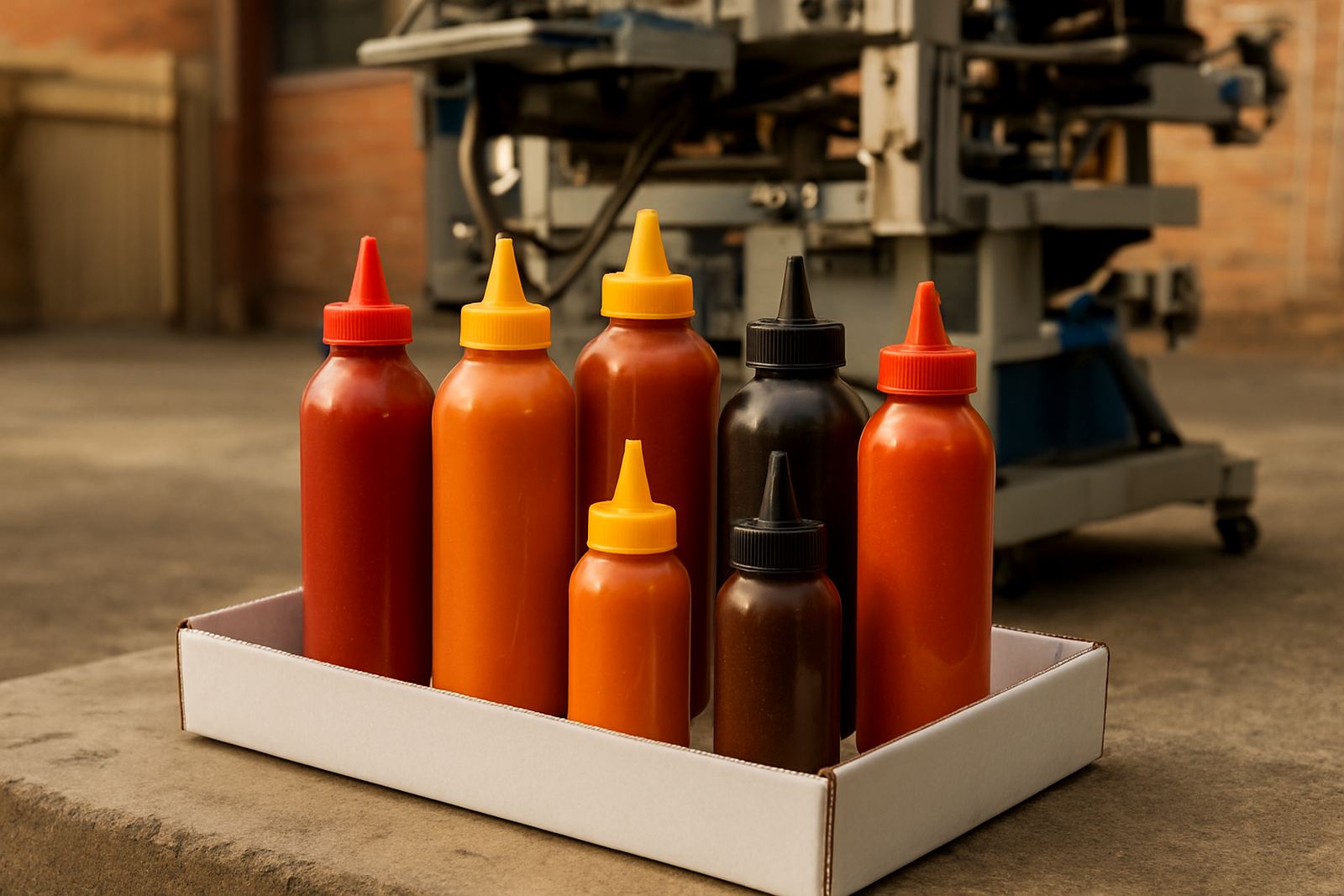
Sauce packaging is hard on branding. Bottles get handled with wet hands, knocked in crates, stored near heat, and often packed in chilled or humid conditions. For this reason many producers move to direct print on the bottle body, especially where they want a cleaner look and better colour hold than a wrap label can give.
For squeezable PET, HDPE, and rigid plastic bottles, screen printing is a practical choice when you want bold product names, clear flavour marks, batch coding space, and a strong retail face. It also helps on bottles that have shoulders, curves, or a narrower grip area where labels can lift at the edges. In food production, the print must look neat and it must stay that way after transport and normal use.
Our Aeroton, Johannesburg base supports sauce makers from small kitchens to larger filling lines. We work with businesses in Johannesburg South, Midrand, Pretoria, Durban and Cape Town, with installs nationwide. If you are moving from manual stickers or looking to shorten changeover time, we can advise on the right machine set and screen setup for your bottle size. Some clients only need one colour and a simple jig, others need a quicker set-up for 3 or 4 stock keeping units, and that changes the budget quite a bit.
Typical Equipment for Sauce Bottle Printing
Most sauce bottle jobs start with a cylindrical screen-printing machine matched to the bottle diameter and print area. For smaller runs, a semi-automatic machine is often enough. For higher output, a better guided unit with accurate registration and repeatable pressure gives cleaner results and less waste. The screen mesh, squeegee angle, ink choice, and curing method all need to suit the bottle material and the kind of sauce line you are running.
- Cylindrical screen-printing machine for round or slightly tapered bottles
- Custom screen frames and artwork separation for each sauce variant
- Jigs or carriers for short bottles, slim bottles, and grip shape changes
- Ink system matched to plastic type and washdown conditions
- Curing or drying arrangement suited to your floor space and power supply
For many sauce packers in South Africa, load-shedding is still part of planning. That means we often help clients think through backup power, heat control, and a layout that keeps the print area moving even when the rest of the plant slows down. In coastal towns like Durban or Cape Town, humidity can also affect drying times and screen storage, so the room setup matters. A good machine can still underperform if the screens sit in damp air or the bottles are not clean enough before print.
Layout Planning That Saves Time on the Floor
Sauce bottle printing should fit into the real flow of the plant, not the other way round. You need enough space for incoming bottles, clean packing after print, screen handling, and a safe spot for consumables. If the print station is too close to filling or capping, dust and splash contamination become a problem. If it is too far away, operators waste time walking bottles back and forth.
We usually look at the line from unpacking to final carton packing and ask where the bottle needs to pause. That pause point is where the print process should sit. For a new setup, it helps to keep the machine on level flooring, with a clear power point, good lighting, and room for a second person during start-up if the artwork changes often. Small details like bottle feed direction and stack height can make a big difference when your team is printing 500 bottles in a shift or 5 000, the wrong table height gets tiring fast.
- Leave enough space for screen changes and cleaning between flavours
- Keep the print station away from open water and high dust areas
- Plan for operator movement if bottles need pre-wipe or pre-flame treatment
- Allow room for spare screens, inks, and rejected bottles
Common Mistakes on Sauce Bottle Jobs
One common mistake is choosing a print method that looks fine on a sample but fails once bottles move through filling and transport. Sauce bottles can be soft or slightly uneven, so the machine must hold them steadily. Another issue is trying to print too much detail on a curved surface. Fine lines may look good on artwork proofs, then break up on the real bottle because the print area is too small or the mesh count is wrong.
People also underestimate screen prep. If the screens are not reclaimed properly, old ink residue can ghost into the next job and spoil colour consistency. In food packaging, that is not something to guess at. Poor drying is another problem, especially when the plant is hot, or the room has a lot of moisture. If the ink is not fully cured before packing, you get scuffing in cartons and returns from retailers. It sounds simple but this catches a lot of teams out.
We also see clients buy a machine before checking bottle supply consistency. If the bottle wall thickness, shoulder height, or print panel changes from one batch to the next, set-up time climbs and yield drops. A quick sample test on the actual bottle is always worth it before you commit to full production.
Budget Ranges in Rand for Sauce Bottle Setups
Budget depends on output, automation, and how many bottle types you need to cover. A basic entry setup for lower volumes can start from about R65 000 to R120 000, usually with a simpler machine, one or two screens, and basic operator training. A more capable setup for steady production and faster changeovers often sits between R140 000 and R280 000, especially when you need better registration, more accessories, and proper layout support.
For larger operations with multiple sauce sizes, screening aids, spares, and planned maintenance cover, budgets can move above R300 000. That is common where the business wants lower downtime, a safer production flow, and faster turnaround on packaging changes. We can also help phase the spend, starting with the core machine and adding screens, spare parts, and training as volumes grow. This is usually easier on cashflow and lets the team learn the process properly.
When comparing quotes, check what is included. Some pricing looks lower until you add installation, commissioning, and the first round of consumables. It is better to cost the full working system than buy piecemeal and find out later that the line is missing a key part.
Support, Training and Ongoing Maintenance
Our team handles machine installation, site setup, operator training, screen making, screen reclaiming, preventive maintenance, breakdown repairs, spares supply, colour setup help and production optimising. That matters on sauce lines because a small fault can stop the whole day, and a poorly trained operator can use too much ink or struggle with registration. Thabo Mokoena leads the business, with support from Naledi Khumalo, Johan van der Merwe, Anele Dlamini, Farieda Jacobs and Sibusiso Nene.
For new sauce bottle clients, we often recommend a short run-in period after installation so the team can settle the settings and spot issues early. That might mean adjusting pressure, screen tension, or curing time once the real bottles arrive. Once the line is stable, preventive maintenance keeps the machine accurate and helps avoid sudden breakdowns during peak production. If you are based in Aeroton, Johannesburg South, Midrand, Pretoria, Durban or Cape Town, we can plan a site visit and work from there.