When Shampoo Bottles Need More Than a Label
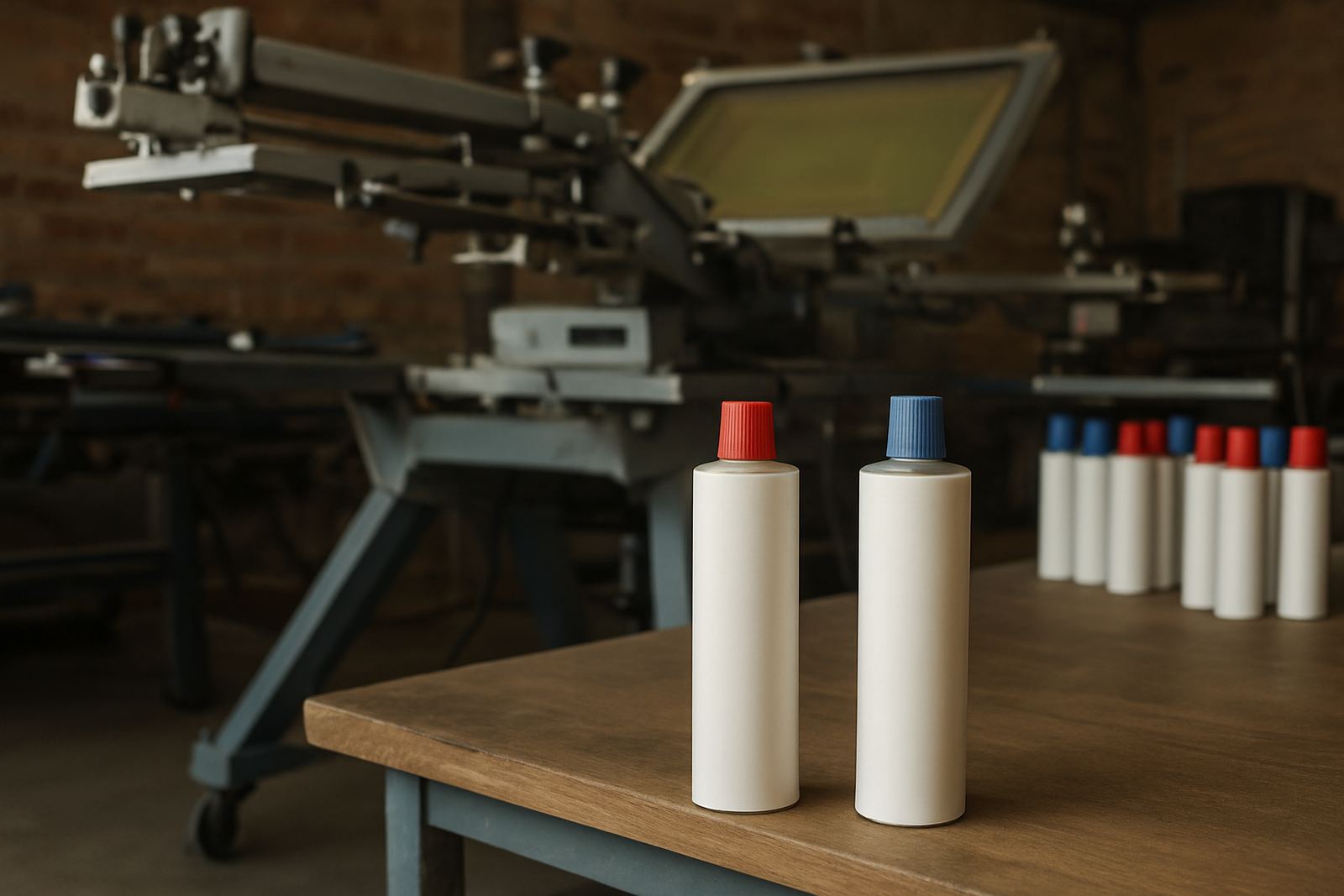
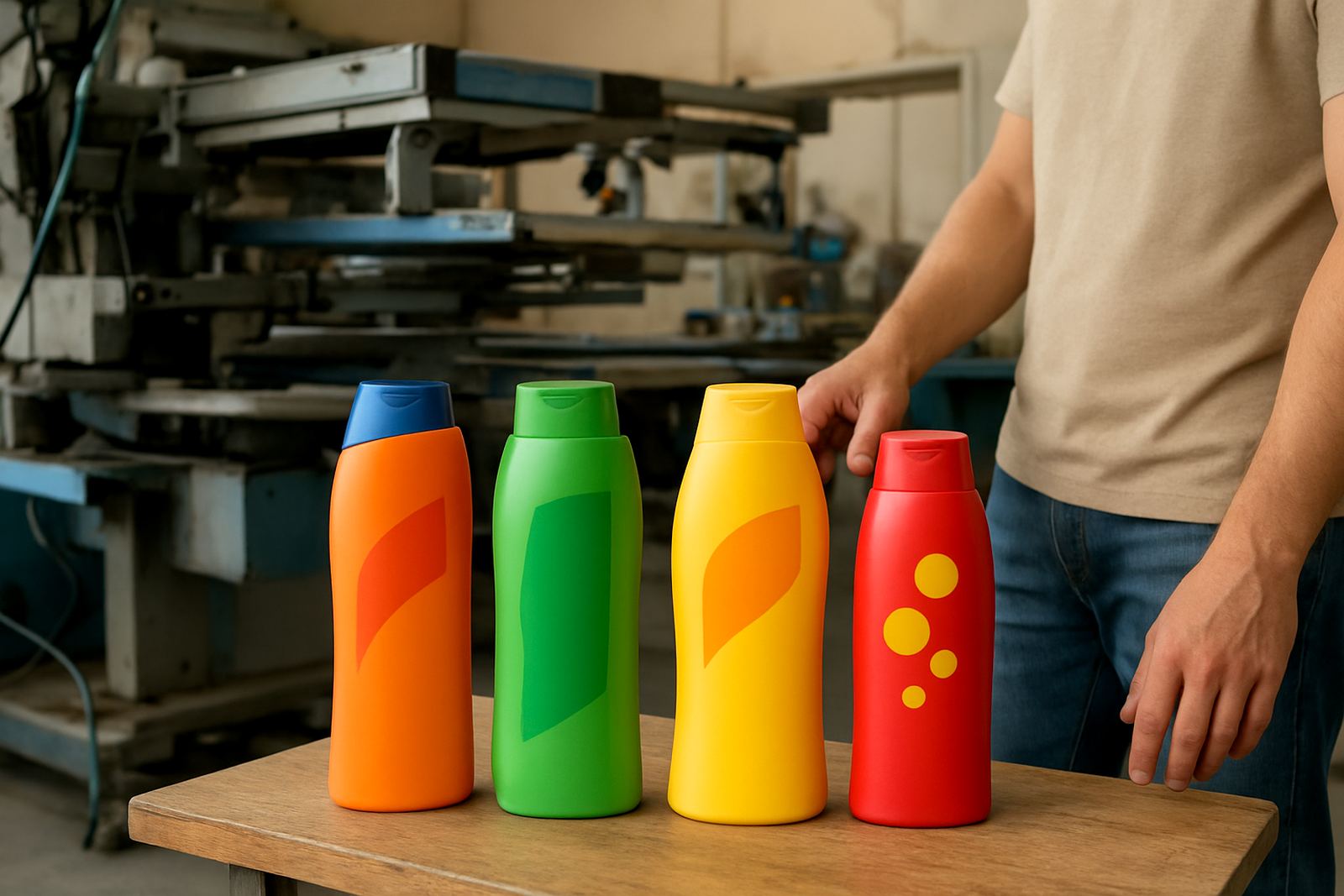
Shampoo and personal care bottles are often sold in wet bathrooms, packed in cartons, and handled by staff and customers many times before the bottle is empty. If the print scuffs, lifts or looks uneven on a curved surface, the brand loses value fast. Screen printing gives a direct printed finish on plastic or glass bottles, which works well for logo blocks, product names, shade marks and simple brand bands.
For bottles with a steady curve, the main issue is not whether the print can be done, but how consistently it can be done all day. On small runs, a manual or semi-automatic cylindrical machine may be enough. For higher volumes, you need proper jigs, repeatable set-up and screens made for the exact bottle diameter. That matters on round 250 ml and 500 ml packs, and also on oval or slightly tapered bottles where the print area changes as the bottle turns.
Typical Equipment Set For Personal Care Bottles
A practical shampoo bottle line usually starts with the print machine, the right screen mesh, jigs for the bottle size, drying space and a clean table for setting colour and registration. For most South African production floors, the setup needs to cope with power cuts, so planning for manual backups or inverter support helps keep the day moving.
- Cylindrical screen-printing machine for round or near-round bottles
- Custom jigs or carriers for 200 ml to 1 litre containers
- Screens prepared for fine logos, text and block colour areas
- Ink handling area with measured mixing cups and stir tools
- Drying racks or warm-air curing space, depending on ink type
- Spare squeegees, flood bars and basic change parts
For many clients, the best starting point is a semi-automatic unit with stable bottle rotation and a simple changeover process. If the business prints several ranges such as shampoo, conditioner, body wash and hand lotion, the machine must allow quick adjustments between bottle diameters without losing register. A good technical sales check before purchase saves a lot of grief later.
Layout And Planning Advice For A Busy Shop Floor
Set the print area close to screen preparation and close to the curing or drying point. If the operator must walk far with wet bottles, the chance of smudging goes up. In places like Johannesburg South, Midrand and Aeroton where many customers run mixed production, a neat U-shaped layout can work well because one person can load, print, inspect and move bottles along with less handling.
Ventilation is important with solvent-based inks, and so is dust control. Even a small amount of dust can show up on a glossy shampoo bottle and spoil the finish. In Durban or other coastal areas, humidity can also slow drying and affect adhesion if the room is not managed properly. Keep the storage for screens and inks away from direct sunlight and damp walls. If your floor has uneven power supply or load shedding, build in a plan for safe shut-down so the screen does not dry out on the machine.
It also helps to plan for the bottle shape before ordering packaging. A very curved shoulder, narrow print panel or glossy slip coating can make setup harder. If the artwork is too busy, a round bottle can distort fine details. simpler artwork usually prints better, and the bottle still looks well finished on shelf.
Common Mistakes That Cost Time And Bottles
Most production problems on shampoo bottles come from rushing the set-up. The bottle may look simple, but curved plastics expose every fault in alignment and pressure. A screen that is too coarse, too much ink, or a jig that does not hold the bottle firmly will all show up in the first few metres of production. Clients also sometimes forget that the same design can behave very differently on PET, HDPE and glass.
- Using one screen for different bottle diameters without checking registration
- Choosing ink before confirming the bottle material and surface finish
- Setting the print pressure too high and distorting the image
- Skipping adhesion tests after a supplier changes bottle stock
- Ignoring drying time, then packing bottles while the print is still soft
Another common issue is underestimating screen making and reclaiming. If screens are not cleaned properly between jobs, ghost images and blocked mesh can carry into the next run. That leads to patchy print and waste. Preventive maintenance matters too, because worn bearings, loose guides and bad alignment can stop a line dead in the middle of a rush order.
Budget Ranges For A Shampoo Bottle Print Line
Budgets vary depending on bottle volume, degree of automation and how many sizes you print. For a small operation adding direct print to shampoo bottles, a basic semi-automatic start-up package can begin around R180,000 to R350,000, depending on the machine specification and the jigs needed. A more advanced line for higher output and better repeatability can sit between R450,000 and R950,000. Large production set-ups with multiple stations, extra drying support and spare tooling can move beyond that.
Do not forget the working costs around the machine. Screens, inks, test bottles, setup time, operator training and ongoing spares all need to be included. If the bottles are changing often, budget for more frequent screen preparation and colour setup help. For many clients, the best spend is not the biggest machine but the machine that matches their actual daily volume.
As a rule, if a line is expected to print 3,000 to 8,000 bottles a day, the equipment must be chosen for repeatability more than speed. If it is only used for seasonal runs or new product trials, a leaner setup keeps cash tied up lower and still gives a neat result.
How We Support Shampoo Bottle Projects Nationwide
We work from Aeroton in Johannesburg and install nationwide, including Pretoria, Midrand, Durban and Cape Town. Our support covers machine installation, site setup, operator training, screen making, screen reclaiming, preventive maintenance, breakdown repairs, spares supply, colour setup help and production optimising. That matters when a customer needs a line running before a launch or when a contract pack changes at short notice.
Thabo Mokoena and the team know that bottle work is judged on detail. A clean first sample, steady repeat print and a machine that keeps running are what clients pay for. If you are printing shampoo bottles for salons, wholesalers or retail packs, we can help you choose the right cylindrical screen-printing equipment and set it up properly from the start. Send a message through our contact form for a practical discussion and a quote in Rand.