When Food Jars Need Direct Decoration
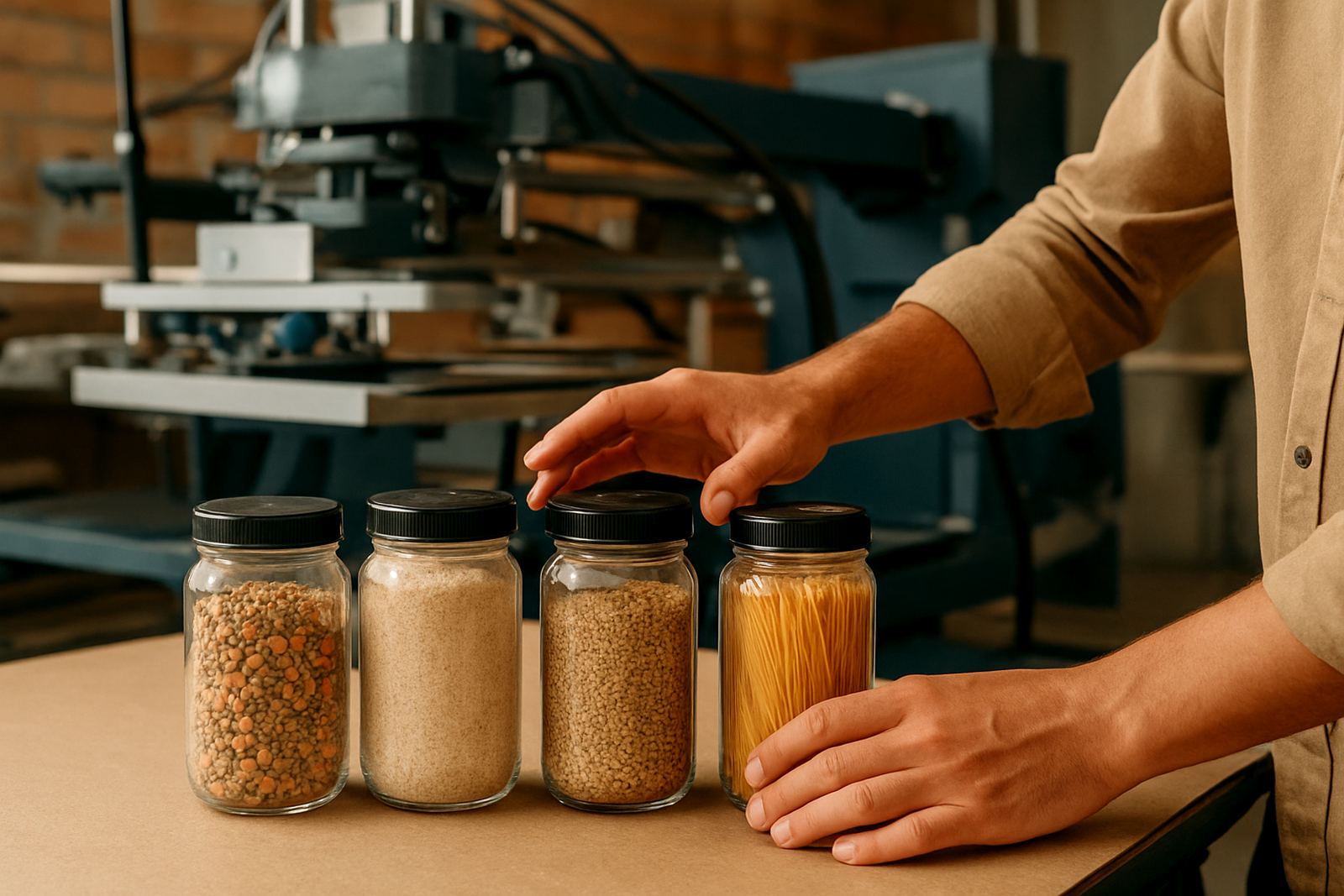
Food jar runs usually start with a simple requirement, a label that must look neat, stay put and handle cold rooms, wiping and regular product handling. Direct screen printing is a good fit where the jar shape is cylindrical and the customer wants a permanent printed finish instead of paper labels that lift at the corners.
We work with businesses in Johannesburg, Pretoria, Midrand, Durban, Cape Town and other centres nationwide. Typical products include glass jars for sauces, preserves and dry goods, plus plastic pantry containers and similar round packs. The main thing is consistency across the run, because a jar on a shelf has little chance to hide poor alignment.
Typical Machine Setups For Jar Runs
The right equipment depends on jar diameter, print length and daily volumes. For smaller food jar operations, a compact cylindrical screen-printing machine is often enough. Larger packers may need a sturdier unit with better registration control, plus drying and handling support to keep pace with filling lines. For jars with tighter necks or tapered sections, we check the printable band carefully before any order is placed.
- Cylindrical screen-printing machine sized for the jar diameter
- Screen frames and artwork preparation for one or more colours
- Jigs or holders for stable loading and repeatable registration
- Curing or drying support suited to glass or plastic packs
- Basic spare parts and consumables for day to day production
For food packaging, the print area must suit the actual jar shape and not just the artwork. A 250 ml sauce jar and a 1 litre pantry tub may both be round, but they need different handling and setup time.
Layout And Planning For A Small Or Growing Plant
Before buying equipment, it helps to map the full path from unpacked jar to finished pack. The print area should sit close to the feed point and drying point, with enough space for cartons, clean screens and rejected stock. In places like Aeroton and Johannesburg South, many businesses work in tight industrial units, so floor space has to be used carefully.
- Allow a clean loading zone so jars do not pick up dust or moisture
- Keep inks, screens and cleaning materials in a separate, ventilated area
- Plan for power stability if load-shedding affects drying or curing time
- Leave space for maintenance access around the machine
- Check whether your jar supplier keeps diameter and wall thickness consistent
On coastal sites, humidity can affect drying and screen storage, while inland dust can affect print quality if housekeeping slips. A practical layout saves time and reduces rejects, especially on longer shifts.
Common Mistakes That Lead To Rejects
The most common problem is assuming every round container prints the same way. Food jars vary in wall thickness, surface treatment, taper and neck profile, and these details affect registration and ink adhesion. Another frequent issue is overloading the machine with a run size it was never meant to handle, which leads to rushed setup and poor colour control.
We also see teams trying to skip proper screen reclaiming or using worn screens for one more job. That usually shows up as fuzzy edges, uneven solids or ghosting from a previous design. Small errors on a jar are easy to spot because customers handle the product at eye level, so they notice faults quickly.
- Using the wrong ink for glass or treated plastic
- Poor surface cleaning before printing
- Incorrect curing time after print
- Ignoring jar diameter changes between batches
- Mixing operators without clear setup notes
Budget Ranges In Rand
Budget depends on the level of automation, the print size and whether you need screens, training and installation included. Entry-level cylindrical setups for small jar runs can start from about R85 000 to R180 000, while more capable machines for steadier production often sit between R220 000 and R450 000. If a plant needs supporting equipment, spares and training, a fuller start-up budget can move higher.
It is also worth budgeting for installation, operator training, preventive maintenance and screen making from the start. Many clients find it easier to plan for a proper setup once than to patch together a cheaper solution that keeps stopping during peak production. Thabo Mokoena and the team can help size the package to the actual jar range and monthly volume.
Support For Installs And Ongoing Production
Bottle Screen Printers is based in Aeroton, Johannesburg and installs nationwide. Our team handles machine installation, site setup, operator training, colour setup help, production optimising, preventive maintenance and breakdown repairs. For food jar customers, that support matters because a clean start saves a lot of time later.
Whether the job is a new line in Pretoria, an upgrade in Durban or a small production room in Cape Town, the aim is the same, steady output and print quality that holds up in real use. If you need a quote or want to talk through jar sizes and volumes, send a message through our contact form and we will help work out the right arrangement.
- Machine Installation
- Site Setup
- Operator Training
- Screen Making and Reclaiming
- Preventive Maintenance and Spares Supply