When adhesive tubes need print that lasts through handling
Glue, filler and repair tubes are handled differently to cosmetic packs. They get squeezed, stacked, dropped into cartons and often sit in store rooms where dust, heat and humidity can affect the finish. That is why tube decoration for adhesive products needs strong ink bond, accurate registration and a process that can cope with repeated flexing of the tube body.
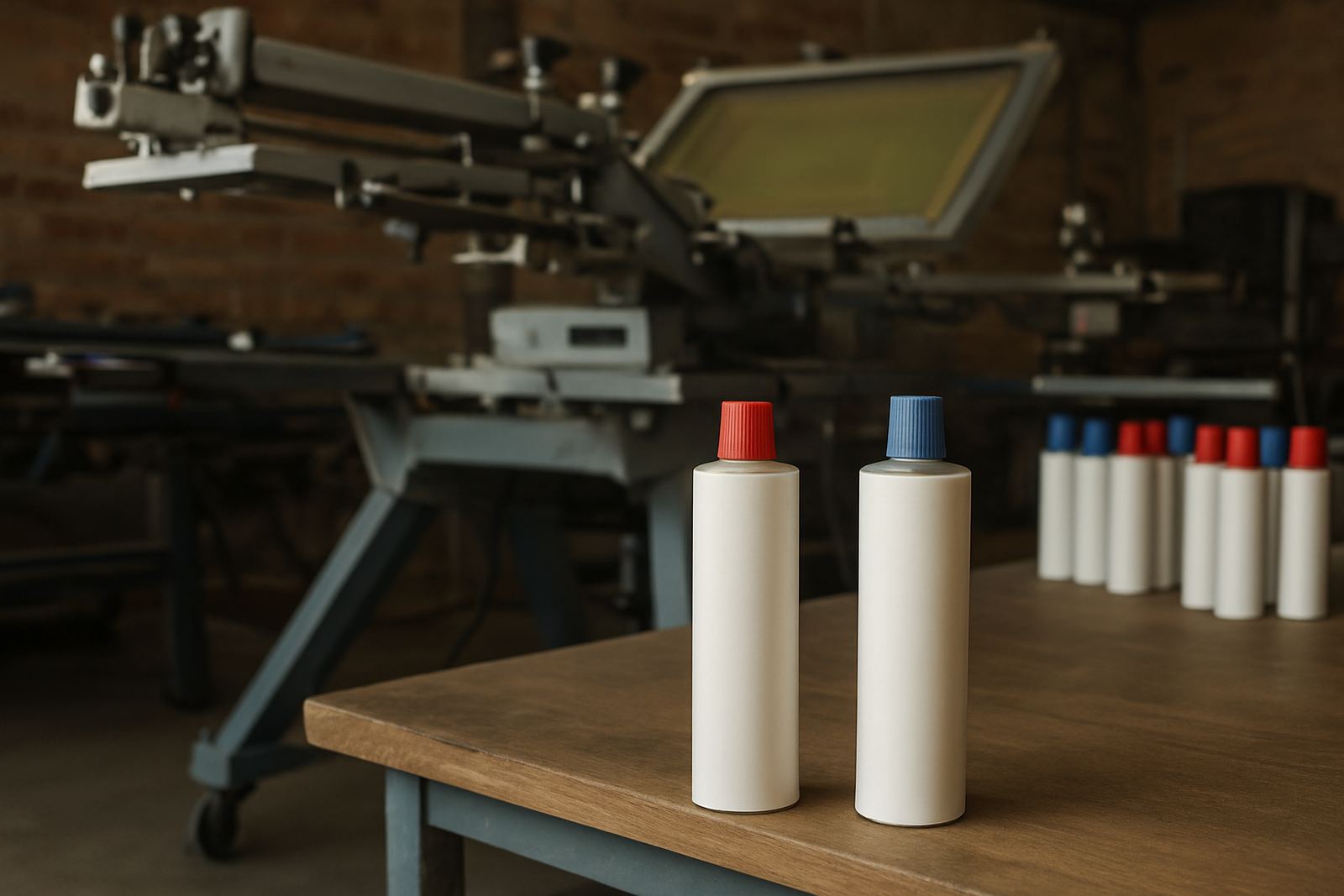
In Johannesburg, Durban or Cape Town, we usually see the same brief from packing teams: the product name must stay clear, the instructions must stay readable, and the batch coding area must remain clean enough for retail and compliance checks. For many adhesive ranges, a simple label is not enough. Screen printing gives a direct printed finish that can be more durable on suitable tubes, especially where the pack is exposed to oils, workshop dirt or general warehouse wear.
The right setup depends on tube size, wall material and how many colours you need. Small hand feed jobs can work for low volume, but once production grows, a steady cylindrical machine is better. It keeps print position consistent, helps with repeat runs and reduces the risk of waste when a team is trying to meet orders before month end or year end stock takes.
Typical equipment set for glue and repair tube lines
Most adhesive tube projects need more than just a printer. You need the print machine, the correct screens, drying space, and a way to keep the line moving without tubes marking each other while still warm. Our team works with businesses from Aeroton to Midrand, Pretoria, Durban and Cape Town to match the equipment to the actual pack size and daily output.
- Cylindrical screen-printing machine for round or slightly tapered tubes
- Matched screens for each colour and artwork panel
- Ink system suited to the tube material and cure method
- Jigs or holders for smaller tubes and narrow diameters
- Drying racks or controlled drying section
- Batch coding and changeover tools for quick product switches
For adhesive products, people often ask whether one machine can handle both small hand adhesive tubes and larger construction or hardware repair tubes. In many cases yes, but it needs proper tooling and set up. If the print area is long, or if the tube has a shoulder or cap shape that changes the grip point, that needs to be checked before purchase. A machine that looks fine on paper can become frustrating on the floor if the clamping is not suited to the pack shape. Thats where a proper site discussion saves money later.
Layout and planning advice for a smooth production flow
Tube printing should sit in the same working rhythm as filling, sealing and packing. If the printed tubes have to travel too far across the site, or cross forklift routes, the chance of scuffing goes up. For busy plants in Johannesburg South or on industrial sites in Pretoria and Durban, the safest layout is usually a short flow from print to dry to pack, with enough space for staging and rejects.
When we plan a line, we look at power supply, floor space, airflow and operator movement. Load-shedding is a real factor in South African production, so a good layout allows for controlled restart after an outage. If your curing or drying process needs steady power, you may want backup power planning as part of the setup. Coastal humidity in places like Durban and Cape Town can also slow drying, so ventilation and storage spacing matter more than people think.
- Allow clear space for loading and offloading cartons of tubes
- Keep print, drying and packing separate where possible
- Store screens flat and clean to avoid damage
- Plan for easy access during changeovers and cleaning
- Leave room for maintenance and spare parts handling
If the site is cramped, the answer is not always a bigger machine. Sometimes a tighter process, better operator flow and a sensible screen change area will do more for output than extra equipment. We often help clients rethink the line before they spend on machinery, because a better layout can cut downtime without adding much cost.
Common mistakes on adhesive tube jobs
One of the biggest mistakes is treating adhesive tubes like ordinary promotional packaging. They are not. The finish must survive handling and the print must remain readable even when the tube bends. Using the wrong screen mesh, wrong drying time or wrong ink system can lead to cracking, smudging or poor adhesion. Once that happens, rework eats into margin very quickly.
Another common issue is underestimating setup time. If a factory changes from clear tubes to white tubes, or from small glue tubes to wider repair tubes, the screen and pressure settings may need adjustment. Operators sometimes rush this part when they are under pressure to complete a run before stock collection. That is when misalignment and waste usually show up.
We also see teams buy a machine without proper training for colour setup and screen reclaiming. The machine itself may be good, but if the screen cleaning process is sloppy the image quality drops and repeat jobs become difficult to match. Thabo Mokoena and the technical team work with production staff to set practical routines, so the line can keep running day after day without constant calls for help.
Budget ranges in Rand for tube printing projects
Budgets vary by output, tube size and whether you are starting from scratch or adding to an existing decorating line. For smaller adhesive product ranges, a starter setup can begin at around R85 000 to R180 000 for a basic machine package with essential screens and support items. That range suits lower volumes, test products or a focused range where one or two tube sizes dominate.
Mid-range production setups often sit between R180 000 and R420 000, especially where you need better speed, more stable registration, drying support and a stronger spares plan. If your site runs more than one shift, or if you need frequent changeovers between glue, sealant and repair lines, it is worth budgeting for proper operator training and preventive maintenance too.
Higher-output projects with stronger automation, specialised tooling and multiple screen sets can go beyond R420 000. The right figure depends on whether the business needs local installation in Aeroton or a full nationwide rollout with site setup, training and ongoing service visits. A cheap machine that stops often is never cheap for long.
Support from Aeroton to sites nationwide
Bottle Screen Printers is based in Aeroton, Johannesburg, and installs nationwide, including Johannesburg South, Midrand, Pretoria, Durban and Cape Town. The team handles machine installation, site setup, operator training, screen making, screen reclaiming, preventive maintenance, breakdown repairs, spares supply, colour setup help and production optimising. That matters on adhesive jobs because a tube line only pays back properly when the team knows how to keep it steady.
For businesses that print glue and repair products in short seasonal runs, we can help match the machine and screen set to the actual order pattern, not just to the catalogue spec. If you need advice on a new line or want to improve an existing one, send a message through our contact form and speak to Johan van der Merwe, Naledi Khumalo or Sibusiso Nene for the next step. Small changes in setup often make a bigger difference than people expect, especially on busy production floors.