Why tube printing needs more than a standard setup
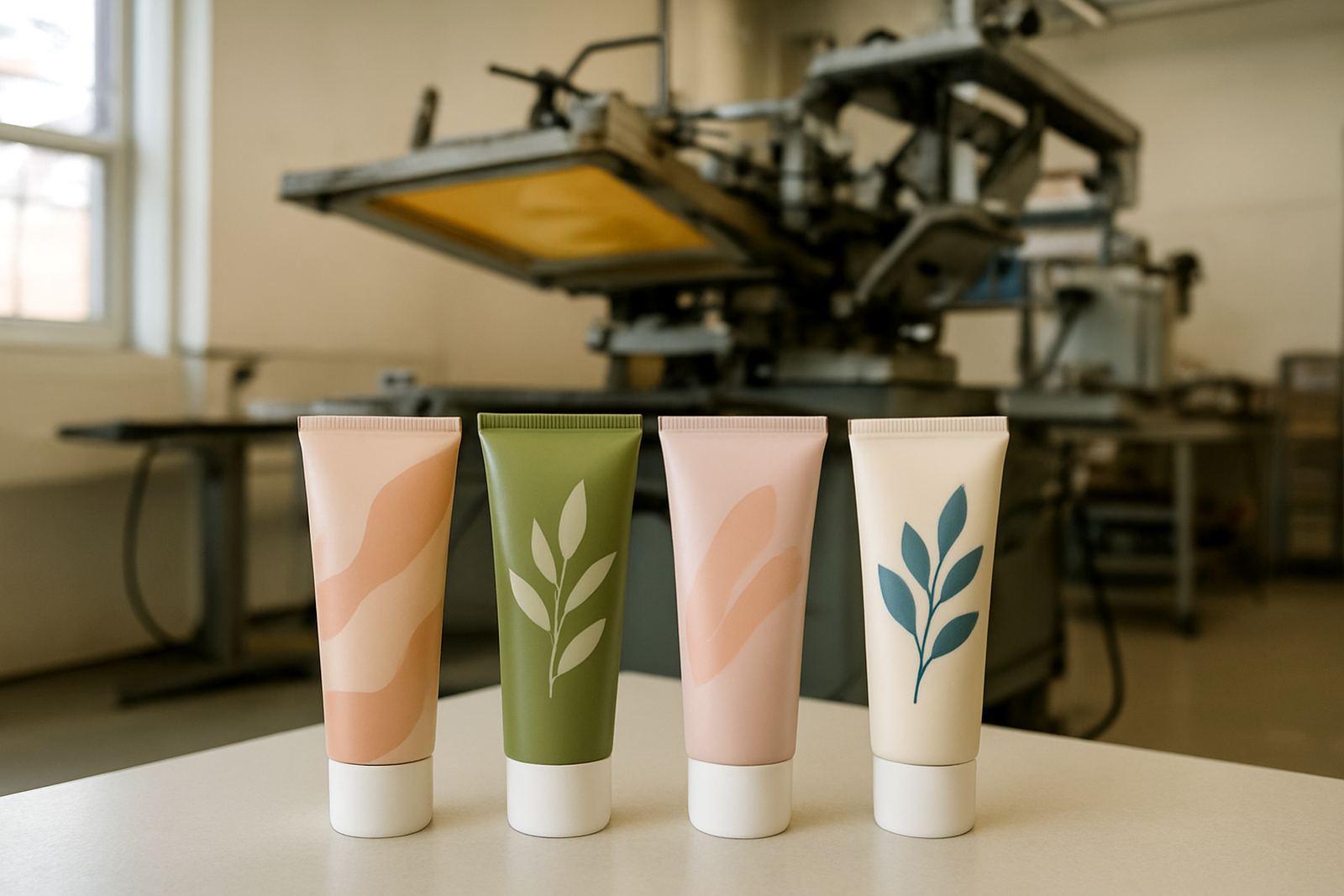
Cosmetic tubes are light, flexible and often printed on curved surfaces with narrow diameter changes, so the print process has to be controlled from the start. A small shift in tube position can cause logo drift, poor registration or a weak cure, which is why many businesses move away from hand methods once volumes grow beyond short runs.
For creams, gels and skincare packaging, the usual client situation is simple enough: the product is working, orders are rising, and the packaging must look consistent from the first tube to the last. That may be for private label brands, contract fillers, salon ranges or retail packs. In Johannesburg, Pretoria, Durban and Cape Town, we often see teams wanting one machine that can handle different tube lengths without constant re-set time, because production windows are tight and labour needs to be planned carefully.
Typical equipment set for cosmetic tubes
A practical tube-printing line usually starts with a cylindrical screen-printing machine matched to the tube diameter and print area. For cosmetic tubes, the machine should hold the product firmly without flattening it, and it should keep the print head and rotation timing steady. Screen frames, squeegees and ink handling gear are part of the set too, along with drying or curing space sized for the ink system in use.
- Cylindrical screen-printing machine sized for small to medium diameter tubes
- Print screens prepared for one colour or multiple colour jobs
- Jigs or holders for different tube lengths and cap styles
- Curing or drying arrangement for the ink type and line speed
- Cleaning station for reclaiming screens and managing changeovers
For smaller operations, one machine with a careful changeover process can be enough. Larger plants often need a second station for screen making or reclaiming so that production does not stop while new artwork is being prepared. A Durban team dealing with coastal humidity may also need better drying control than a dry inland site, because damp air can slow ink performance and affect curing times.
Layout and planning in an Aeroton or factory setting
Before installing equipment, plan the room around the product flow, not just around the machine footprint. Tubes should come in one side, be printed, then move directly to curing, inspection and packing without crossing foot traffic. That sounds basic but many stoppages start with poor layout and not with the machine itself.
In Johannesburg South and Midrand, power interruptions are still a fact of life, so it helps to allow for load-shedding backup where air, drying or curing depends on power. The machine area should also be level, dust controlled and easy to clean because skincare packaging shows handling marks quickly. If your site is near municipal inspection requirements or a shared industrial park, allow space for safe solvent storage, fire control and waste handling from the start, not after the first audit.
- Leave enough clearance for loading and offloading cartons of tubes
- Keep screens and inks in a dry lockable room
- Plan for backup power if drying or curing cannot stop mid-shift
- Separate clean packing from dirty reclaim or wash-down areas
What customers often get wrong with cosmetic tube jobs
One common mistake is choosing a machine only on price and not on tube range. A printer that suits a narrow lotion tube may struggle with a wider gel pack, and that means poor grip, misfeed or wasted stock. Another mistake is expecting one screen to cover too many artwork variations. Fine text, small skincare claims and batch coding need proper separation, otherwise the print looks muddy.
We also see teams underestimating training. A good operator can spot ink flow issues, registration drift and dirty screens early, but only if the team has been shown how to set the job correctly. Preventive maintenance matters too. Worn bearings, dirty guides or tired drive parts do not always stop the machine immediately, but they do affect print quality over time. That ends up costing more than the service visit would have.
- Buying for one tube size and then adding new sizes without checking compatibility
- Skipping colour setup support on first production runs
- Using screens past their useful life instead of reclaiming properly
- Ignoring curing time when packing volumes increase
Budget ranges for tube printing in Rand
Budget depends on whether you need only the print machine, or a full production setup with training, screens, setup help and maintenance planning. As a working guide, entry-level tube-printing setups for smaller cosmetic ranges can start in the lower tens of thousands of Rand, while more capable lines with better control, multiple holders and supporting equipment move into the mid to higher hundreds of thousands. The final figure depends on print width, speed, automation and how much manual handling remains.
It is worth budgeting for the whole job, not only the machine price. That includes site setup, operator training, spare parts, screen-making consumables, and a first-round service plan. A business in Cape Town or Durban may also need more time on drying and storage controls because of humidity, while inland sites may spend more on stable power support. Either way, a realistic budget should cover the first 3 months of production, because that is when most adjustments are made.
Support from Aeroton to sites across South Africa
Bottle Screen Printers is based in Aeroton, Johannesburg and supports installs nationwide, with regular work in Johannesburg South, Midrand, Pretoria, Durban and Cape Town. The team includes Thabo Mokoena, Naledi Khumalo, Johan van der Merwe, Anele Dlamini, Farieda Jacobs and Sibusiso Nene, so clients get help with machine installation, site setup, operator training, screen making, screen reclaiming, preventive maintenance, breakdown repairs, spares supply, colour setup help and production optimising.
For cosmetic tubes, that support is useful because the process usually improves once the first production issues are solved. A better holder here, a cleaner screen there, or a changed drying time can make a noticeable difference to yield and finish. If you are setting up a new line or replacing an older setup, send your tube size, artwork count and expected volumes through our contact form so the equipment match can be planned properly.