Brief From a Local Beverage Pack House
The client was a bottled drinks packer in Johannesburg South, supplying a mix of still drinks and flavoured beverages into retail and promotional channels. They needed screen printing support for cylindrical bottles used on a line that changed formats often, with batches ranging from small promotional runs to steadier repeat orders.
The brief was straightforward: keep colour matching consistent from run to run, reduce stoppages during changeovers, and make sure the print sat cleanly on curved bottle bodies. The team also wanted a process that could cope with a busy production room, where operators had to work quickly without losing print quality.
- Product type: cylindrical drink bottles
- Run style: short to medium production cycles
- Main goal: repeat colour and registration control
- Location: Aeroton, Johannesburg
What Made the Job Tricky
Short runs sound simple, but they put pressure on setup time and consistency. Every stop for a colour shift or screen clean can eat into output, and on bottle work a small alignment error shows up fast. The site also dealt with load-shedding planning, so the equipment needed to restart cleanly after interruptions without wasting product.
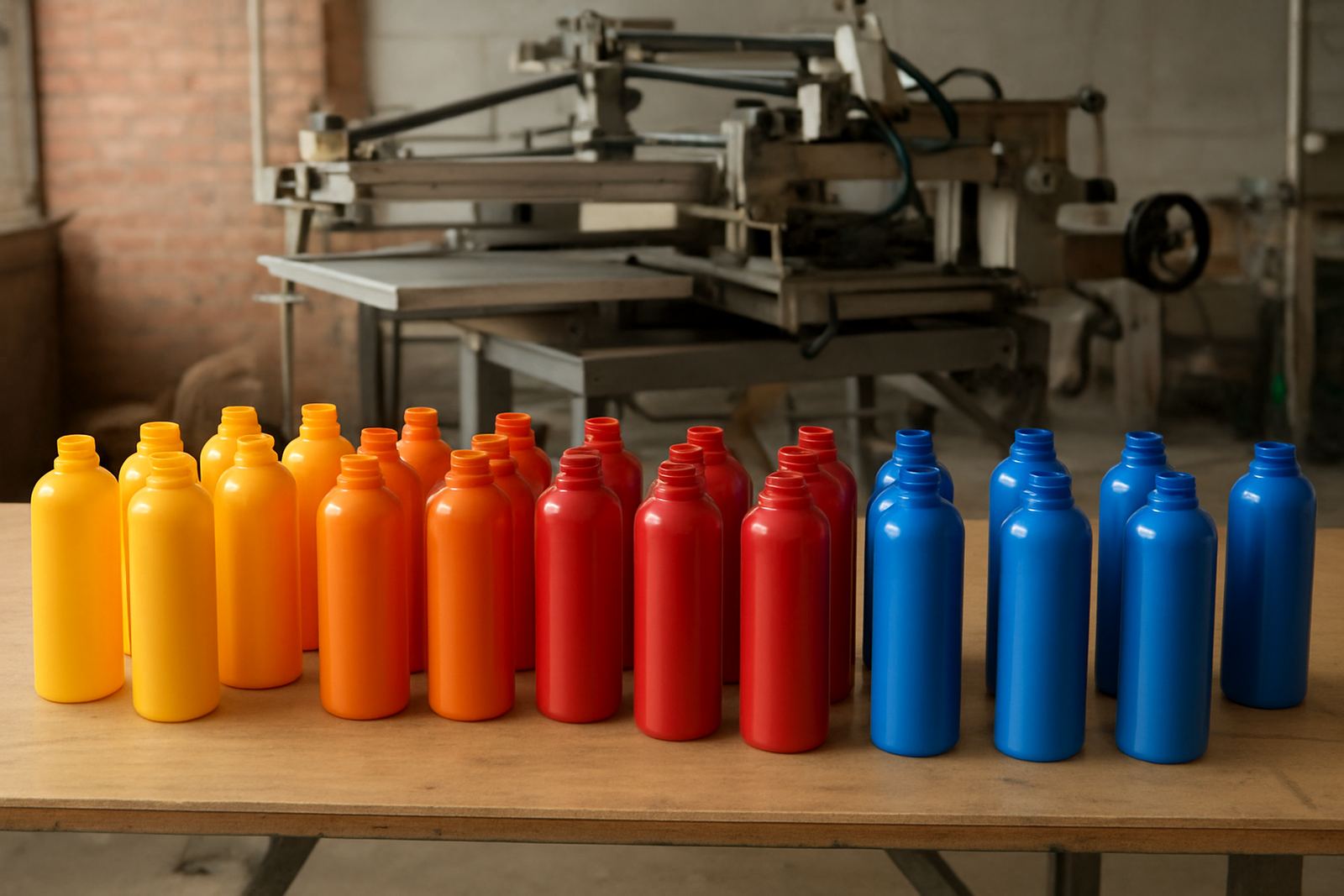
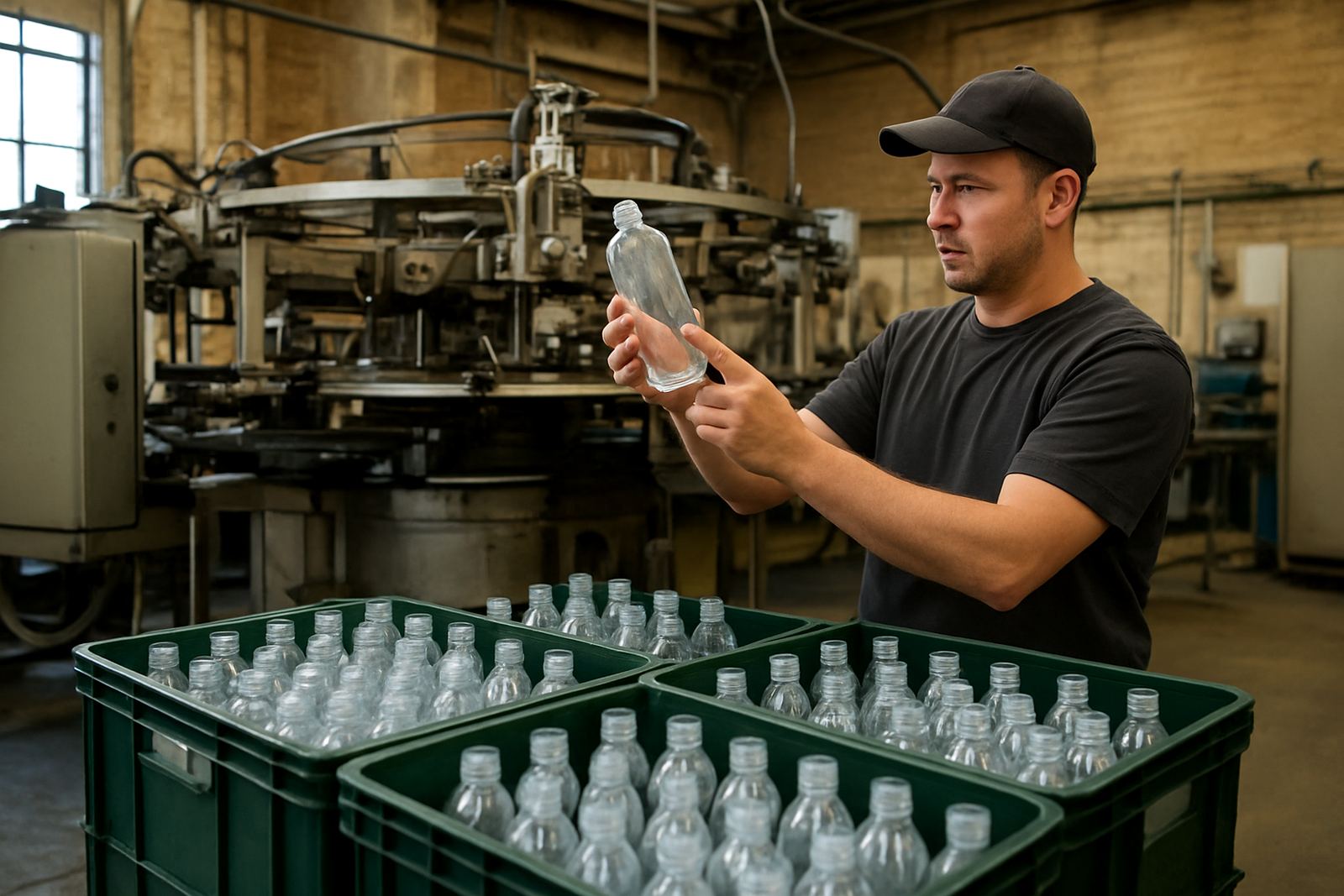
Humidity from the coastal stock moved through the supply chain too, so ink behaviour and screen condition had to be watched closely. The client needed reliable printing on smooth PET and coated glass surfaces, plus enough flexibility to handle different bottle diameters without constant rework.
- Typical bottle sizes: 330 ml, 500 ml and 1 litre
- Print area: one to two colour panels on the body
- Constraint: fast changeovers between SKUs
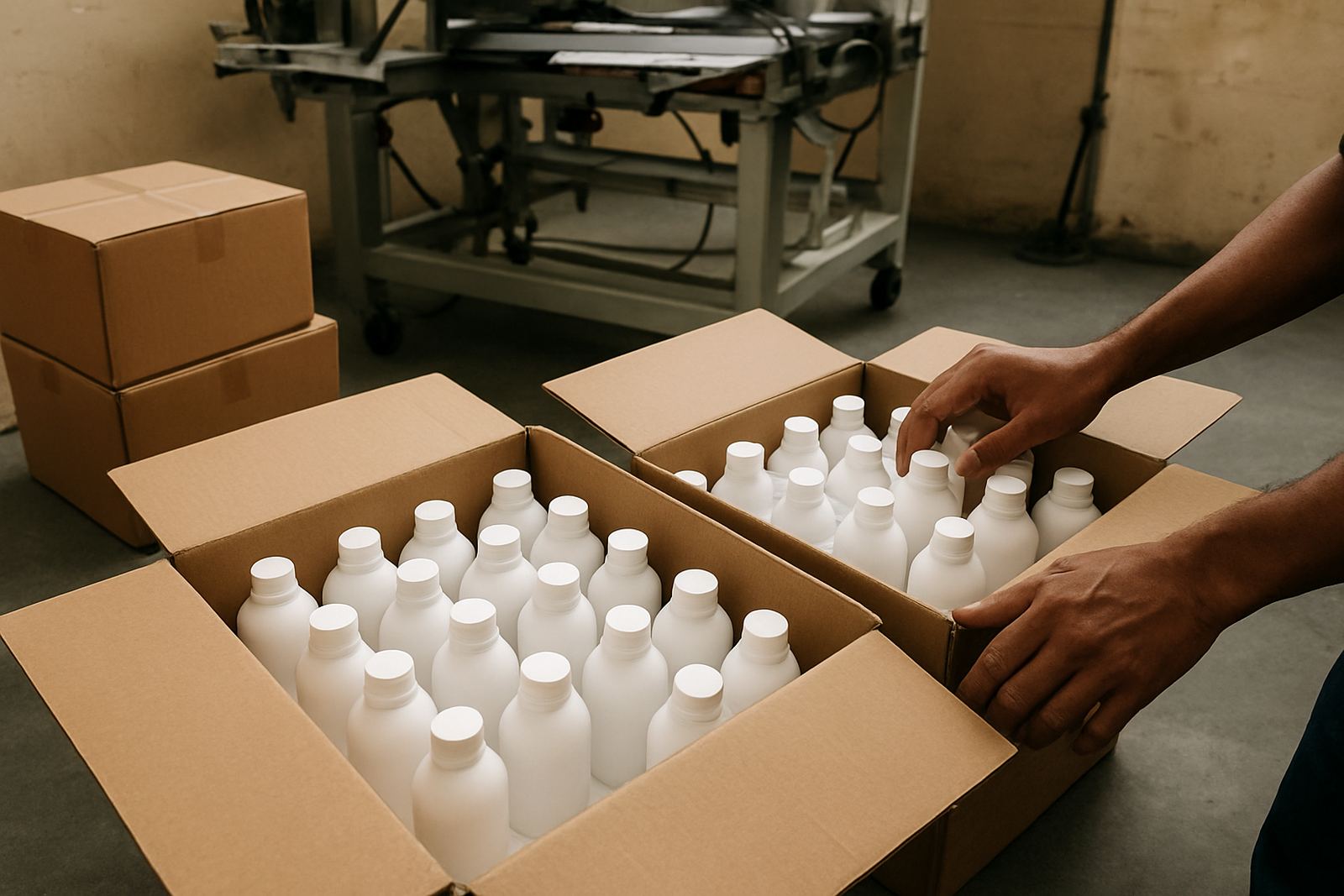
- Concern: print wear during packing and delivery
Equipment Supplied And Setup Done On Site
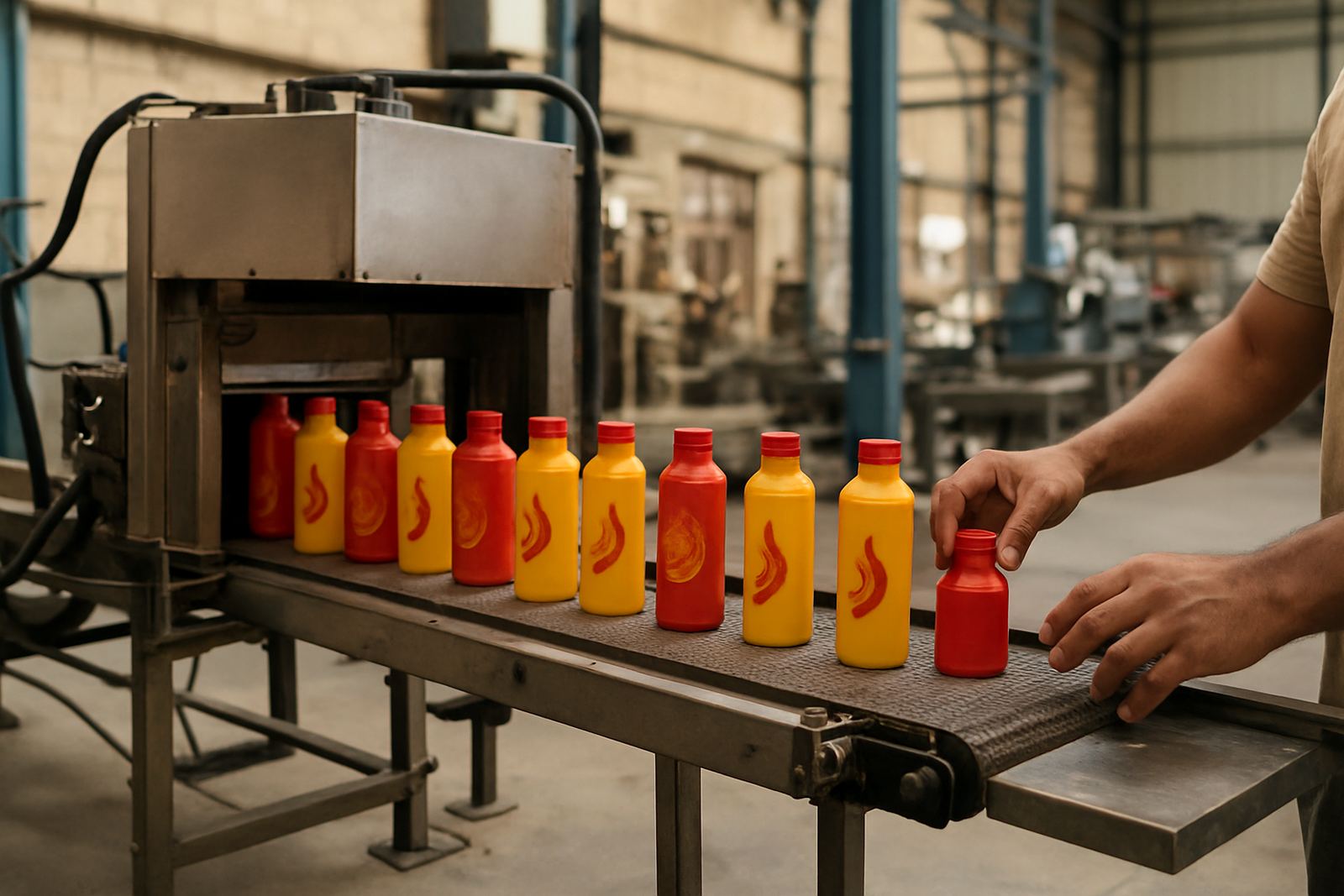
We supplied a cylindrical screen-printing setup suited to bottles and tubes, along with matching screens, support fittings and colour setup guidance. The machine was positioned in the production flow so that bottles could move from prep to print to drying without unnecessary lifting or handling. That saved time and reduced the risk of scuffing on fresh prints.
Site setup included levelling, checking power requirements, and confirming safe working space around the unit. We also helped the team set the squeegee pressure, off-contact and registration points for the main bottle sizes. One of the main targets was consistency over speed, not just pushing more bottles through.
- Cylindrical print unit configured for bottle bodies
- Custom screens prepared for repeat artwork use
- Operator controls set for cleaner repeatability
- Layout planned for practical maintenance access
Training For The Crew And Colour Control
Once the machine was in place, we spent time with the operators and supervisors on screen prep, registration checks and basic fault spotting. The client did not need a theory lesson, they needed working habits that held up on a busy floor. Farieda handled the production training focus, while the technical team helped with colour setup and fine adjustments.
We showed the crew how to watch ink build, keep an eye on screen tension, and manage wipe frequency so the print stayed sharp across the batch. There was also practical guidance on reclaiming screens after a run so they could be reused without losing detail or causing ghosting on the next job.
- Operator training completed over two sessions
- Screen reclaiming method standardised
- Colour setup checks documented for repeat orders
- Basic maintenance routine assigned to line staff
Timeline From Start To First Good Run
The project took three weeks from first assessment to stable production output. Week one covered the site visit, job sizing and final equipment confirmation. Week two covered delivery, install and power checks. Week three focused on test prints, colour setting and operator handover until the results were repeatable.
By the end of the third week the client was printing the core bottle range with less downtime between batches. The team could move from one order to the next more quickly, and the print quality held steady enough for regular packing without extra sorting. A small adjustment here and there was still needed, but that is normal on short run work.
- Week 1: assessment and machine match-up
- Week 2: installation and site setup
- Week 3: testing, training and handover
- Follow-up: service check after initial production
Results We Saw On The Floor
The main result was repeatable colour and cleaner registration across several bottle sizes. The client also cut down on start-up waste because set-up notes were kept in a practical format that the operators could use from one shift to the next. In a business where schedules change quickly, that kind of repeatability matters a lot.
There was also a better rhythm to the run order. Bottles moved through the print step with fewer pauses, and the team had a clearer idea of when to stop for a screen clean or a pressure check. The line did not suddenly become perfect, but it became easier to manage and easier to trust.
- Better colour consistency across repeat orders
- Less waste during start-up and changeover
- Cleaner handling of curved bottle surfaces
- Improved confidence for busy shift work
What We Would Repeat On The Next Bottle Project
If we were doing this again on another drink bottle project, we would keep the same approach: practical site planning, strong operator training and simple colour notes that live with the line. For short production cycles, that is usually better than over-complicating the process. The machine can do the work, but the crew needs clear settings and a routine they can repeat.
For sites in Johannesburg, Pretoria, Midrand, Durban or Cape Town, the same principles apply. Make the setup fit the packaging line, allow for power interruptions, and build a maintenance habit before the first busy week hits. Thabo and the team keep this kind of work grounded in real plant conditions, not just spec sheets.
- Plan around local power and shift patterns
- Keep screens and settings logged by product size
- Leave access for cleaning and maintenance
- Match the print process to the actual bottle supply
Key facts
| Project type | Bottle screen-printing setup for beverage packaging |
|---|---|
| Client location | Aeroton, Johannesburg South |
| Timeline | 3 weeks |
| Product formats | 330 ml, 500 ml and 1 litre bottles |
| Print application | Cylindrical screen printing on bottle bodies |
| Service scope | Installation, training, colour setup, screen making and support |