Food Jar Brief in Centurion
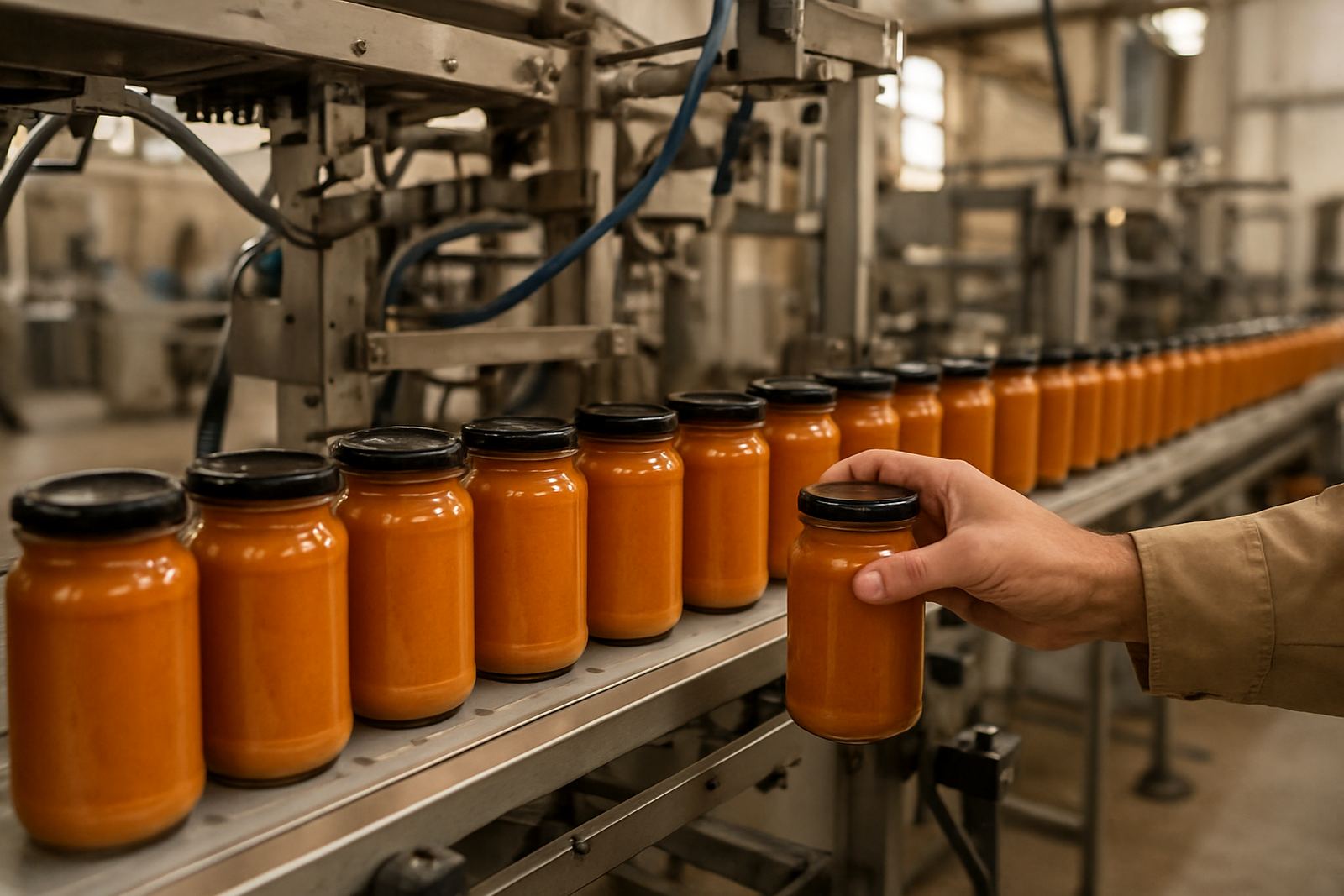
A food producer in Centurion needed a better way to mark clear cylindrical jars for retail and repeat orders. The jars were going out with labels that lifted at the edges in cold storage and looked untidy once the packs had been handled during distribution. The client wanted direct print on the body of the jar so the product would hold its look from packing right through to shelf display.
The brief was simple on paper but tight in practice. The print had to stay aligned around a curved surface, give a solid colour finish, and cope with the kind of day to day handling that comes with dispatch, stacking and transport. The jars were a standard food grade cylindrical format and the client needed a process that would work across multiple batches without constant readjustment.
- Project type: direct-print branding on cylindrical food jars
- Area: Centurion, Gauteng
- Container style: clear cylindrical jars with screw lids
- Outcome needed: neat retail presentation and repeatable print placement
Constraints on the Line
The main challenge was the jar shape and the print surface. Cylindrical containers can move a few millimetres during loading, and that small shift shows up quickly on artwork that must meet neatly at the seam. The client also needed a setup that could be managed by a small production team, with minimal down time and enough consistency to avoid rework.
Because this was food packaging, the plant also had to keep a clean working area and manage the process without exposing the containers to dust or handling marks. In Centurion, where many packing rooms run hard during the week, we also had to plan around load-shedding and make sure the equipment layout would still make sense if the client shifted between grid power and backup power. That part matters more than people think, and it saves hours later.
- Curved print surface needed accurate registration
- Short set-up time was important between jar sizes
- Equipment had to suit a clean packing environment
- Process needed to remain workable during power interruptions
What We Supplied and Set Up
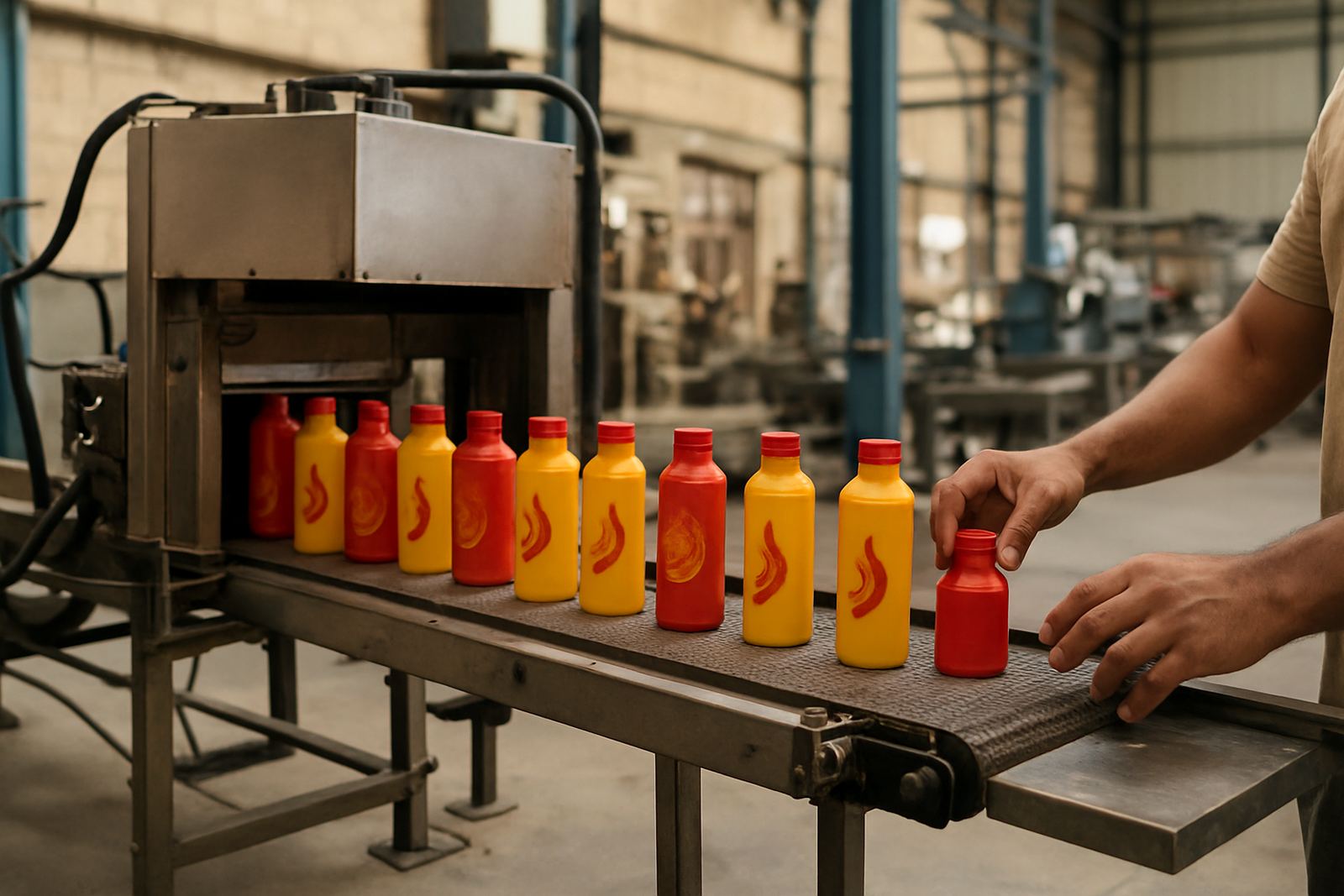
We supplied a cylindrical screen-printing machine sized for small to medium food jars, together with matched screens and the setup needed for direct print work. Our team handled site setup, machine installation and colour setup help on the day. We also checked the feed and offload positions so the jars could move through the print cycle without unnecessary contact on the decorated area.
Screen making was done for the jar artwork and we prepared the print area for the required repeat. For this job the client wanted a crisp single-colour identity mark, with enough ink deposit to remain visible on clear packaging. The print needed to look clean from a normal retail viewing distance, not just under workshop lights. We set the machine for a 360 degree cylindrical pass and tested the repeat until the seam sat where it should.
Our team also walked the operators through basic screen reclaiming and cleaning so the same setup could be put back into service with less waste. Training covered load position, off-contact checks, squeegee pressure, and how to spot a small registration drift before it turns into rejected stock.
Timeline and Installation in Weeks
The project ran over three weeks from first assessment to production handover. Week one was the site review, artwork check and confirmation of jar dimensions. Week two covered screen making, machine preparation and delivery planning. Week three was installation, operator training and live printing with the client team present. That sequence kept the work tight and reduced the risk of surprises on install day.
Once the machine was in place, our technician checked the base levelling, print stroke and drying position. We also spent time with the production team on safe handling around wet prints so the fresh ink did not pick up marks while the jars moved down the line. The client wanted a practical setup, not a fancy one, just something that would run every morning without drama.
- Week 1: site assessment and jar measurements
- Week 2: screen making and machine preparation
- Week 3: installation, training and test production
- Total: 3 weeks from first visit to handover
Results on the Finished Jars
The final print gave the jars a much cleaner shelf look. The brand mark sat straight on the curve of the container, with even colour coverage and better visual consistency across the batch. The client also gained more control over repeat production, which matters when the same jar format is used for different flavours or pack sizes. It means the line can keep moving without constant changeovers or label stock issues.
From a production point of view, the biggest gain was confidence. The operators could set up the job, check registration and keep the output steady. There was less handling damage and no edge lift because the branding was now printed directly onto the jar body. For a food product sold in Gauteng and beyond, that kind of finish helps the pack look more professional on shelf and in the box.
- Cleaner presentation for retail display
- Better repeatability from batch to batch
- Less handling damage than applied labels
- Simple enough for the client team to run after training
What We Would Do Again
We would use the same approach again for any client printing straight onto cylindrical food jars, cups or tubes. The combination of correct screen prep, proper machine levelling and practical operator training gives the best result for this kind of packaging. It also helps to build in a short test period before full run production, because even a good jar can behave differently once the line speed changes.
For food packers in Centurion, Pretoria, Midrand and the rest of Gauteng, the main lesson is to plan the print process around the real conditions on site. If the packing room is warm, if the jars vary a little in mould finish, or if power stability is not ideal, those things should be allowed for from the start. That is how you keep the job neat and avoid rework. We keep spares, screens and support on hand for exactly that reason, so a business is not left waiting when production picks up again after a stop.
If you need direct print equipment for bottles, cups or jars, we can assist with machine installation, screen making, operator training and follow up support from Aeroton in Johannesburg.
Key facts
| Project location | Centurion, Gauteng |
|---|---|
| Container type | Cylindrical food jars |
| Print method | Direct screen print |
| Timeline | 3 weeks |
| Supplied | Machine, screens and setup support |
| Service scope | Installation, training and production support |