Why mandrel size changes the print result
A mandrel holds the tube steady while the print head and screen do their work. If the fit is too loose, the tube can twist or walk during the stroke. If it is too tight, the tube can distort or sit under strain, which shows up as uneven ink laydown and poor repeatability.
On cylindrical work, the tube needs to sit square and true from start to finish. That matters whether you are printing cosmetic tubes, food packaging, sample containers or industrial sleeves. A good fit supports the wall of the tube without crushing it, and that helps keep the print line clean all the way around.
In practice, many print faults blamed on ink or screen tension start with poor mandrel selection. The wrong diameter, the wrong length, or a worn support surface can all change how the product behaves under pressure. If your output varies from the first piece to the last, the mandrel is one of the first things to check.
Matching tube diameter, wall thickness and material
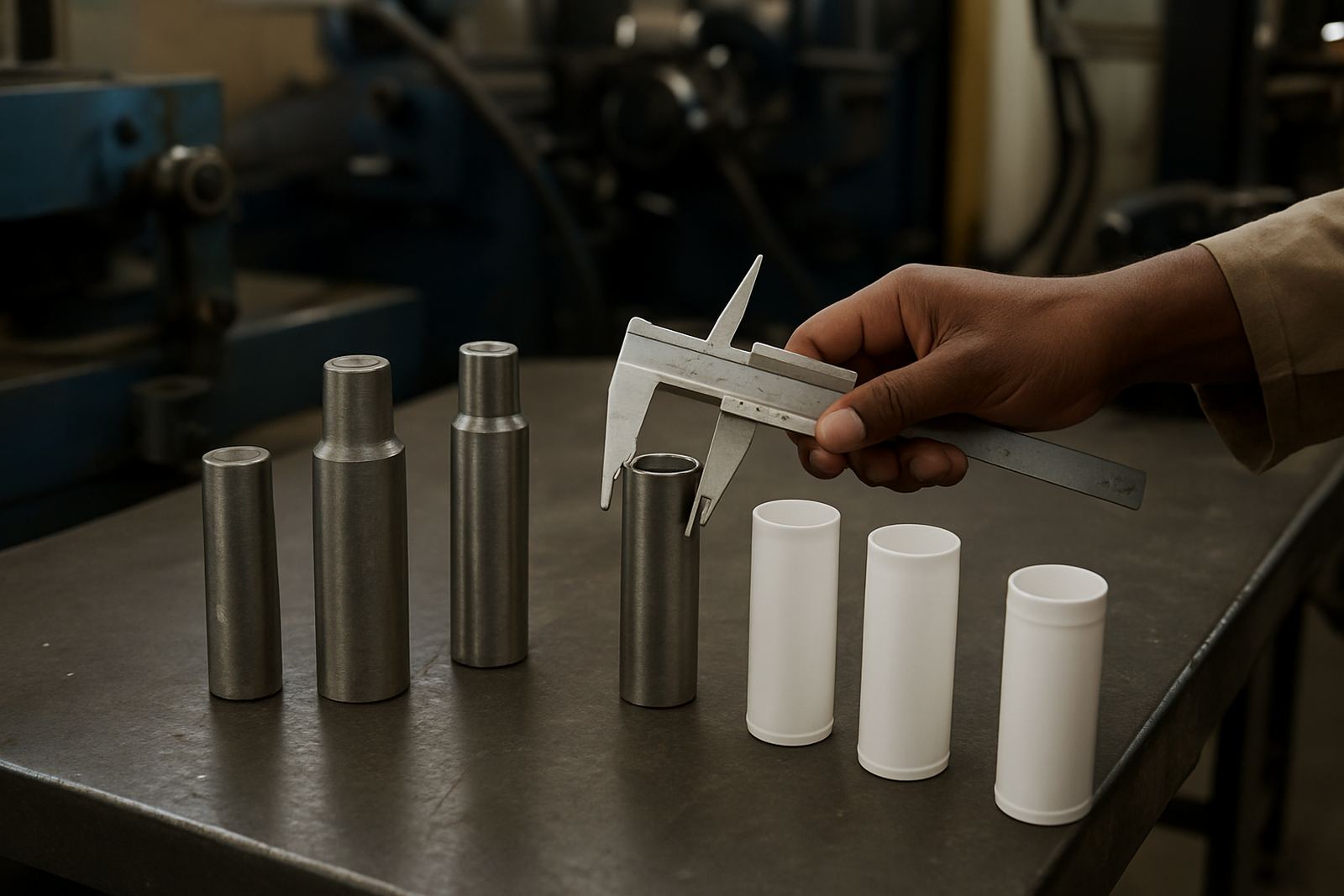
Tube size is not just about outside diameter. You also need to think about wall thickness, material softness and how much the tube flexes under clamping. A soft plastic tube may need gentler support than a rigid container, while a thin wall can collapse if the mandrel design pushes too hard on the inner surface.
As a rule, the mandrel should support the tube evenly along the print zone. That means the contact points must suit the tube shape, especially where there is a shoulder, cap thread or tapered section. A straight mandrel used on a slightly tapered tube can leave the print sitting off-centre by the end of the run.
For mixed production, it helps to keep a simple size schedule with inner diameter, usable length and material type. That makes changeovers quicker and reduces guesswork when operators are setting up a new job before a load shedding window closes and the shift has to keep moving.
- Measure the tube at more than one point, not only at the mouth.
- Check the usable print length against the mandrel support length.
- Allow for softer materials that expand or flex during rotation.
- Keep a record of jobs that need a special support profile.
Signs the mandrel is wrong on the day
Most production teams notice the signs before they know the cause. A tube that lifts slightly on one side, a repeating drag mark, or a print that shifts after a few cycles can point to mandrel mismatch. In some cases the operator keeps adjusting pressure, but the real issue is the support underneath the tube.
You may also see more rejects in humid coastal conditions, where some materials behave differently during storage and handling. Durban customers often mention that a tube which ran fine in the morning can start moving more by afternoon if the stock has warmed up or picked up moisture during the day.
Look out for these warning signs:
- Registration drifting from one print to the next
- Ink heavier on one side of the image
- Surface scuffing or shine marks on the tube
- Tube slipping during start-up or stop cycles
- Extra vibration when the mandrel turns
How selection affects finish, cure and repeatability
A stable mandrel gives the print more than support. It helps the ink film stay even, which improves colour consistency and reduces the chance of pinholes or edge break-up. When the tube does not move during the print, the finish is cleaner and the artwork looks sharper after curing or drying.
Repeatability matters when you are running larger batches. If one tube sits slightly higher than the next, your screen contact changes every time and that can alter ink deposit. Over a 5,000 unit run that small error becomes a real cost in wastage and rework.
For teams working in Johannesburg South, Midrand or Pretoria, stable mandrel setup also helps when power interruptions break the production rhythm. When a machine restarts, you want the product to locate in the same position without a fresh round of trial and error.
Practical setup checks before the first production run
Before sign-off on a new tube job, check the mandrel with the same care you give the screen and ink mix. The aim is simple: make sure the tube sits correctly, rotates without wobble and returns to the same position after each cycle. A few minutes here can save hours later.
Use a clean mandrel surface, confirm the locating points are not worn, and test with a small batch before full production. If the job has a tight registration requirement, run three to five pieces and inspect them under the same light your customer will use on the shelf or counter.
- Confirm the tube slides on without force but does not rattle.
- Check end stops and locating pins for wear.
- Run a short sample and compare left-to-right print alignment.
- Inspect for marks after removal, especially on softer plastics.
If the sample changes after warm-up, the fit may be too loose or the support length too short. Small corrections at this stage are far cheaper than resetting a full order midway through the shift.
Local support for installations, training and repairs
For South African print rooms, mandrel selection is not something to leave to guesswork. The right support should suit the machine, the tube spec and the production pace. In a busy Aeroton workshop, or on-site in Cape Town, the best results usually come from matching the mandrel to the actual job conditions rather than relying on a generic part.
Bottle Screen Printers works with customers across Johannesburg, Durban, Pretoria and beyond on machine installation, site setup, operator training, screen making, screen reclaiming, preventive maintenance, breakdown repairs, spares supply, colour setup help and production optimising. That makes it easier to sort out a tube job that keeps shifting, or to set a new mandrel spec before production starts in earnest.
When the fit is right, the print stays steady, the finish looks cleaner and the line runs with less stop-start pressure on your team. That is the real value of proper mandrel selection, and it shows up in the product as well as the numbers.