Why a sample is cheaper than fixing a full batch
In cylindrical screen printing, the first print is rarely the final print. Substrate shape, wall thickness, ink choice, curing time, and the way the container sits in the machine all affect the result. A sample lets you check these variables while you still have time to correct them. That matters whether you are printing 200 tubes for a cosmetic launch or 5 000 bottles for a beverage promotion.
For many South African businesses, the real cost is not the sample itself, it is the waste that comes from moving too fast. Reprints, rejected stock, and delivery delays add up quickly, especially when a client is waiting on a launch date or a retail handover. A sample reduces that risk and gives both sides a clear point of approval.
- Check colour match before the full run starts
- Confirm the print position around the curve of the container
- Test drying or curing under your actual production conditions
- Spot issues with ink adhesion on plastic, glass, or coated surfaces
What to look for on the first printed sample
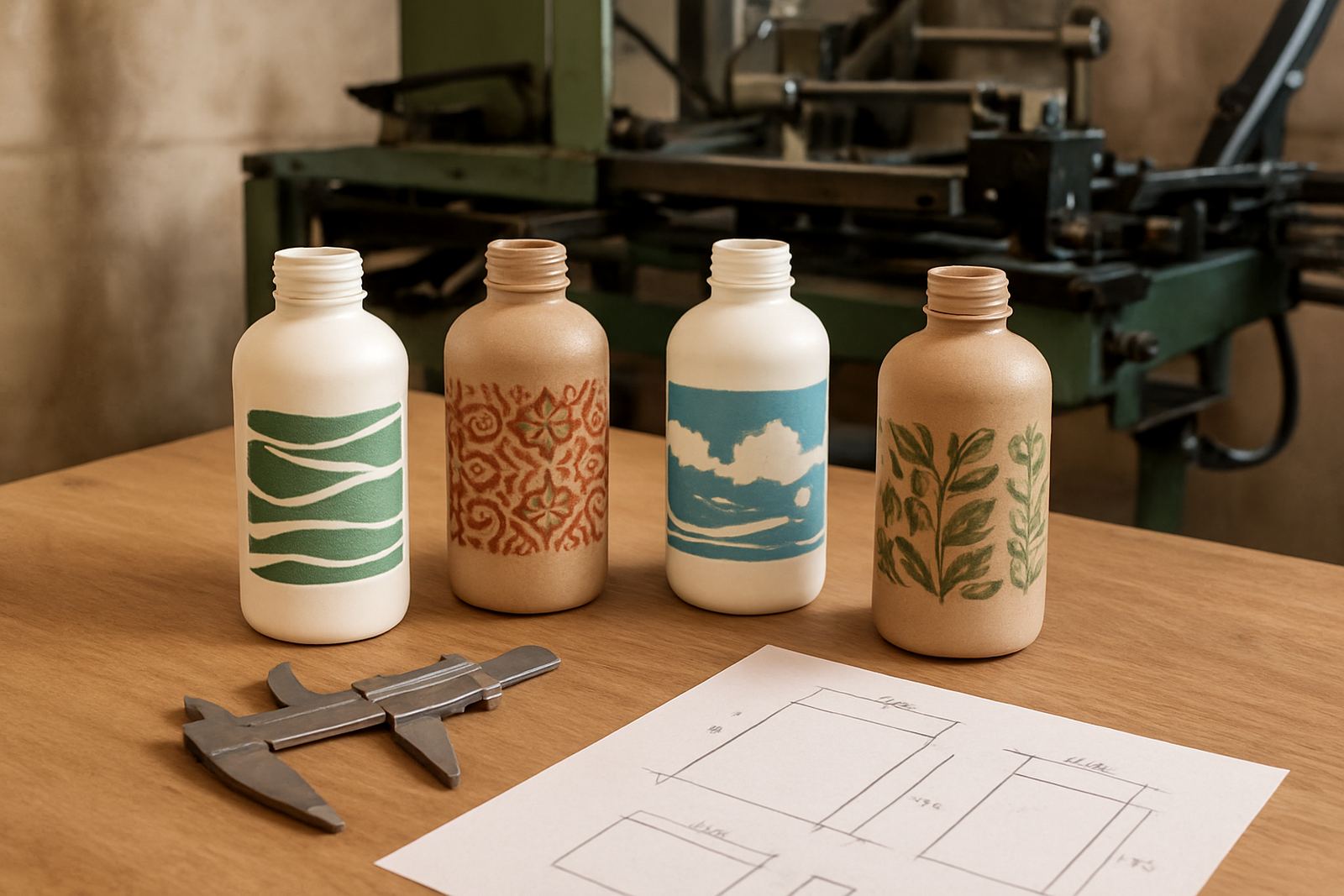
A sample should be judged as a working production tool, not just a pretty piece. Look closely at the edge of the print, the opacity of the ink, and whether the design stays true as the container rotates. A logo can look fine on a flat proof and still distort once it wraps around a curved bottle. That is why a proper sample matters.
If the job uses more than one colour, check how the colours sit together. Misalignment by even a small amount can be obvious on a gloss bottle or a bright cup. In humid areas like Durban or Cape Town, drying behaviour can also change through the day, so a sample helps you understand how the ink behaves in your own workshop, not only under ideal conditions.
- Registration and overlap between colours
- Ink coverage on textured or glossy surfaces
- Resistance to smudging after handling
- Drying time when the production area is warm or damp
How sampling helps clients approve with confidence
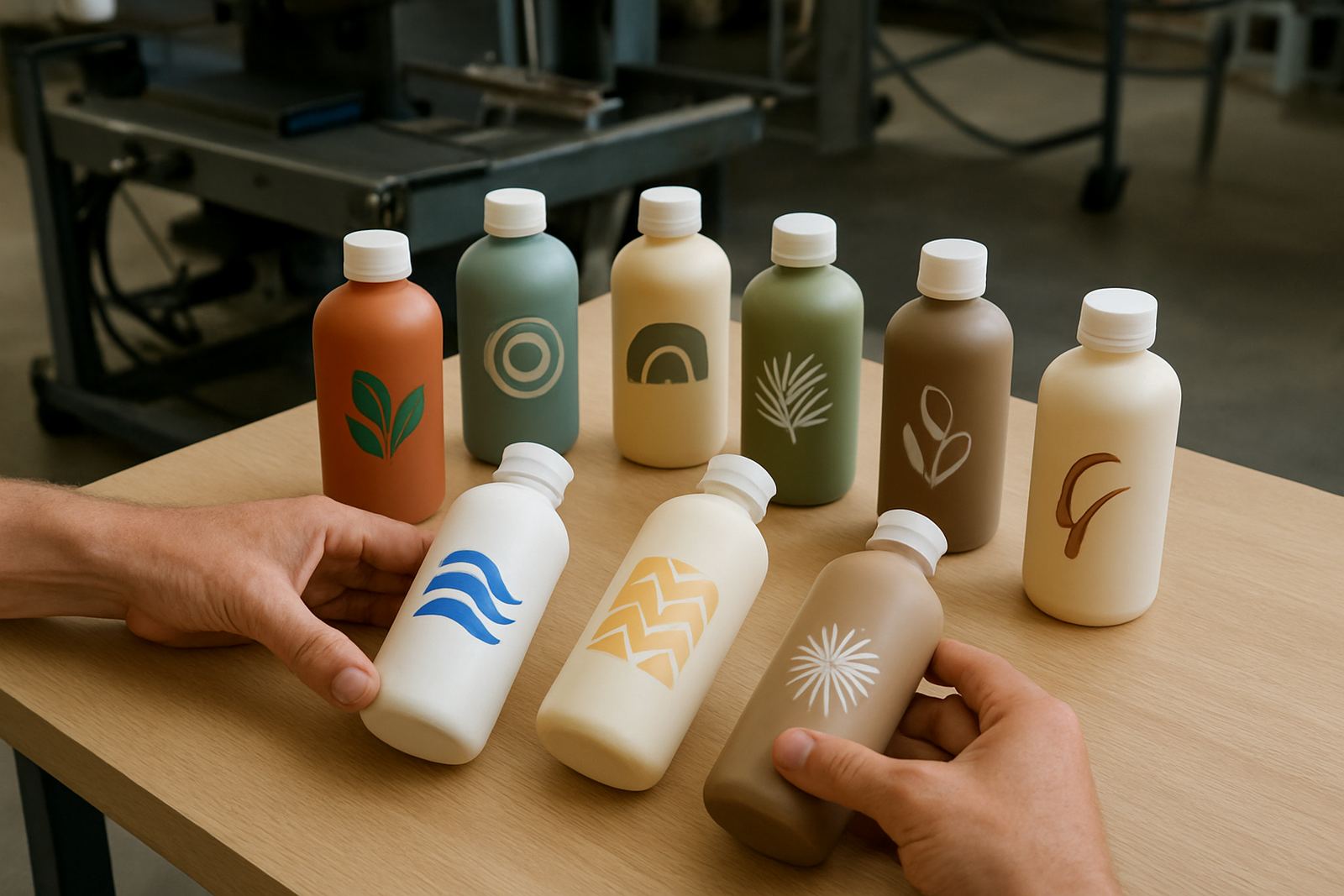
Client approval becomes much easier when they can hold the finished sample in their hand. A PDF on a screen does not show gloss, texture, or how the print sits on a curved surface. A physical sample answers the questions that usually slow sign-off, such as whether the logo is too large, whether the text is readable, or whether the colour feels right on the material.
This is especially useful for agencies, resellers, and in-house marketing teams that need sign-off from more than one person. Instead of going back and forth with comments, you can send one sample and get a clear yes or no. It saves time and keeps the project moving, which is important when a launch date is tied to a trade show, seasonal promotion, or retail supply window.
In our experience, approval runs smoother when the sample is labelled clearly with the product name, ink mix, print position, and any curing notes. That way, nobody has to guess what was approved later on.
- Fewer revision cycles
- Less confusion between mock-up and production art
- Clear sign-off for colour, size, and placement
- Better records if the same job is repeated later
A Johannesburg sample run can save a national rollout
Consider a packaging supplier in Aeroton preparing a nationwide order for branded water bottles. The client wants the same logo printed onto three container sizes, with delivery going to Johannesburg, Pretoria, Durban, and Cape Town. Without a sample, the team might discover too late that the smallest bottle needs a different print wrap or that the darker container needs an extra hit of ink for good coverage.
By running a sample first, the supplier can confirm the settings, show the customer the real output, and avoid sending out a full batch that misses the mark. For a business working around load-shedding, that is also practical. If power interruptions affect your schedule, it is better to discover a setup issue on ten units than on a pallet.
Sampling also helps when you are planning delivery by branch or by municipality. Some clients need product for a council event, a school programme, or a retail chain with strict intake dates. One approved sample gives everyone a shared reference before the run begins.
- Save setup time on repeat jobs
- Reduce waste when multiple sizes are involved
- Plan curing and packing around load-shedding windows
- Keep delivery dates realistic across provinces
The sample process should match the real job
A useful sample is made with the same ink, screens, setup, and container type that will be used in production. If the sample is done with a different material or different drying method, it can give false confidence. That is a common mistake, and it leads to surprises later. A proper sample must reflect the actual job as closely as possible.
It also helps to include the same operator who will run the batch, or at least the same setup notes. Small differences in screen tension, squeegee pressure, or container alignment can change the result. When the sample is printed properly, it becomes a working standard for the rest of the run and not just a one-off test.
For businesses printing bottles, cups, and tubes on a regular basis, keeping a sample on file is also useful for reorders. If a customer returns six months later, you can compare the new proof against the approved sample and get back to work faster.
Practical habits that make sample approval faster
Good sampling is not only about the machine. It is also about process. The faster the team can gather correct information, the quicker the sample can be approved and the full run can start. A clean handover between sales, production, and the client prevents the backtracking that slows jobs down.
Simple discipline goes a long way. Keep artwork versions named clearly, write down the product dimensions, and note the exact colour references used for the test. If the print is going onto a tube or curved bottle, mark the orientation too. That way the approved sample can be repeated without guesswork.
- Send artwork in one final version only
- Confirm container size and material before setup
- Record ink and curing notes with the sample
- Get written approval before running the balance of stock
At Bottle Screen Printers in Aeroton, Johannesburg, we see the same pattern across installs nationwide: the businesses that sample first waste less, argue less, and finish faster. It is a small step, but in a production environment it pays for itself quickly.