What Our Operator Training Covers
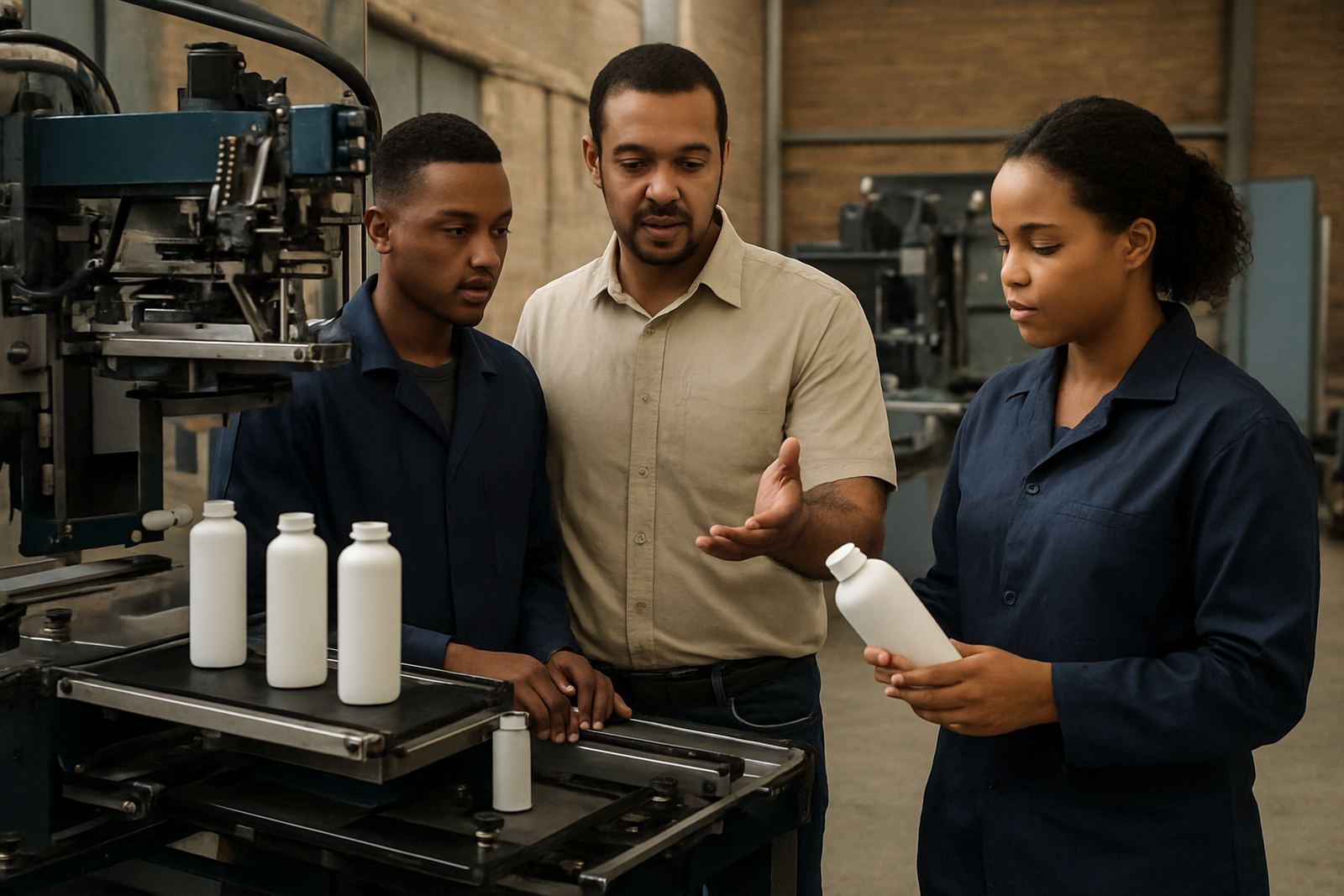
Training is practical and done on your actual machine wherever possible, so your operators learn the same motions they will use every day. We work through safe loading, bottle alignment, screen registration, ink flow, print pressure, curing checks and the basic daily care that keeps output steady. The goal is simple: fewer rejects, less wasted ink and more consistent prints from the first shift.
We train new staff as well as existing operators who need a refresher after a machine move, new product launch or change in artwork. For businesses in Johannesburg, Pretoria, Midrand, Durban or Cape Town, we can plan training around your production hours so you do not lose a full day of output.
- Loading and unloading cylindrical products without scuffing or slipping
- Registration set-up for repeat print jobs and multi-colour runs
- Curing checks for air, UV or heat-based drying systems
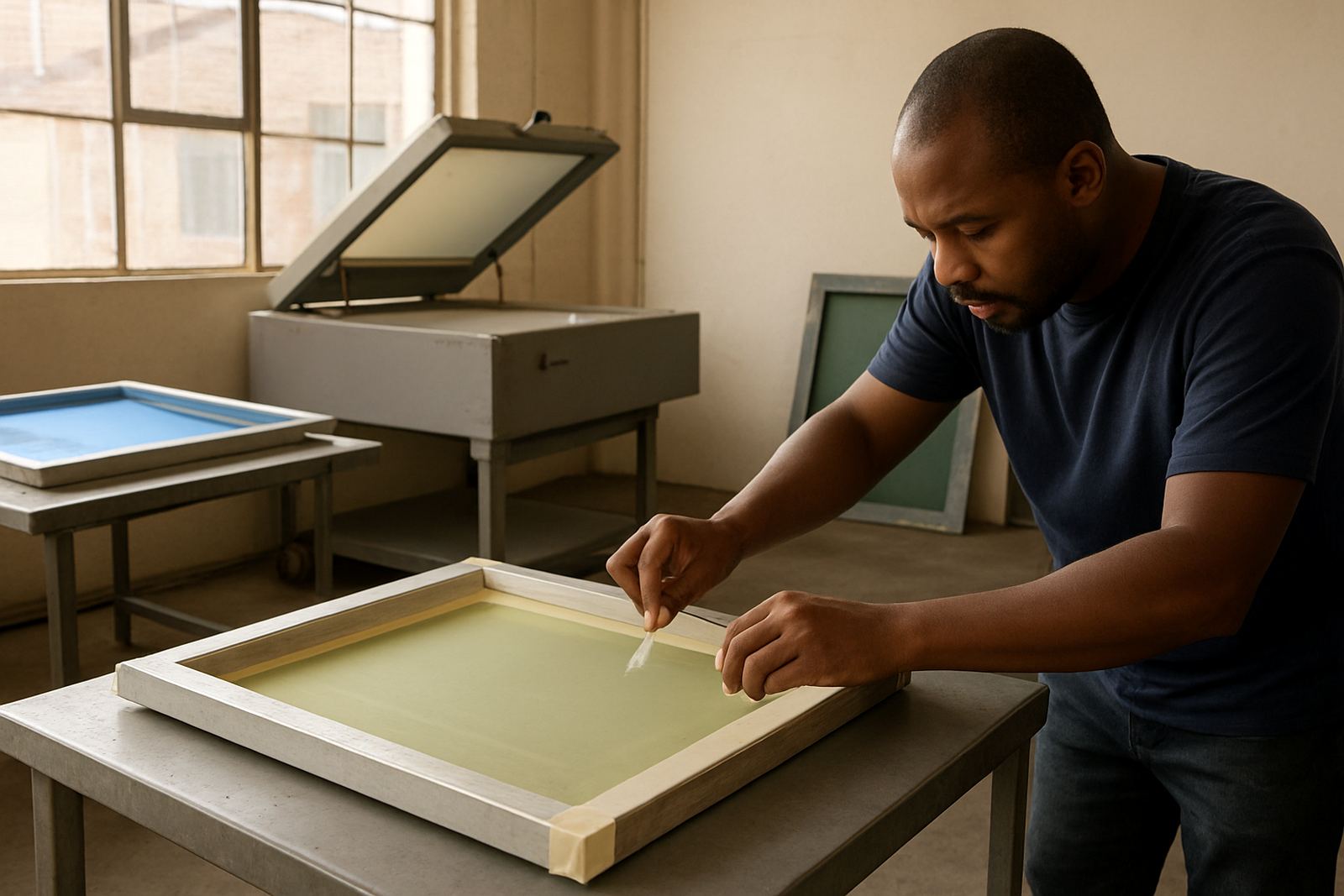
- Routine daily cleaning, lubrication and screen care
How We Run The Training Day
We start with a quick check of your machine, screens, ink and product samples. Then we move step by step through the full print cycle, showing your team what good setup looks like and where small errors usually start. The session is hands-on, not classroom theory, and operators are expected to load product, make adjustments and confirm print quality under supervision.
For larger sites in Aeroton, Johannesburg South, Pretoria industrial areas and coastal plants in Durban or Cape Town, we can split the session across two shifts if needed. That helps when load-shedding, supplier deliveries or production targets make it hard to release the whole team at once.
- Pre-training machine check and site assessment
- Demonstration on loading, registration and first-off approval
- Supervised operator practice with your own product range
- Final sign-off and a practical care checklist for supervisors
Training Specs And Product Types We Cover
Our operator training is suitable for cylindrical screen-printing machines used on bottles, cups, tubes and similar round containers. We work with manual, semi-automatic and selected automated set-ups, and we tailor the session to the size of your production line. If your team prints on PET, glass, coated aluminium or plastic tubes, we adjust the training to match the surface behaviour and drying needs.
In humid coastal areas, ink handling and drying times need extra attention, especially during winter mornings or after rain. We also show operators how to spot poor grip, image shift and cure issues before a run turns into scrap. A short missed setting can cost a lot by the end of a shift, so we focus on the details that matter.
- Product sizes typically from small tubes to large diameter bottles
- Single-colour and multi-colour screen print set-ups
- Manual feed, semi-auto feed and line integration basics
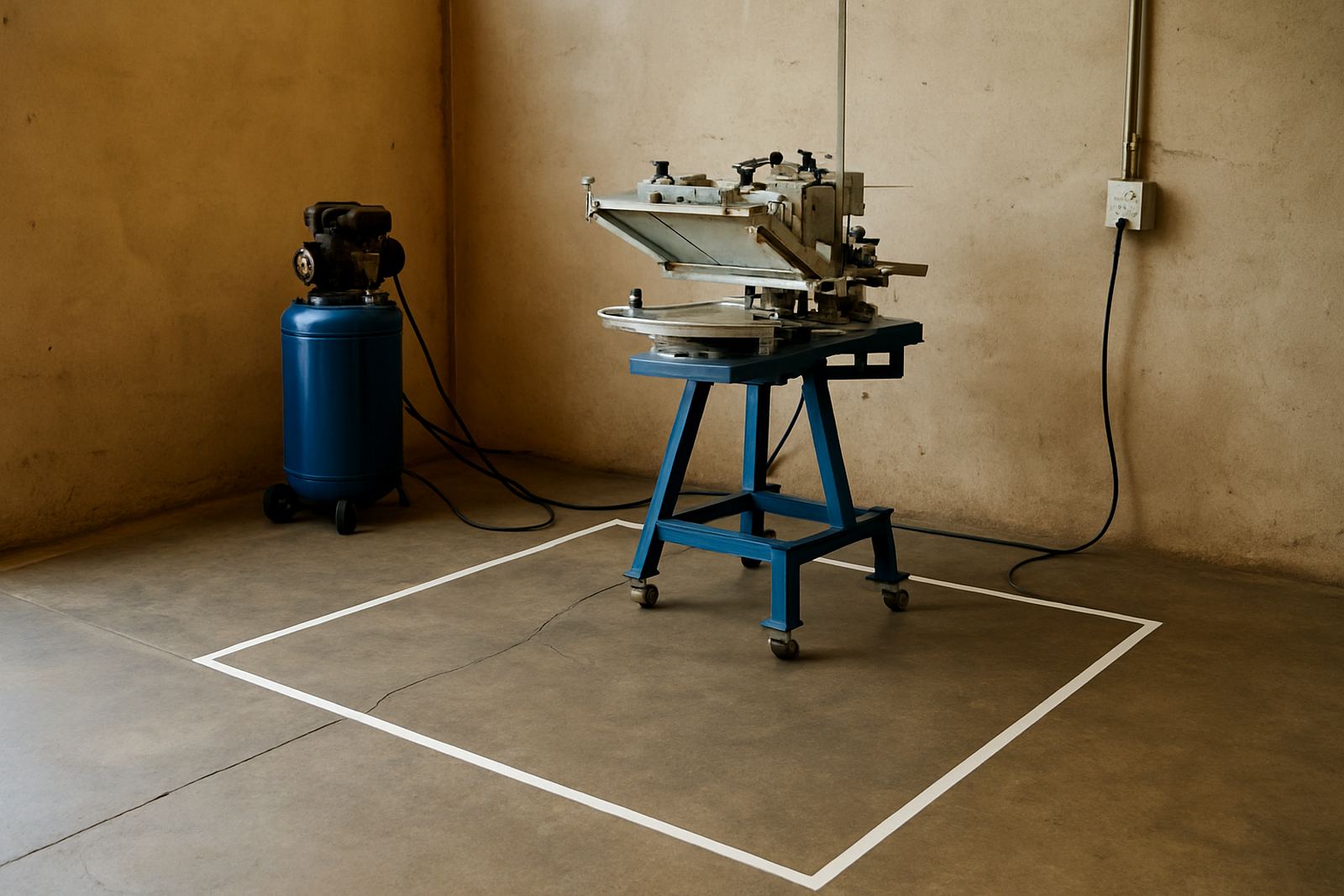
- Suitable for workshops with limited floor space and mixed production batches
Turnaround And Booking Timeframes
Most training bookings can be arranged within 3 to 7 working days, depending on travel, machine readiness and how many operators need to attend. If a site in Johannesburg or Pretoria already has equipment installed and ready, we can often schedule quicker. For coastal or out-of-town installs, the lead time may be slightly longer if we need to coordinate with your production plan.
A standard training session usually runs for half a day to a full day. Larger teams, new line start-ups or sites with more than one machine may need follow-up time. If you are reopening after shutdown or changing product sizes, we can also bundle training with maintenance checks so the machine is ready for the next run, not just the next lesson.
- Standard session: 4 to 8 hours
- Refresher session: 2 to 4 hours
- Multi-machine or multi-shift training: by arrangement
Pricing Approach That Fits Real Production
We price operator training according to the machine type, number of operators, site location and whether we need to include extra setup or troubleshooting. There is no one-size fee because a small Aeroton workshop with one operator is very different from a multi-line plant in Durban or Cape Town. Travel, after-hours work and weekend training can also affect the final cost.
Where possible, we keep pricing practical by combining training with installation, site setup or preventive maintenance. That saves you from paying for two separate visits. We quote clearly before the session starts, including any call-out or travel charges, so there are no surprises when the invoice lands.
- Quoted per session or per day, depending on scope
- Additional operators can be added at a set rate
- Follow-up refresher visits are priced lower than first-time training
Daily Care And Maintenance Intervals
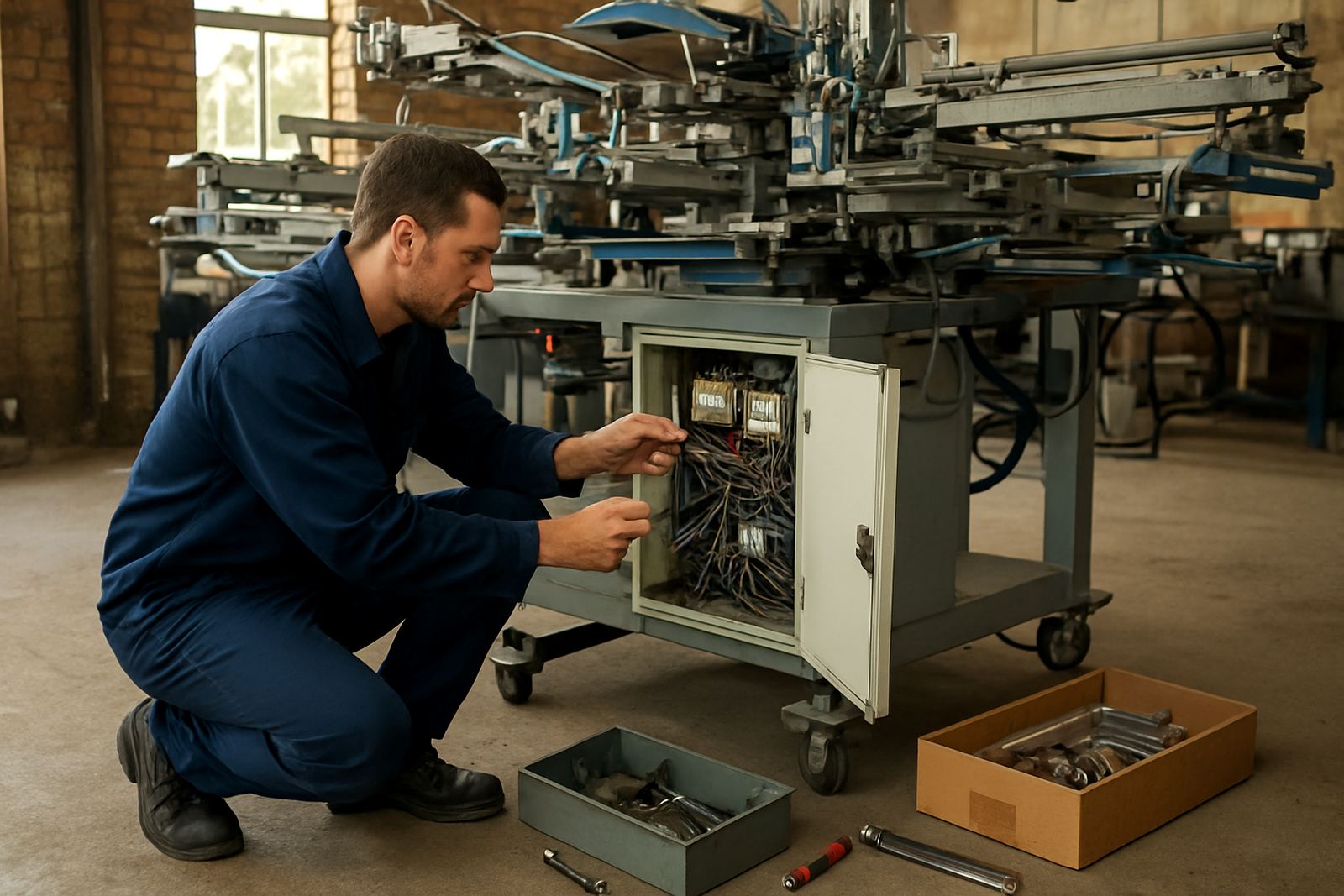
Good operators protect the machine as well as the print quality. We train your team on what must be done every shift, every week and every month so small issues do not become breakdowns. This is especially useful where power interruptions, dust or coastal humidity can affect screens, bearings and curing consistency.
After training, your supervisors should have a simple routine to follow. Daily cleaning and checks take only a few minutes but they make a real difference to print registration and machine life. We also advise on when to call for service rather than pushing a machine too hard and creating more damage.
- Daily: clean ink contact points, check clamps and remove residue
- Weekly: inspect alignment, belts, guides and moving parts
- Monthly: review wear items, lubrication and print consistency
- Every 6 to 12 months: planned service review, depending on usage
Why Training Matters For Busy South African Plants
When operators understand the machine properly, production becomes steadier and easier to manage. Teams can keep quality up during shift changes, train new staff faster and reduce waste on costly printed goods. It also helps when you need the line to keep moving during municipal outages, generator changeovers or tight delivery schedules.
Our training is led by people who work with this equipment every day, so the advice is practical and grounded in local conditions. If your business is based in Aeroton, Johannesburg South, Midrand, Pretoria, Durban or Cape Town, we can support your operators with clear instructions that fit the realities of South African production, not theory from far away.
- Fewer setup mistakes and less product wastage
- Better print registration and curing control
- More confident operators and faster handovers between shifts
Key facts
| Training format | On-site hands-on session at your factory or production area |
|---|---|
| Products covered | Bottles, cups, tubes and other cylindrical items |
| Machine types | Manual, semi-automatic and selected automated set-ups |
| Typical session length | 4 to 8 hours, depending on team size and scope |
| Booking lead time | Usually 3 to 7 working days |
| Service area | Aeroton, Johannesburg South, Midrand, Pretoria, Durban, Cape Town and nationwide installs |