What the benchtop curing unit does in a small print line
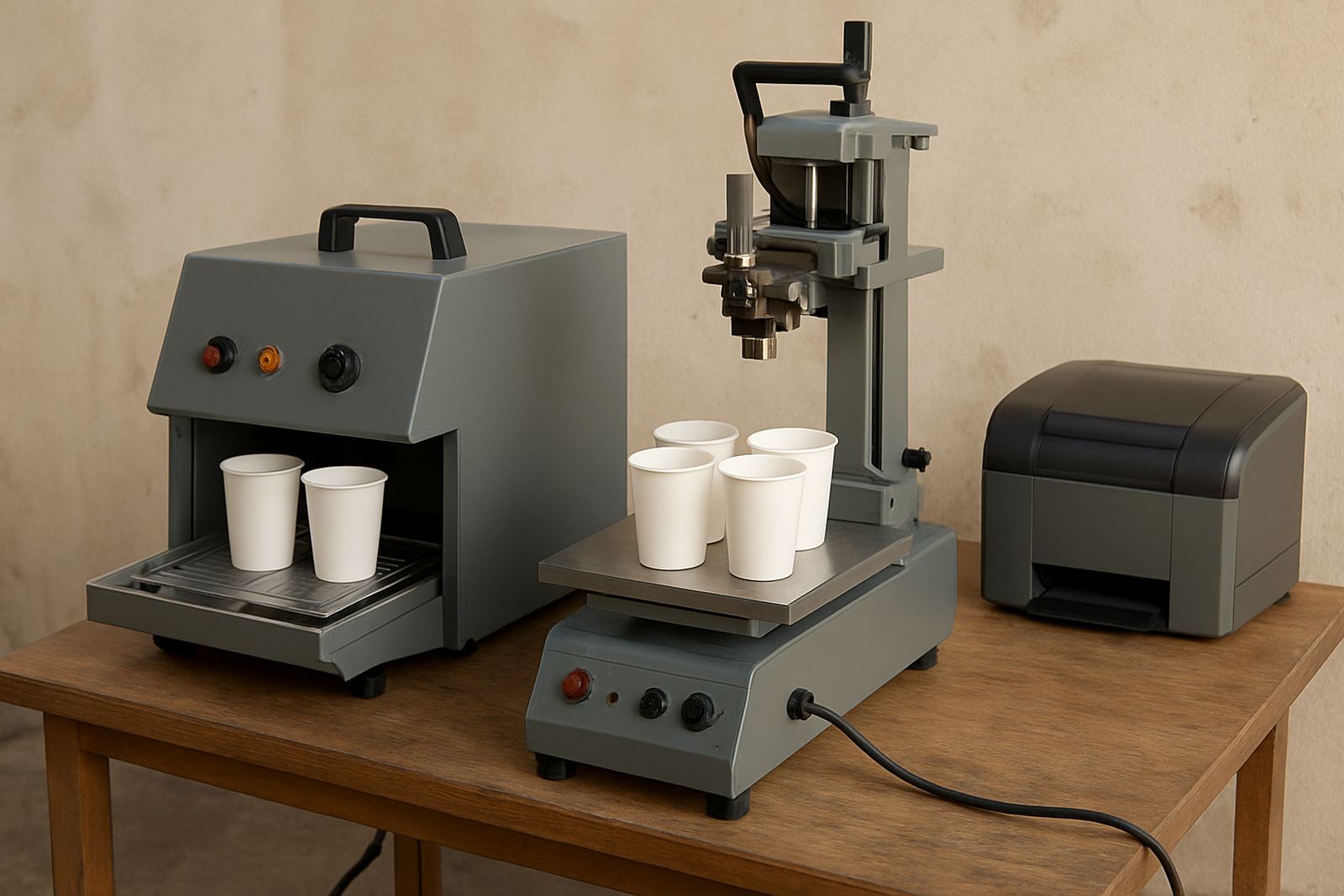
This unit is made to cure ink after printing on cylindrical items such as bottles, cups and tubes. It sits on a bench or small stand and provides a steady heat zone that helps the print bond properly to the substrate. For smaller operations, it is a practical step up from ad hoc drying methods that can lead to soft prints, finger marks or uneven finish.
It is especially useful where you print mixed batches and need repeatable results. If you are working with promo cups for events, sample bottles for a brand launch, or short runs for a local manufacturer, the curing process has to be consistent. A proper benchtop unit gives you that control without needing a large tunnel dryer or a full production line.
- Compact footprint for tight work areas
- Even heat distribution for repeatable curing
- Suitable for short runs and sample approval work
- Helps reduce handling damage after printing
Sizes and configuration options to match the job
Benchtop curing units are usually selected by the item size and the type of print work you do. The right unit needs enough chamber space or lamp coverage for your tallest bottle or widest cup, while still keeping the heat focused where it is needed. A small test line may only need a narrow chamber, while a more active shop may prefer a wider opening and stronger temperature control.
Common options include adjustable height, variable conveyor speed on some models, timer control and digital temperature settings. Some units are set up for one operator on a simple bench, while others are paired with a small print station and take-off area. If your products change often, it helps to choose a model with enough clearance for different diameters and a stable base for daily use.
- Clearance for cylindrical items up to around 120 mm to 250 mm in diameter, depending on model
- Working length options for short sample items or longer tubes
- Manual or semi-automatic control layouts
- Optional stands or wheels for easier movement in the workshop
Where it suits best in South African production spaces
This unit suits small screen-printing businesses, start-up decorators, packaging suppliers and promotional product shops. It is also a good fit for in-house branding departments that only cure a limited number of items each day. In Johannesburg, Pretoria, Durban and Cape Town, we often see it used where floor space is tight and the job list changes week to week.
It works well in mixed production areas where you need to keep the printing table close to the cure zone. That cuts walking time and helps manage output during busy periods. In coastal areas, a controlled curing unit can also help with finish consistency when humidity is high. For workshops in industrial parks or shared premises, a neat benchtop setup makes compliance and day-to-day housekeeping easier.
- Sample rooms and short-run branding shops
- Packaging and promotional product workshops
- Trade printers with limited floor space
- Sites that need quick setup and clean handling
Power, heat and installation points to plan for
Before ordering, check your available power supply and the space around the bench. Most benchtop curing units need a stable single-phase electrical feed, with the exact load depending on the heating method and chamber size. If you are running from a site that experiences load-shedding, a backup power plan is important, especially if you need to keep production moving for same-day orders.
Installation should allow safe access, proper ventilation and enough room for loading and unloading items. Heat builds up in a small area, so the unit should not sit too close to plastic stock, solvents or packed cartons. In some workshops, an extraction fan or extra airflow is recommended. We also check that the bench is level, the operator has a clear path and the unit is positioned for safe routine use. A tidy install saves trouble later and helps the machine last longer.
- Stable electrical supply with correct breaker protection
- Ventilation space around the unit
- Level bench or stand for safe operation
- Backup planning for load-shedding periods
Care, servicing and everyday upkeep
Regular cleaning and inspection keep the curing unit performing properly. Dust, ink mist and packaging debris can build up around the heater area and controls, so the machine should be wiped down often. Check cables, switches, hinges and any moving parts at the start of the shift. If the unit uses lamps or heaters, watch for uneven output or slow heat-up, because that can point to wear before a full failure happens.
For busy print shops, preventive maintenance is better than waiting for a breakdown. A planned service can include temperature checks, control verification, element inspection and general safety testing. If the unit is used near coastal humidity, pay extra attention to corrosion on fasteners and electrical connections. We can assist with servicing, breakdown repairs and spares supply, and we also help operators understand basic daily care so the machine stays dependable.
- Clean heat zone and exterior surfaces regularly
- Inspect cables, controls and heating parts
- Keep ventilation paths open
- Schedule planned servicing before peak trading periods
What to confirm when you place an order
To match the right benchtop curing unit to your work, confirm the item sizes you print most often, the ink system you use and your available power supply. It also helps to know whether you need a unit for sample approval, light daily production or more regular output. The more detail you give at order stage, the better the fit will be for your workshop and your budget.
We also ask about the space available on your bench, access for installation and whether you need training on correct curing times. If your team prints in more than one location, tell us which site needs the machine and where spares or service support should be directed. From Aeroton in Johannesburg, we assist clients nationwide with machine installation, site setup, operator training, colour setup help and ongoing support.
- Product sizes and maximum diameter or length
- Ink type and curing temperature range
- Power supply details and backup power plans
- Workshop space, access and installation location
Key facts
| Product type | Benchtop curing unit for cylindrical print work |
|---|---|
| Typical use | Curing printed bottles, cups, tubes and sample items |
| Footprint | Compact bench or stand mounted unit |
| Power | Single-phase electrical supply, exact load depends on model |
| Control options | Timer, temperature control and adjustable settings depending on model |
| Support | Installation, training, servicing, repairs and spares supply nationwide |