What a tube mandrel set does on press
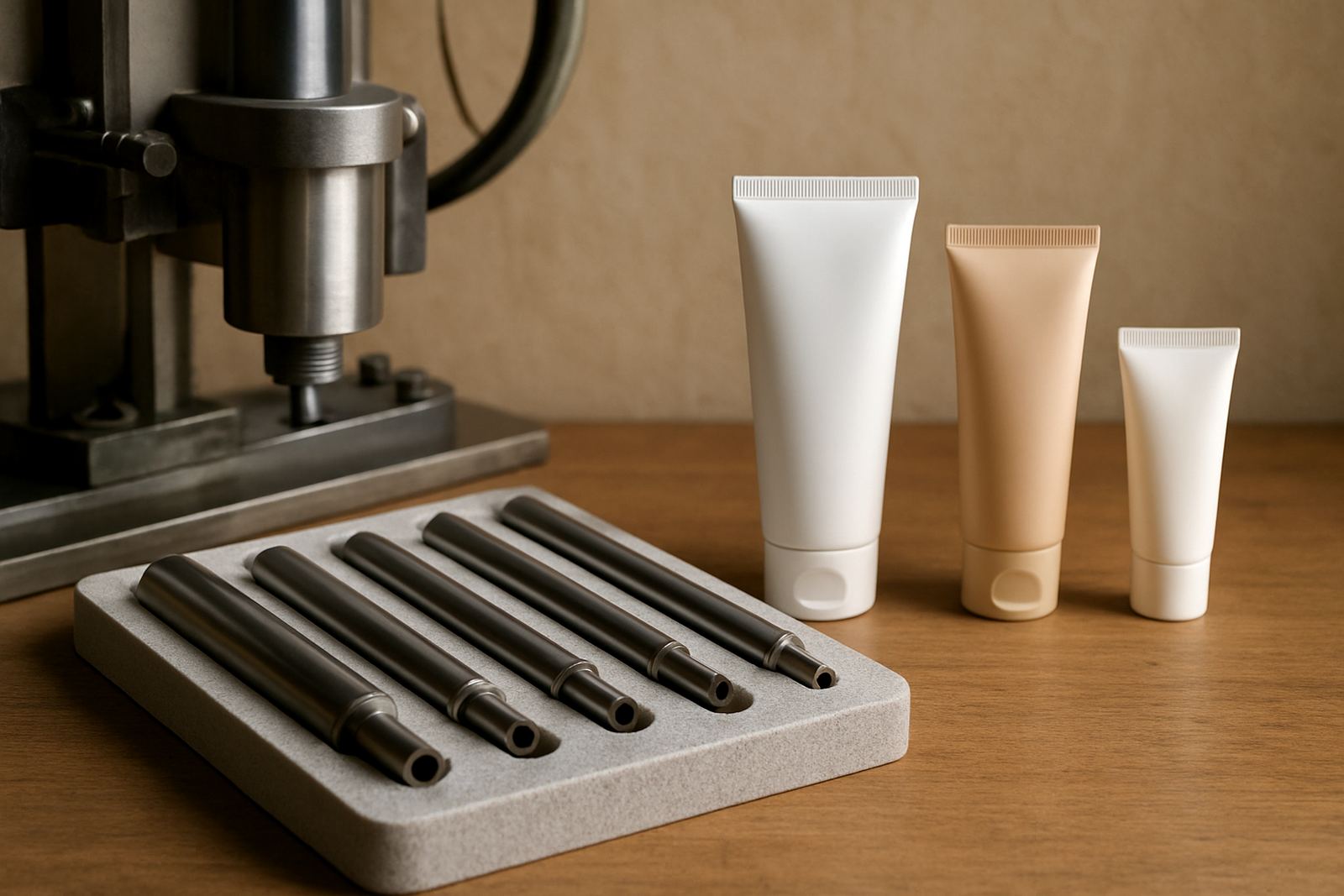
A tube mandrel set supports the tube from the inside or at the ends so the part stays centred while it is printed. That matters on thin-walled plastic tubes, laminated tubes, small lotion tubes and certain rigid tubes where movement causes off-centre artwork, uneven ink laydown or smudging at the seam. For operators, the biggest benefit is simple control: the tube sits in a fixed position, so each cycle starts from the same point.
In daily production, a good mandrel set reduces rejects and gives more repeatable results across a run. It is especially useful where short runs are mixed with colour changes, or where you need to print fine text, logos, barcode areas or full wrap graphics. If you are working in Johannesburg, Durban or Cape Town, this also helps when humidity or heat affects tube handling and the parts become harder to keep consistent.
Sizes and holding options available
Mandrels are selected to suit the tube diameter, wall thickness and the way the part feeds through the machine. Some sets are made for small cosmetic tubes, while others handle wider industrial tubes or longer bodies. The holding section can be fixed, quick-change or adjustable, depending on the machine and the print format. For production that changes often, a quick-change arrangement saves time and lowers set-up errors.
- Common tube diameters: 16 mm to 60 mm
- Standard lengths: 80 mm to 250 mm supported body length
- Material options: aluminium, engineered plastic or mixed build
- Holding styles: internal support, end support, or adjustable support
- Use case options: manual loading, semi-automatic feed, or linked production line set-up
Where you need very consistent print position, the mandrel size should match the tube closely without crushing it. Too loose and the tube can twist. Too tight and the wall can mark or deform, especially on softer plastics and laminated packs.
Best suited applications in South African production
Tube mandrel sets are used by printers and packers that need clean branding on cylindrical or near-cylindrical tubes. This includes cosmetic tubes, hand cream packs, lubricants, adhesive tubes, food products and some technical or chemical packaging. If your line has different tube heights or cap styles, a good mandrel set can help you run more than one SKU without major stop-start changes.
They suit businesses that print short promotional batches as well as longer commercial runs. In Gauteng factories, for example, teams often use mandrels to keep parts stable when the operator is moving between multiple jobs in one shift. On the coast, where moisture can affect handling and inks, consistent tube support also helps keep the print position accurate from the first unit to the last.
- Cosmetic and personal care tubes
- Food and sauce packaging tubes
- Industrial and maintenance product tubes
- Promotional sample tubes
- Small technical sleeves and cylindrical containers
Installation, power and line requirements
A mandrel set normally fits into the print machine as part of the tube holding system and does not need separate power in most setups. What matters is correct alignment, repeatable loading height and enough clearance for the print head, drying area and operator access. If the mandrel is used on an automated or semi-automated line, check the infeed speed and whether the loading side can handle your chosen tube length without snagging.
For site set-up, the floor surface should be level and the machine should be placed where the operator can load safely and reach the controls without stretching. In some plants, especially where load-shedding backup power is used, it is worth confirming that your compressor, dryer or ancillary equipment can restart cleanly after an outage. A stable mandrel set will not solve poor line set-up, but it does make the job easier once the machine is aligned.
- No separate gas requirement for the mandrel set itself
- Check machine voltage and any air supply on the main press
- Allow space for loading, cleaning and inspection
- Confirm tube feed direction and stop positions before production starts
- Keep the set level to avoid side pressure on the tube body
Care, cleaning and servicing in the workshop
Mandrels work best when kept clean and free of ink build-up, adhesive dust and tube residue. After a shift, wipe the contact points and check for wear on locating surfaces. If the set uses replaceable inserts or sleeves, inspect them regularly and replace them before they start marking the tube. Small damage can quickly become a recurring print fault, so it is better to catch it early.
During preventive maintenance, check fasteners, locating pins and the repeat position of each station. If your operation runs in a busy production area, a simple service routine can save time later. We usually recommend a visual check every day, a deeper clean weekly, and a full alignment review whenever you change tube size or switch to a new material. On some lines a bit of play is all it takes to throw off registration, so dont leave worn parts in service too long.
What to confirm before you order
Before ordering a tube mandrel set, measure the tube body carefully and confirm the exact print area you need to cover. The key details are diameter, overall length, wall thickness, material type and whether the tube is flexible or rigid. If the tube has a shoulder, cap or taper, include that too because it affects how the part sits in the holder. A sample tube is always best if you can send one in.
It also helps to note your target run speed, ink type and whether you need quick changeovers between sizes. If the tubes are used in a humid area, stored in cartons for long periods or handled after cold transport, tell us that as well because it can affect the choice of support and grip. The more detail you give upfront, the closer the set will be to your actual production needs.
- Tube diameter and length
- Flexible or rigid wall construction
- Shoulder, taper and cap details
- Required print length and image position
- Machine make-up and loading method
- Daily output target and changeover frequency
Local support from Aeroton to nationwide installs
Bottle Screen Printers is based in Aeroton, Johannesburg and supports customers across South Africa, including Johannesburg South, Midrand, Pretoria, Durban and Cape Town. The team can help with machine installation, site setup, operator training, screen making, screen reclaiming, preventive maintenance, breakdown repairs, spares supply, colour setup help and production optimising. That makes it easier to get the mandrel set working properly from the start rather than trying to sort out errors on the shop floor.
If you are setting up a new tube print line or replacing worn holding parts on an existing press, speak to the team about your tube samples and production goals. Thabo Mokoena and the technical team can help you choose the right holding arrangement for your run, whether you are printing short batches or long daily volumes. Send a message through our contact form for pricing and fitment guidance.
Key facts
| Product type | Tube mandrel set for cylindrical tube handling |
|---|---|
| Supported tube diameter range | 16 mm to 60 mm typical, subject to machine set-up |
| Supported tube length | 80 mm to 250 mm typical body support |
| Material options | Aluminium, engineered plastic, or mixed construction |
| Power requirement | No separate power on standard manual mandrel sets |
| Typical use | Screen printing on flexible and rigid tubes |
| Maintenance interval | Daily wipe-down, weekly clean, periodic alignment check |