What a screen drying cabinet does in daily production
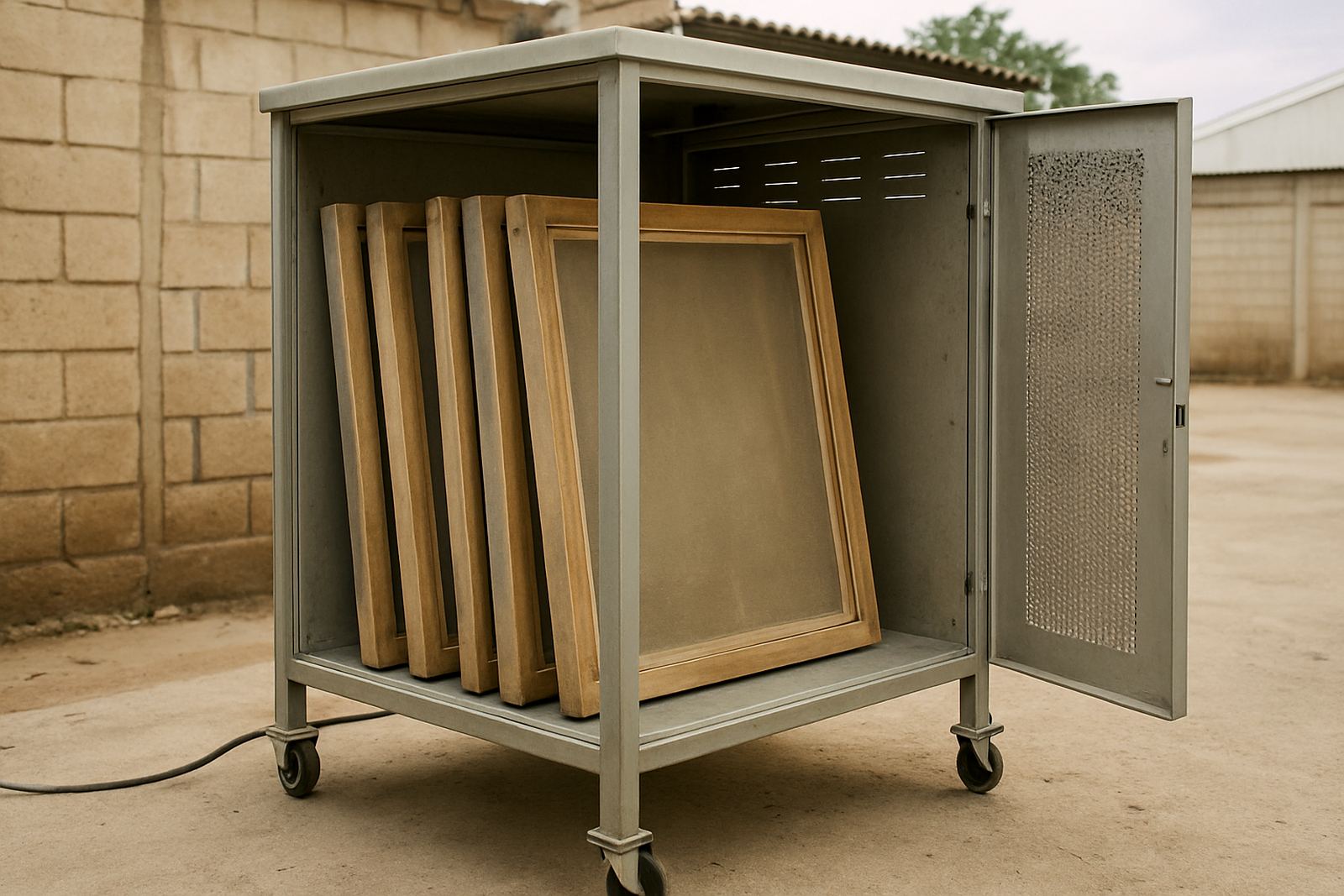
A screen drying cabinet is used to dry coated screens, washed screens, and screen frames in a controlled space before the next step in production. For bottle and cylindrical screen work, that control matters because uneven drying can cause coating defects, pinholes, and poor stencil edge quality. In practical terms, it gives your team a cleaner, more repeatable process from coating to exposure.
These cabinets are commonly used in shops that print on bottles, cups, tubes and similar items where screen preparation must stay consistent from shift to shift. If your workshop deals with coastal humidity, dust from nearby yard traffic, or stop-start power conditions, a drying cabinet helps reduce the risk of screens sitting around too long before use.
- Controlled drying space for coated screens
- Helps reduce dust contamination on wet emulsion
- Useful for screen making in small and medium print rooms
- Supports faster turnaround between coating and exposure
Standard sizes and cabinet options
Screen drying cabinets are supplied in different sizes to suit the screen sizes you actually use. A small unit can suit starter operations or lower daily volumes, while larger cabinets are better for busy print rooms handling multiple screens at once. Most buyers ask for cabinet depth, shelf spacing, and how many screens can be dried per cycle. Those details matter more than the cabinet name or model.
Typical options include fixed shelving, adjustable racks, heated air circulation, and lockable doors. Some setups also need caster wheels for moving the cabinet around a workshop, especially where space is tight. If you handle longer bottle screens or wider flat screens alongside cylindrical work, check the internal height carefully so the screens can stand without touching the sides, cause that's where handling damage starts.
- Compact cabinets for smaller shops and training rooms
- Mid-size units for daily production use
- Larger cabinets for higher screen turnover
- Optional shelving and airflow configurations
Where this cabinet suits best in South Africa
This product suits screen printing businesses, garment decoration shops with bottle decoration lines, and packaging printers that need a stable drying stage. It is also useful for businesses in Johannesburg, Pretoria, Midrand, Durban, Cape Town, and surrounding industrial areas where the workshop may deal with heat changes and high dust levels. A proper drying cabinet helps keep production more predictable in these conditions.
For businesses supplying promo bottles, water cups, cosmetic tubes, or industrial containers, the cabinet forms part of the screen room rather than the press line. That means it supports the prep side of the job, where time lost on poor drying often shows up later as rejected screens or rework. If your team prints on a tight schedule, the cabinet can help keep screens ready before the press crew starts waiting.
- Screen printing shops with regular repro work
- Packaging and label support operations
- Promo product suppliers handling bottles and cups
- Sites needing better dust control in screen prep
Installation, power needs and workshop setup
Installation normally starts with a level floor, enough wall clearance for airflow, and a clean area away from spray wash and solvent vapour. The cabinet should sit where operators can load and unload screens safely without crossing high-traffic passages. If the room is shared with coating, exposure, or reclaiming, plan the workflow so wet screens do not pass through dusty zones.
Power requirements depend on the cabinet specification, but most heated units need a proper single phase or three phase supply as confirmed at order stage. A stable supply is important where load shedding or voltage dips are common, so some sites choose to pair the cabinet with backup power planning. We also check ventilation needs, and whether the room has enough space for door opening, screen handling, and daily cleaning. Don not tuck it into a corner and hope for the best.
- Level floor and clear access around the cabinet
- Confirmed power supply before delivery
- Room layout planned for coating and reclaiming flow
- Backup power consideration for load-shedding affected sites
Care, servicing and long term reliability
Like most workshop equipment, a drying cabinet works best when it is kept clean and checked on a routine basis. Dust build-up, blocked airflow, worn seals, and faulty controls can all affect drying consistency. If the cabinet is used for screen making every day, the filters and heating components should be inspected as part of preventive maintenance, not only when there is a problem.
We supply breakdown repairs, spares, and preventive maintenance support so the cabinet keeps performing across normal production cycles. In humid coastal areas, it is worth watching for corrosion on fittings and any signs of moisture holding in the cabinet after shutdown. A quick wipe-down and regular inspection can save a lot of lost time later on.
- Keep the interior dust-free and dry
- Check airflow paths and seals regularly
- Inspect controls, heaters, and fans on schedule
- Plan service work before peak production periods
What to confirm before ordering
Before placing an order, check the screen size range you use, how many screens must dry at one time, and whether the cabinet will sit in a new or existing screen room. You should also confirm the power supply available on site, the access route for delivery, and whether your team needs installation and operator training. Small details like door width and turning space can make delivery much easier.
It also helps to confirm what type of screens you use most often. Cylindrical work for bottles and cups can require different handling from longer tube screens, so the cabinet size should match your actual production. If you are setting up a new line or replacing older equipment, ask for site setup support and colour setup help so the cabinet fits properly into the full process.
- Screen dimensions and quantity per cycle
- Power supply and site access details
- Room layout and available floor space
- Need for installation, training, or service support
Key facts
| Product type | Screen drying cabinet for coated and washed screens |
|---|---|
| Use case | Preparation between coating stages for bottle, cup and tube screen work |
| Capacity | Sized by screen format and number of screens per cycle |
| Power | Available in configurations matched to site supply, confirm at order |
| Installation | Site setup and operator training available nationwide |
| Support | Preventive maintenance, breakdown repairs and spares supply |
| Base area | Aeroton, Johannesburg with installs across South Africa |