What a Screen Washout Booth Does in Daily Production
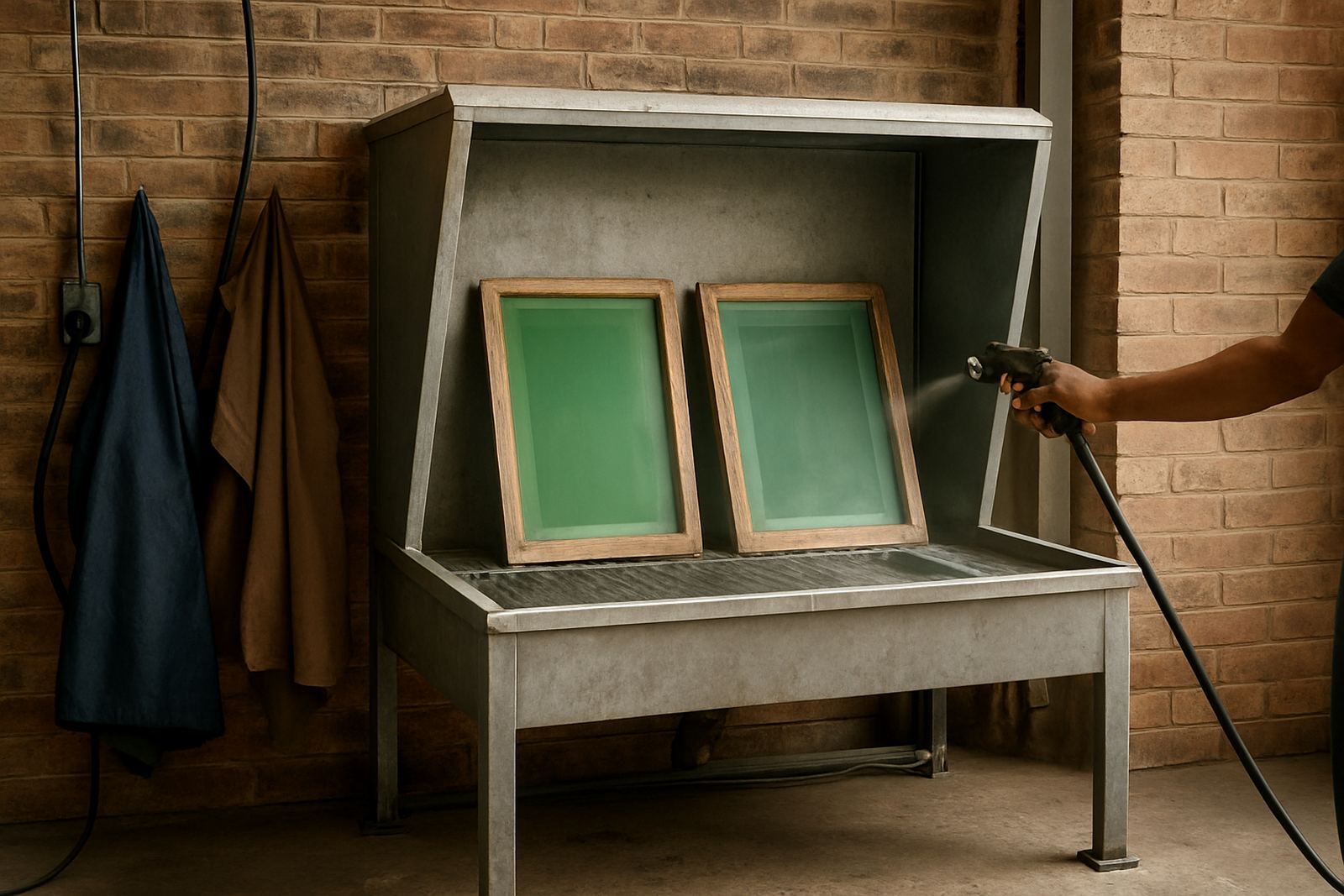
A screen washout booth gives you a dedicated space to wash emulsion, ink residue and reclaim chemicals off cylindrical screens after printing. Instead of spraying screens in an open yard or against a wall, the booth keeps water, sludge and overspray in one controlled area, which helps with cleaner work and easier compliance on site. For shops handling bottles, cups and tubes, that matters because screens are handled often and small contamination can affect the next run.
Most units are built around a stainless steel or powder coated wash area, with a splash back, drain point and lighting. The operator can rinse, brush and inspect the screen before it goes back into coating or storage. In Johannesburg or Durban where humidity and dust can both be a problem, a proper washout point also reduces mess around the rest of the print floor.
Sizes and Options for Small Shops to High-Use Plants
We supply washout booths in practical sizes so they fit your screen frame lengths and the space you have available. Smaller units suit start-ups and training rooms, while wider booths are better for higher throughput and larger cylindrical screen sets. If your workshop is in Aeroton or Midrand and space is tight, a compact booth can still do the job without taking over the room.
- Compact single operator booths for light to medium screen volumes
- Longer booths for repeated reclaiming and multi-size screens
- Stainless steel contact surfaces for wet areas and coastal use
- Wall mounted spray rails or hand hose points
- Optional mesh filters and sludge collection trays
Typical working widths range from about 1.2 metres to 2.4 metres, with custom lengths available to suit your screen size and handling method. If you are running both bottles and cups, it is worth checking the internal clearance against the longest screen you use, not just the daily average.
Where the Booth Suits Best in South African Print Rooms
These booths suit screen printing shops that reclaim screens daily, in-house brand teams, promotional product suppliers and packaging decorators working with tubes or rigid containers. They are also useful where the municipality expects wash water to be managed properly and not sent straight into a storm water drain. In places like Pretoria industrial areas or Cape Town coastal sites, tidy washdown control helps protect floors, walls and nearby equipment.
It is a sensible fit where screens are moved between printing, coating and storage in the same building. The booth helps create one clear wash point so operators know where to rinse, inspect and set screens aside for drying. That small bit of structure can save time when the team is under pressure before a dispatch cut off, especially during load shedding when every task needs to be planned.
- Screen reclaiming after cylindrical print runs
- Preparing screens before coating or re-use
- Washdown control in production areas with limited drainage
- Training spaces where clean handling is needed
Installation, Drainage and Power Needs
Installation starts with a level floor, a proper drain arrangement and enough space for operators to move around the booth safely. Some sites use a floor drain into a filtration system, while others need a standalone sludge trap before the waste line. We look at the layout, water feed and waste route before setup so the booth works cleanly from day one. If the floor is already busy with other machines, plan a clear wet area so hoses and screens do not interfere with traffic.
Power needs depend on the fitted options. A basic booth may only need lighting and extraction support, while a fitted unit with pumps, spray heads or warm air drying assistance will need a dedicated electrical supply. Where gas is used for drying support or warming, the line must be installed and tested properly by a qualified installer. In coastal areas, we also pay attention to corrosion protection and cable routing so the booth lasts longer.
- Level floor and safe operator access
- Water inlet and controlled waste outlet
- Electrical supply for lights, pumps or extraction
- Possible gas connection only where specified
- Drain capture or filtration as required by site rules
Care, Cleaning and Preventive Servicing
A washout booth needs regular cleaning to keep it working properly and to stop residue from building up in the drain path. At the end of the shift, screens, brushes and trays should be rinsed and the booth wiped down. Weekly checks should include the drain screen, pump if fitted, light fittings and any hose points. If sludge is left to harden, the booth becomes harder to use and the wash area can start smelling bad.
Our service team supports preventive maintenance, breakdown repairs and spares supply for fitted systems. We also help with operator training so your staff know how to use the booth safely and how to keep water use under control. In busy plants around Johannesburg South or Durban, a simple service routine can prevent downtime and keep the wash area ready even when orders are stacking up.
What to Check Before You Order
Before you place an order, check the longest screen size, the number of screens washed per day and the floor space available. You should also know whether you need open rinse cleaning only, or a more fitted unit with filtration, extraction or drying support. If the booth will sit near a screen coating area, plan for splash control and drying space too. A small miss on measurements can slow the whole line.
- Maximum screen length and frame width
- Daily screen volume and peak wash periods
- Water supply pressure and waste drainage point
- Electrical supply and any gas requirement
- Available floor space and door access for delivery
- Any site rules for water runoff or chemical handling
If you are unsure, send through your screen sizes and production rate and we will help match the booth to the job. That way you get a setup that suits your space, your cleaning routine and your budget without overbuying.
Key facts
| Product type | Screen washout booth for reclaiming and preparing cylindrical screens |
|---|---|
| Typical width range | About 1.2 m to 2.4 m working width, with custom builds available |
| Typical use | Bottle, cup and tube screen cleaning, reclaiming and prep |
| Construction options | Stainless steel or powder coated wet-area build |
| Services available | Installation, operator training, maintenance, repairs and spares |
| Base area | Aeroton, Johannesburg, with installs nationwide |