What the UV Curing Tunnel does on a print line
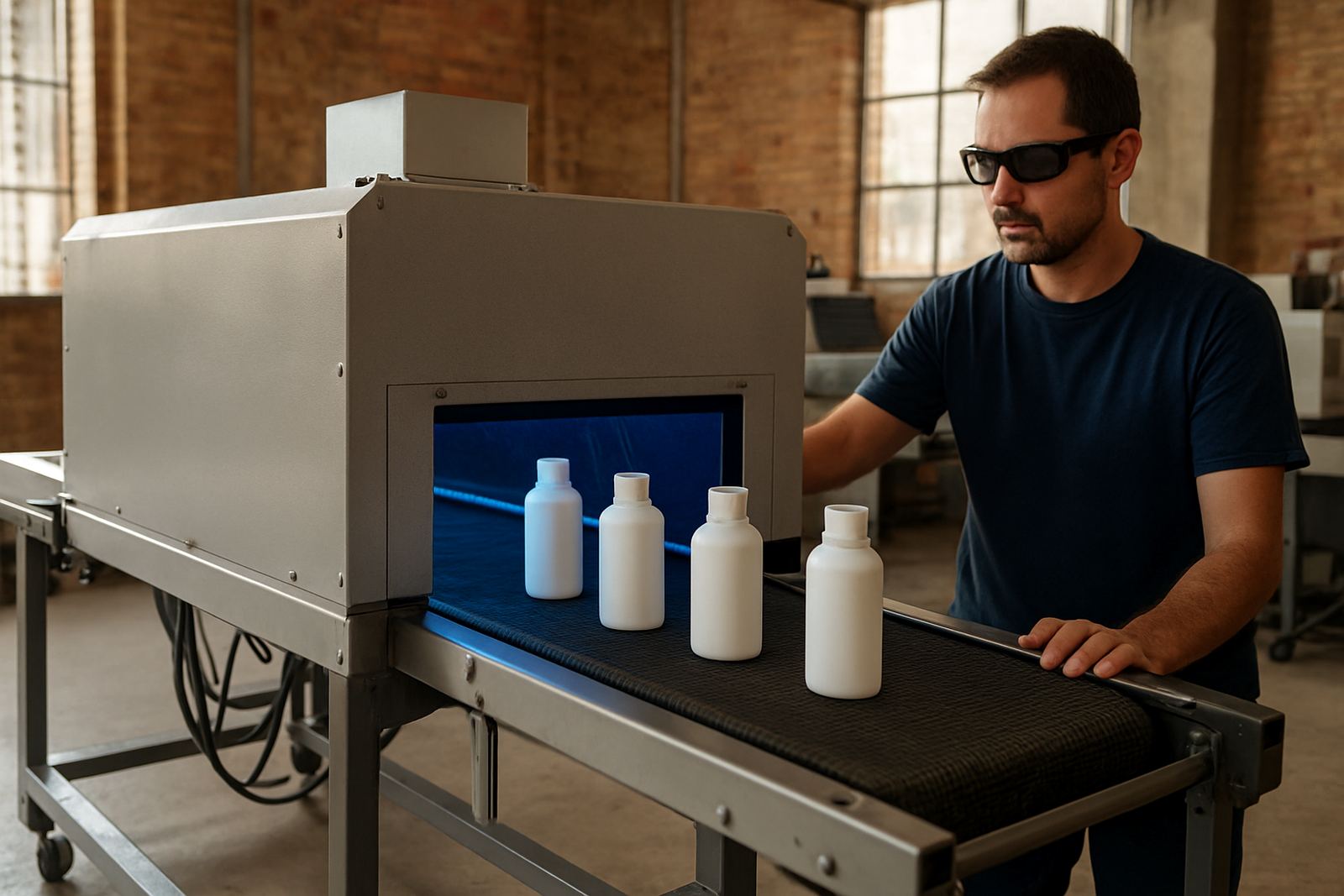
A UV curing tunnel is a conveyor-style unit that passes printed cylindrical products through a controlled UV zone so compatible inks cure fast after printing. For bottle work, that means less waiting between print and packing, and fewer marks from handling while the ink is still soft. On repeat runs it helps keep colour stable from the first unit to the last.
These tunnels are used after cylindrical screen printing or other compatible decoration steps on plastics, coated metals and other approved substrates. They are a practical fit for shops that print water bottles, cosmetic tubes, travel mugs and similar items where speed matters and the finish must hold up to handling, transit and shelf display.
- Fast curing for compatible UV inks
- Helps reduce smudging and blocking
- Suitable for round and cylindrical containers
- Works with manual and semi-automatic print lines
Typical sizes and setup options
UV curing tunnels are usually supplied in compact line lengths suited to South African workshops where floor space is tight. A common single-pass tunnel has a conveyor width around 150 mm to 350 mm for bottle-sized work, with longer or wider options available for mixed product ranges. Tunnel length, lamp count and conveyor speed are selected around the ink system and output target.
Options can include adjustable conveyor height, variable speed control, tunnel guards, cooling fans and entry or exit guides for unstable parts. For higher output, some sites choose a longer chamber to give more exposure time, while smaller workshops in Aeroton, Johannesburg South or Midrand often prefer a shorter footprint that can fit beside the printer and packing table.
- Compact, medium and higher-output tunnel lengths
- Adjustable conveyor speed for different ink systems
- Guide rails for smaller diameter items
- Fan cooling to help manage heat on the product
Where this tunnel suits best
This equipment suits businesses printing bottles, cups and tubes for sports, personal care, promotional and food-related packaging. It is especially useful where the same item is printed in batches through the day and needs a controlled cure before packing. Shops supplying retailers in Gauteng, KwaZulu-Natal, the Western Cape and surrounding provinces often use it to keep turnaround times tight.
It is also a good match for premises that must manage power interruptions or load-shedding, because a tunnel can be integrated into a line with planned start-up and shutdown steps. In coastal areas such as Durban and Cape Town, proper airflow and dust control matter too, since humidity and fine airborne particles can affect print handling if the area is untidy.
- Promotional product decorators
- Cosmetic and personal care packers
- Drinkware and reusable bottle printers
- Small to medium production rooms
Installation, power and site requirements
We install and set up UV curing tunnels from our Aeroton, Johannesburg base and travel nationwide. The site needs a level floor, enough clearance for infeed and outfeed access, and a clean, dry area with sensible ventilation. Exact space depends on the tunnel length, but you should allow extra room for product loading, maintenance access and operator movement. A tight corner often slows the line more than the machine itself.
Power requirements vary by unit size, lamp count and conveyor drive, though many workshop setups use standard single-phase or three-phase supply depending on the model selected. A dedicated circuit, proper earthing and surge protection are strongly recommended, especially where municipal supply can be inconsistent. Gas is not normally needed on a UV tunnel, which keeps the setup simpler than heated systems.
Before install, we check the printer position, product flow and curing time needed for the ink in use. This helps avoid bottlenecks and makes sure the tunnel matches your output target rather than sitting too fast or too slow for the job.
Care, cleaning and scheduled servicing
Like any production unit, a UV curing tunnel works best when it is kept clean and checked often. Dust build-up around the conveyor, lamp area and cooling points can affect curing performance over time. Operators should wipe down the unit regularly, keep product residue away from moving parts and listen for unusual fan or drive noise. Small problems spotted early are cheaper than a shut line later, plain and simple.
Preventive maintenance should include lamp output checks, belt or conveyor inspection, fan cleaning and electrical safety checks. Our service team can assist with breakdown repairs, spares supply, production training and ongoing maintenance plans for customers across Johannesburg, Pretoria, Durban and Cape Town. If your line runs daily, a planned service visit helps keep cure times consistent and avoids unnecessary downtime.
- Clean reflector and lamp areas on a schedule
- Check conveyor tracking and belt wear
- Inspect cables, switches and earthing points
- Replace worn parts before failure happens
What to confirm before you order
Before placing an order, confirm the product diameter range, print speed, ink type and target cure time. A tunnel that suits 50 mm tubes may not be right for larger bottles or travel mugs, so we always check actual sample pieces where possible. It also helps to know whether you need full line curing or a compact unit for short production runs.
Ask for the tunnel length, conveyor width, lamp arrangement and electrical load in writing so your site prep is done properly. If you are printing for clients with tight colour rules or handling specs, we can also help with colour setup and production optimisation so the curing stage matches the print finish. Thabo Mokoena and the team handle installs, site setup and training for businesses that want the line ready to run without guesswork.
- Product size range and shape
- Ink system and required cure speed
- Available power supply on site
- Floor space, airflow and operator access
- Need for installation, training and after-sales support
Key facts
| Product type | UV curing tunnel for cylindrical printed products |
|---|---|
| Suitable items | Bottles, cups, tubes and other round containers |
| Curing method | UV lamp curing with conveyor feed |
| Width options | Approx. 150 mm to 350 mm conveyor widths, larger options on request |
| Power | Single-phase or three-phase depending on model and output |
| Support | Installation, training, maintenance, repairs and spares supply nationwide |