What a flame treatment unit does on the line
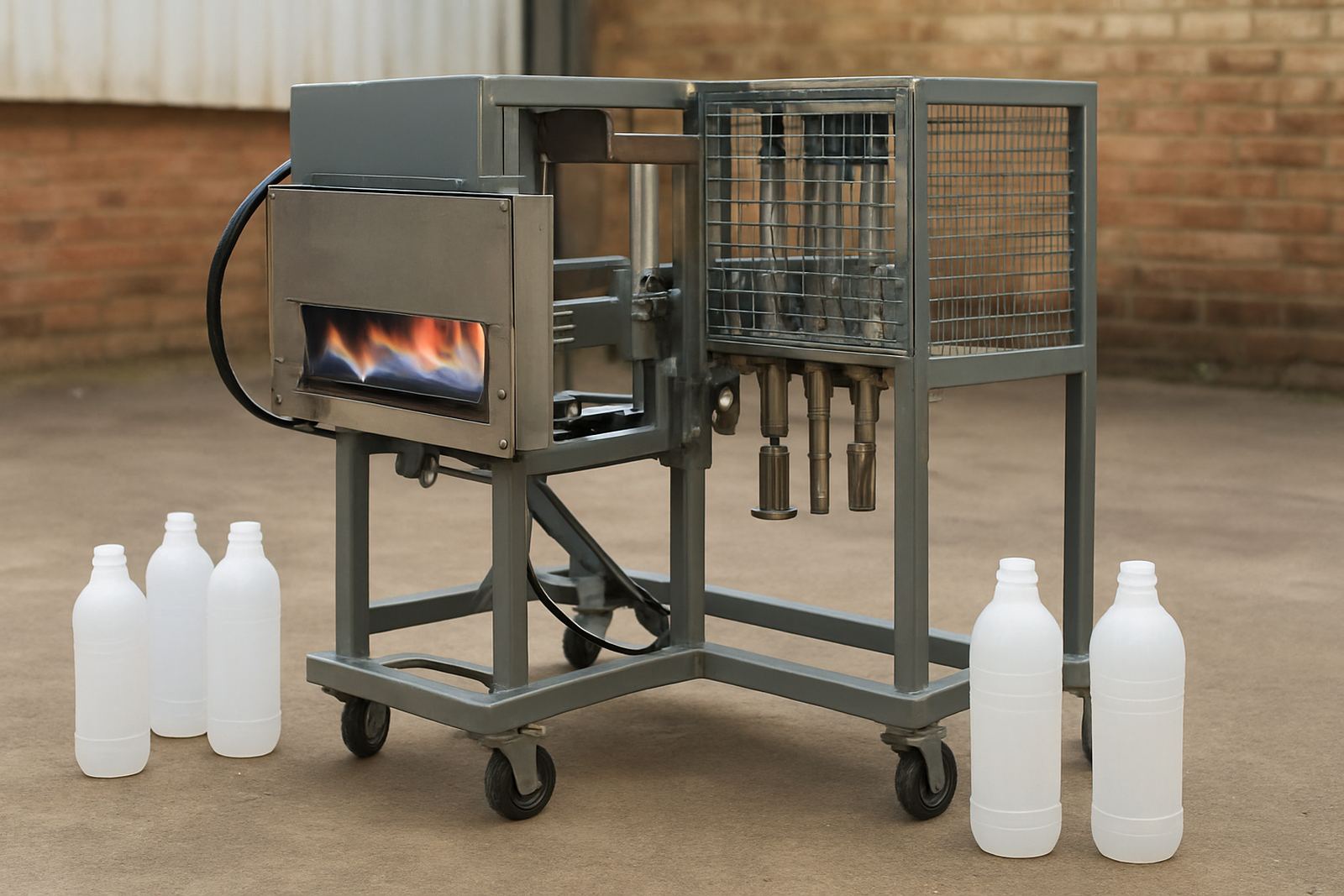
A flame treatment unit passes a controlled flame over the surface of a part just before printing. This raises the surface energy on suitable plastics so inks and coatings bond more evenly. For bottle decorators working with HDPE, PP and other low-energy plastics, that can mean fewer scuffs, less lifting and better print life in daily handling.
It is not a cure for every material. Glass, metal and heat-sensitive plastics need other methods. The unit is best matched to parts that already have a stable shape and can move through the machine without wobbling. On round items the flame must be set to cover the print zone evenly, otherwise you get patchy adhesion on one side and a cleaner print on the other.
- Used before screen printing or pad printing
- Suitable for many bottles, cups, jars and tubes
- Helps improve ink hold on low surface energy plastics
- Works best when the surface is clean and dry
Sizes and setup options for different plants
We supply flame treatment units in compact bench style setups and wider in-line arrangements for higher output. A small unit suits short runs and sample work in a workshop in Aeroton or Midrand, while a longer conveyor style setup suits busy shops running constant day shifts. The right size depends on the part diameter, line speed and whether the operator feeds parts by hand or through a conveyor.
Typical options include single burner or multi-burner heads, manual feed frames, adjustable height stands and conveyor integration. Some sites only need one treatment pass per item, while others need a wider flame path for larger diameter bottles or taller cups. If your products vary often, ask for an adjustable frame so the head can be set quickly without reworking the whole line.
- Manual feed units for short production runs
- Conveyor mounted units for steady output
- Adjustable heads for different diameters and heights
- Single or multi burner arrangements depending on coverage needed
Where it suits best and where it does not
Flame treatment is common in packaging, promotional products, food containers, personal care packaging and industrial plastic parts. It suits businesses printing on water bottles, drinking cups, squeeze tubes and detergent containers. Coastal customers in Durban and Cape Town often use it when moulded parts are giving uneven ink grip in humid conditions.
It is less suitable for very thin parts that may warp, or products that have already been coated with a release layer or heavy mould residue. If the part has oil, dust or a moulding agent on it, the flame will not fix that on its own. The item must still be cleaned properly before print. For some parts, a flame pass followed by a short cooling pause gives cleaner results and less distortion.
- Best for PP, HDPE and similar low-energy plastics
- Useful in high humidity and high dust environments
- Not a substitute for proper cleaning and handling
- Check part thickness if heat build-up is a concern
Installation, power and gas needs
Installation normally needs a stable floor space, safe gas handling and a suitable electrical supply for the drive system and controls. Many units run on LPG with a regulated feed, while the control panel and conveyor section may need standard single phase or three phase power depending on the size. If the site in Johannesburg South or Pretoria has load-shedding, it helps to plan the unit around backup power for control gear and downstream drying equipment.
The unit must be installed with safe clearance, correct flame direction and good ventilation. You also need staff who understand ignition checks, gas shutoff procedures and what to do if the flame is not even. On busy sites we often check the conveyor height, part spacing and extraction setup during install, because a small error there can affect print quality all week.
- Allow space for safe operator access and service checks
- Use regulated LPG supply with proper fittings and isolation
- Confirm power supply before order placement
- Ventilation and fire safety must suit the site rules
Care, servicing and daily checks
Like any production unit, this machine needs regular attention to keep output steady. Burners should be kept clean, flame paths checked, and the frame inspected for loose fasteners and heat damage. In production it is worth checking the flame pattern at start-up, after lunch and after any gas change. A small blocked jet can change adhesion on only one side of the bottle and the fault may only show up later in packing.
Preventive maintenance helps avoid breakdowns when orders are due out. We recommend routine inspections of hoses, regulators, ignition parts and conveyor drive components where fitted. If the machine is used in a dusty area or near open powder, the cleaning interval should be shorter. A unit that is cared for properly will give more even treatment and less wastage on the print line.
- Clean burner heads and check jets regularly
- Inspect gas hoses, clamps and regulators for wear
- Keep moving parts free of dust and overspray
- Book scheduled maintenance before peak season
What to check before you order
Before ordering, measure the product diameter, height and the print area that needs treatment. Confirm the material type, your expected line speed and whether the product will be fed by hand or by conveyor. If you are printing in batches for clients across Gauteng, KwaZulu-Natal or the Cape, it is also worth checking whether your products are changing size often, because that affects the frame choice.
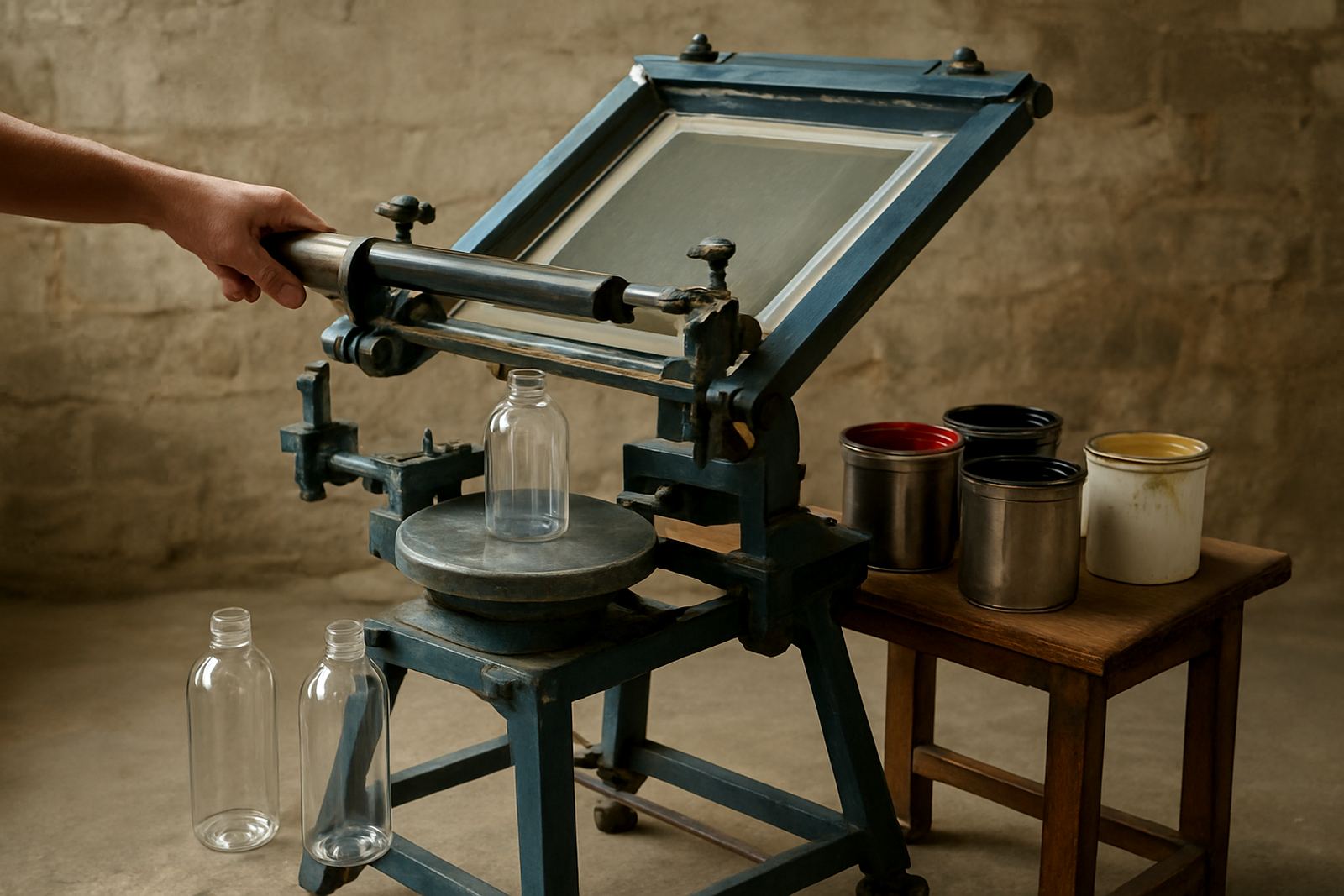
We also ask about gas supply, electrical supply, available floor space and the print process that follows treatment. If the line already includes screen printing equipment, drying or curing, the timing between stations matters. Send photos of the current setup and sample parts if possible. That usually saves time and avoids sending a unit that is too small or too wide for the job.
- Part material and surface finish
- Diameter, height and treatment zone width
- Power supply and LPG supply available on site
- Output target per hour and operator method
Key facts
| Function | Pre-treatment of selected plastic surfaces before printing |
|---|---|
| Typical materials | PP, HDPE and similar low surface energy plastics |
| Power | Depends on model, usually single phase or three phase for controls and conveyor |
| Gas | LPG supply with regulated feed |
| Applications | Bottles, cups, tubes, jars and related packaging |
| Installation | Site setup, operator training and maintenance support available nationwide |