What A Loading Conveyor Does On The Line
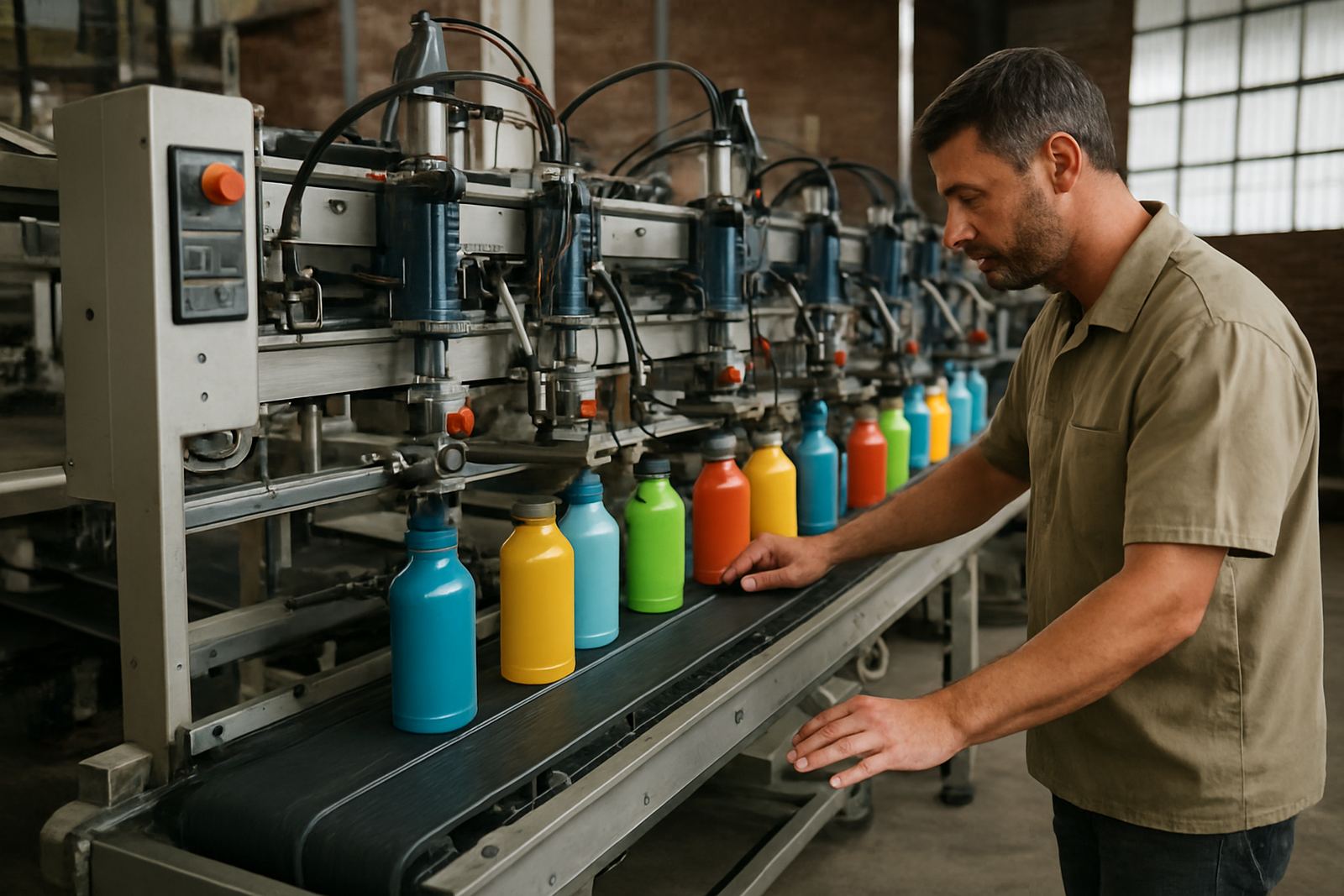
A loading conveyor is the front-end feed section that brings empty or pre-treated containers into the printing area at a controlled pace. It is used to keep cylindrical printing lines moving without the stop-start handling that slows down production and creates handling marks. For bottle printers, cup decorators and tube lines, this simple section often makes the biggest difference to daily output.
In practical terms, the conveyor gives the operator more room to stage product, line up containers correctly and keep the machine supplied at a steady rate. It is especially useful where one person must load, inspect and print at the same time. On runs with glass bottles, PET bottles, aluminium cups or cosmetic tubes, the feed remains more even and the print station gets a better chance to work at its set speed.
At Bottle Screen Printers in Aeroton, Johannesburg, loading conveyors are supplied for South African production conditions, including load-shedding recovery, workshop dust and coastal humidity. The aim is simple: keep the product moving, keep the operator comfortable and reduce the little delays that become costly by the end of the shift.
Sizes, Drive Options And Conveyor Build
Loading conveyors are normally supplied in working lengths from 1.2 metres to 3.0 metres, with custom lengths available for larger lines or tighter factory layouts. Standard belt widths are commonly 150 mm, 200 mm, 250 mm and 300 mm, depending on the container size and the required side support. Speed is usually variable, so the feed can be matched to the printing machine rather than forcing the operator to work at one fixed pace.
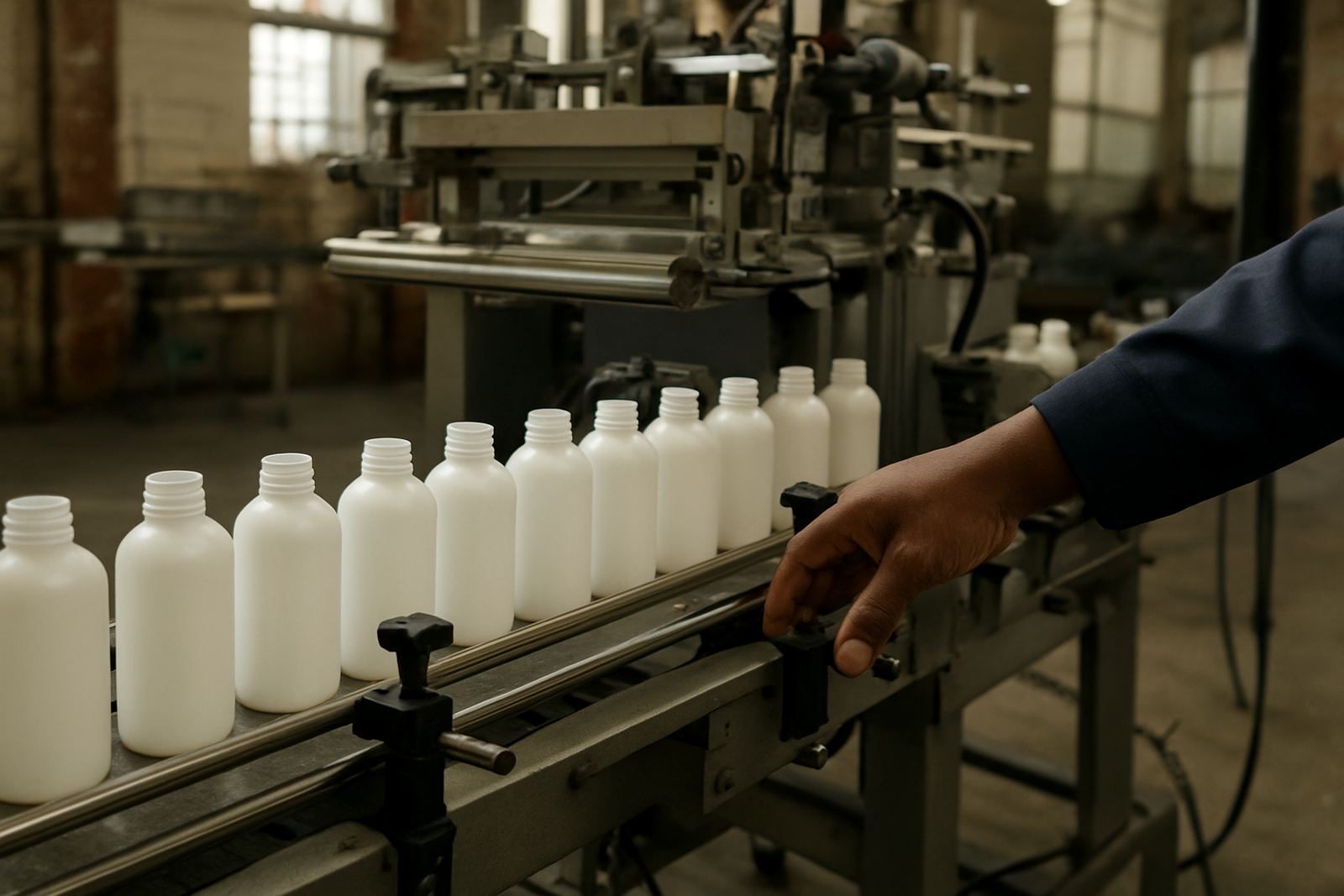
For bottle and tube handling, the deck can be fitted with side guides, guide rails or simple hold-up stops to keep containers upright and correctly spaced. Where the product is light or unstable, a low-friction belt with adjustable guide height works well. Where product is heavier, a stronger frame and more positive drive help keep the line stable.
- Frame: powder-coated steel for workshop use
- Contact parts: stainless steel or hard-wearing plastic guides where needed
- Drive: geared motor with variable speed control
- Controls: start, stop and speed adjustment at operator side
- Options: adjustable height feet, collection tray, guide rails and end stops
Most units are supplied for indoor use on level concrete floors. If your area has high humidity, frequent wash-downs or salty air, we can advise on materials and finishes that hold up better over time.
Where A Loading Conveyor Fits Best
This product suits cylindrical print lines where containers arrive in batches and need to be presented one by one with less manual carrying. It is a good fit for beverage plants, packaging workshops, contract decorators and smaller factories that need to improve flow without changing the full line. In Gauteng, we see it used often in Aeroton, Johannesburg South, Midrand and Pretoria where space must be used carefully and output still needs to rise.
It also suits sites that run mixed product sizes. If you print on 330 ml bottles one day and cosmetic tubes the next, the conveyor helps with staging and product control before the print head. That said, the feed section must be matched to the item size. A narrow guide set for tubes will not suit wide sports bottles, and tall containers may need extra side support.
- Short runs where one operator manages loading and printing
- Plants wanting fewer handling marks and less product bottlenecks
- Lines that need steadier feed into cylindrical screen printing machines
- Factories preparing for higher daily output without hiring extra loaders
For Durban and other coastal sites, we normally look at corrosion protection and maintenance access early in the order. On the West Coast and in Cape Town, the same applies. Small choices at order stage can save time later when the line has to keep running, not stop for avoidable repairs.
Installation, Power And Site Readiness
Installation is straightforward but should be done with the full line layout in mind. The conveyor must sit square to the printing machine, at the correct infeed height and with enough clear space for product staging. If the feed is too high or too low, operators end up lifting or pushing containers awkwardly and that slows things down fast. We normally confirm floor space, inlet and outlet heights, operator position and access for cleaning before installation.
Most loading conveyors run on standard single-phase or three-phase supply depending on the motor size and control setup. Exact requirements are confirmed at order stage. Where facilities suffer from load-shedding, it is worth planning for controlled restart after power returns. A conveyor that starts too abruptly can shift product off line, so the controls should allow a simple reset. If your factory uses a generator or inverter support, we can advise on the practical running load before installation.
Site readiness also includes floor level, available wall sockets, cable routing and cleaning access. If the line is near a wash area, we check splash exposure and advise on protection for motors and controls. In some factories, a small change in conveyor position makes operator movement easier and reduces the chance of back strain. That matters over long shifts.
Care, Servicing And Wear Points
A loading conveyor is not difficult to maintain, but it does need regular care. The belt or rollers should be cleaned daily, especially when labels, ink dust or adhesive residue build up. Side guides should be checked for wear and loose fixings. Motors and gearboxes should be inspected for noise, heat and unusual vibration. If a belt begins to drift or lose tension, deal with it early instead of waiting for a breakdown.
Preventive maintenance is the best way to avoid production stops. We recommend scheduled checks on drive alignment, emergency stop function, electrical connections and fasteners. In humid areas, look out for corrosion around brackets and mounting points. In dry high-dust workshops, dust accumulation around switches and sensors can become a nuisance, so a simple cleaning routine helps a lot.
- Daily wipe-down of belt and guides
- Weekly check of belt tracking and tension
- Monthly inspection of motor mounts and drive parts
- Periodic lubrication where specified by the build
- Keep spare fuses, switches and wear items on hand
Our service team can assist with breakdown repairs, preventive maintenance and operator refresher support. If a line starts feeding unevenly, we can usually narrow it down quickly to guide setup, product size, speed setting or mechanical wear.
What To Check Before You Order
Before placing an order, it helps to confirm the product range, container dimensions and daily output target. A conveyor for narrow tubes is not the same as one for wide bottles. We also need to know whether the line will run one size only or several, because that affects guide design and adjustment points. If you are planning future growth, say so early, because it is easier to allow for extra width or length now than to replace the unit later.
Useful details to send with your enquiry include the following:
- Container type, height and diameter
- Required conveyor length and belt width
- Line speed and expected hourly output
- Available power supply on site
- Floor space and layout sketch if available
- Whether the site is inland or coastal
Also tell us if the conveyor must link into an existing cylindrical screen-printing machine or work as part of a new line. That affects infeed height, controls and operator position. If your team needs help deciding, Johan and the technical team can talk through the options before the machine is shipped.
South African Support From Aeroton To The Coast
Bottle Screen Printers is based in Aeroton, Johannesburg and installs nationwide, including Pretoria, Midrand, Durban and Cape Town. We support machine installation, site setup, operator training, screen making, screen reclaiming, preventive maintenance, breakdown repairs, spares supply, colour setup help and production optimising. That means the conveyor is not handled as a loose item with no backup. It is supplied as part of a working production setup.
If you are setting up a new print line or replacing a feed section that no longer keeps up, we can help you choose the right size and finish for the job. The aim is practical: cleaner feeding, fewer handling issues and a line that works with your team rather than fighting it. For enquiries, send a message through our contact form.
Key facts
| Product type | Feed conveyor for cylindrical printing lines |
|---|---|
| Typical lengths | 1.2 m to 3.0 m, custom lengths available |
| Belt widths | 150 mm, 200 mm, 250 mm, 300 mm |
| Drive | Geared motor with variable speed control |
| Supply | Single-phase or three-phase, confirmed to site |
| Common use | Bottles, cups, tubes and similar cylindrical products |