What the Three Colour Line does on the floor
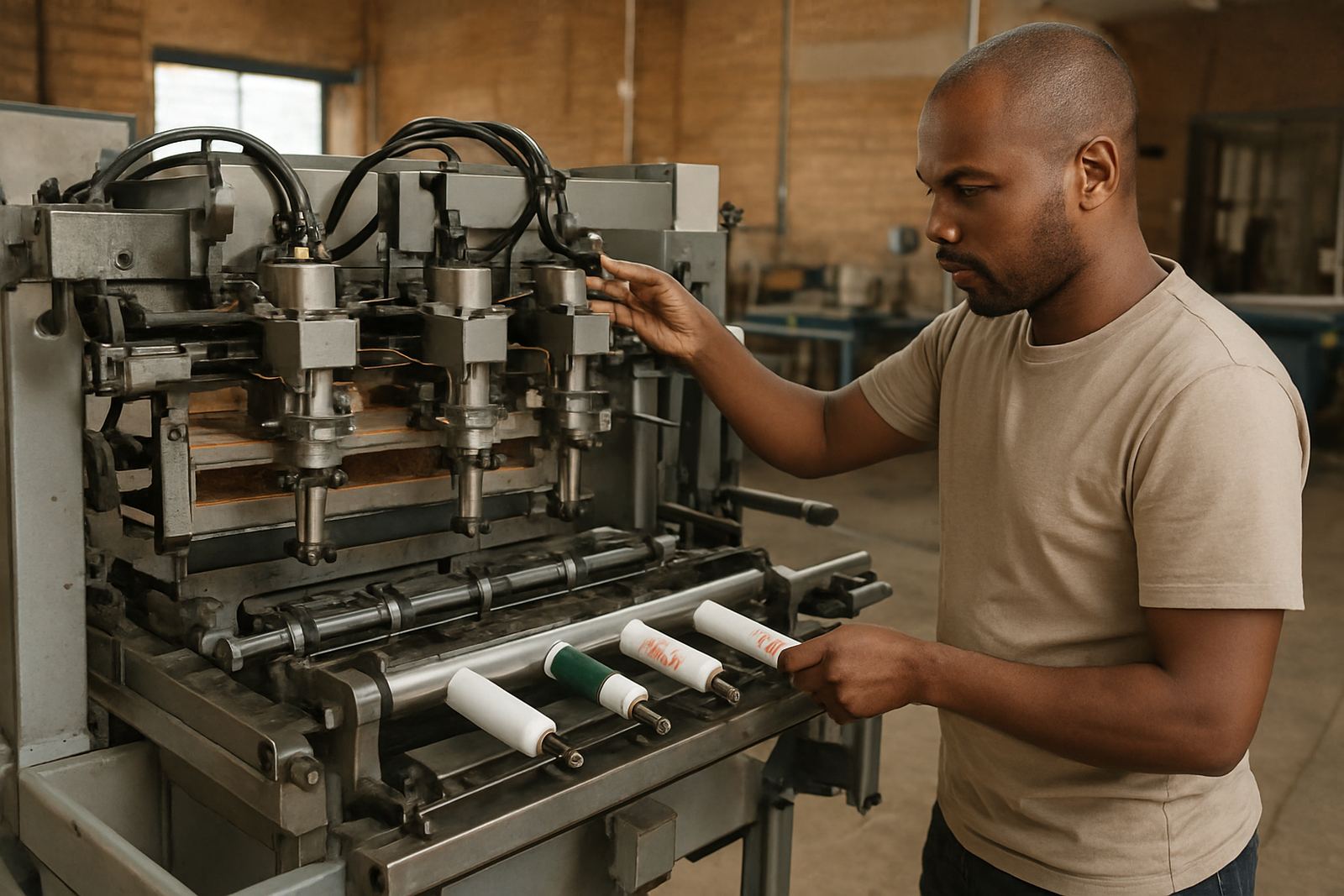
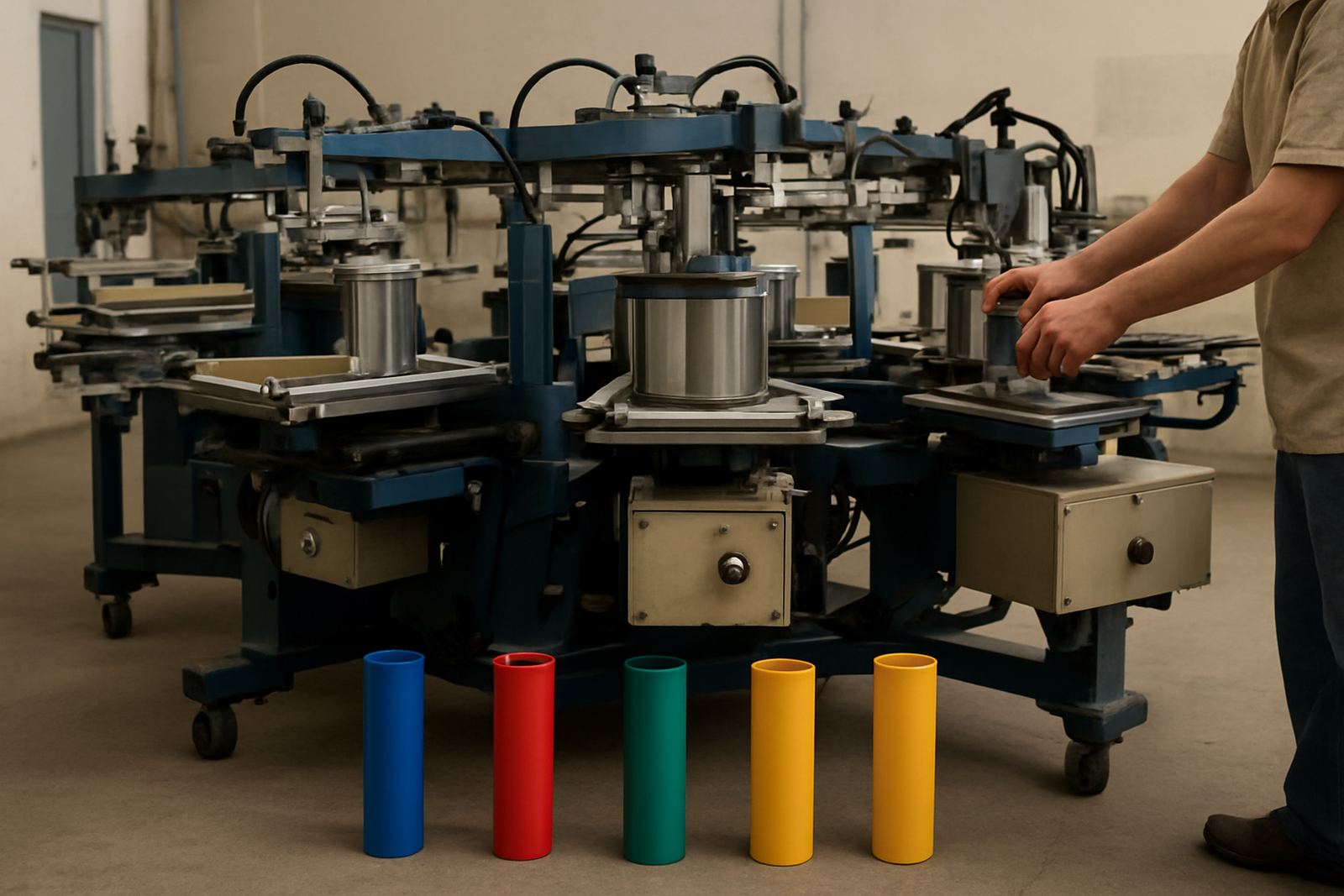
The Three Colour Line is built for printing three colours onto cylindrical products such as plastic bottles, glass bottles, cups and tubes. In plain terms, it gives you more detail and stronger branding than a single-pass setup, while still keeping the process straightforward for day-to-day production. The line is suited to businesses that need short to medium runs with consistent repeat order quality.
Because the product rotates through three print positions, each colour can be set and checked properly before the next pass. That helps with logos, product names, warnings, size markings and decorative artwork. For packaging that sits on a retail shelf or travels through wholesalers, the extra colour count makes a real difference to visibility.
The line is used in Johannesburg, Pretoria, Durban, Cape Town and regional sites where packaging is printed close to filling or dispatch. It also works well for companies that want to bring bottle decoration in-house and avoid delays from outside contractors.
Sizes, layout options and standard specs
Three Colour Line setups are usually supplied with a compact footprint for workshops where floor space is limited. A typical installation suits a straight-line production area with enough room for loading, print stations and offload handling. In many factories, a clear area of about 4 m by 2 m is enough for the machine body and operator movement, though the exact layout depends on the product length and feed direction.
Common working ranges include small cosmetic bottles, personal care containers, food and beverage packaging, laboratory tubes and larger promotional cups. Cylindrical items should have a consistent shape and a surface finish that accepts screen ink properly. Where the product changes often, quick changeover parts can help reduce downtime.
- Three print stations for three colours or three aligned print steps
- Suitable for cylindrical containers such as bottles, cups and tubes
- Manual or semi-automatic handling depending on the chosen setup
- Adjustable product holders for different diameters and lengths
- Registration controls for repeatable colour placement
- Built for workshop use with regular production shifts
When comparing options, ask about the maximum container diameter, print length, screen frame size and the kind of curing needed after printing. Those details matter more than a simple capacity claim, especially if you print across mixed packaging ranges.
Where it suits best in South African production
This line suits businesses that print branded packaging for cosmetics, household goods, drinks, chemicals and promotional products. It is also a good fit for contract printers handling different clients each week. If your work includes batch-to-batch colour control and neat logo placement, a three-station line gives you enough flexibility without becoming too complex to run.
In humid coastal areas like Durban and the Eastern Cape, the process area should be kept dry and well ventilated so screens and printed goods dry evenly. Inland sites in Gauteng often deal with dust and power interruptions, so surge protection and a sensible production plan are important. During load-shedding, planning around curing time and machine stoppages helps avoid rejects and wasted ink.
- Branded bottles for cosmetics and personal care
- Plastic and glass cups for promotions and events
- Small to medium tubes for creams, gels and ointments
- Food and beverage packaging where labelling must stay neat
- Short production runs with frequent artwork changes
For businesses in Johannesburg South, Midrand, Pretoria or Aeroton, the line can be installed in a workshop or production bay with good access for materials. For coastal sites, we normally recommend checking corrosion exposure and storage conditions before final machine placement.
Installation, power and site setup
Installation is arranged to suit the site, the product type and the level of operator support needed. Our team can assist with machine installation, site setup, colour setup help and production optimising so the line is ready to run properly from the start. For sites outside Johannesburg, installs are handled nationwide.
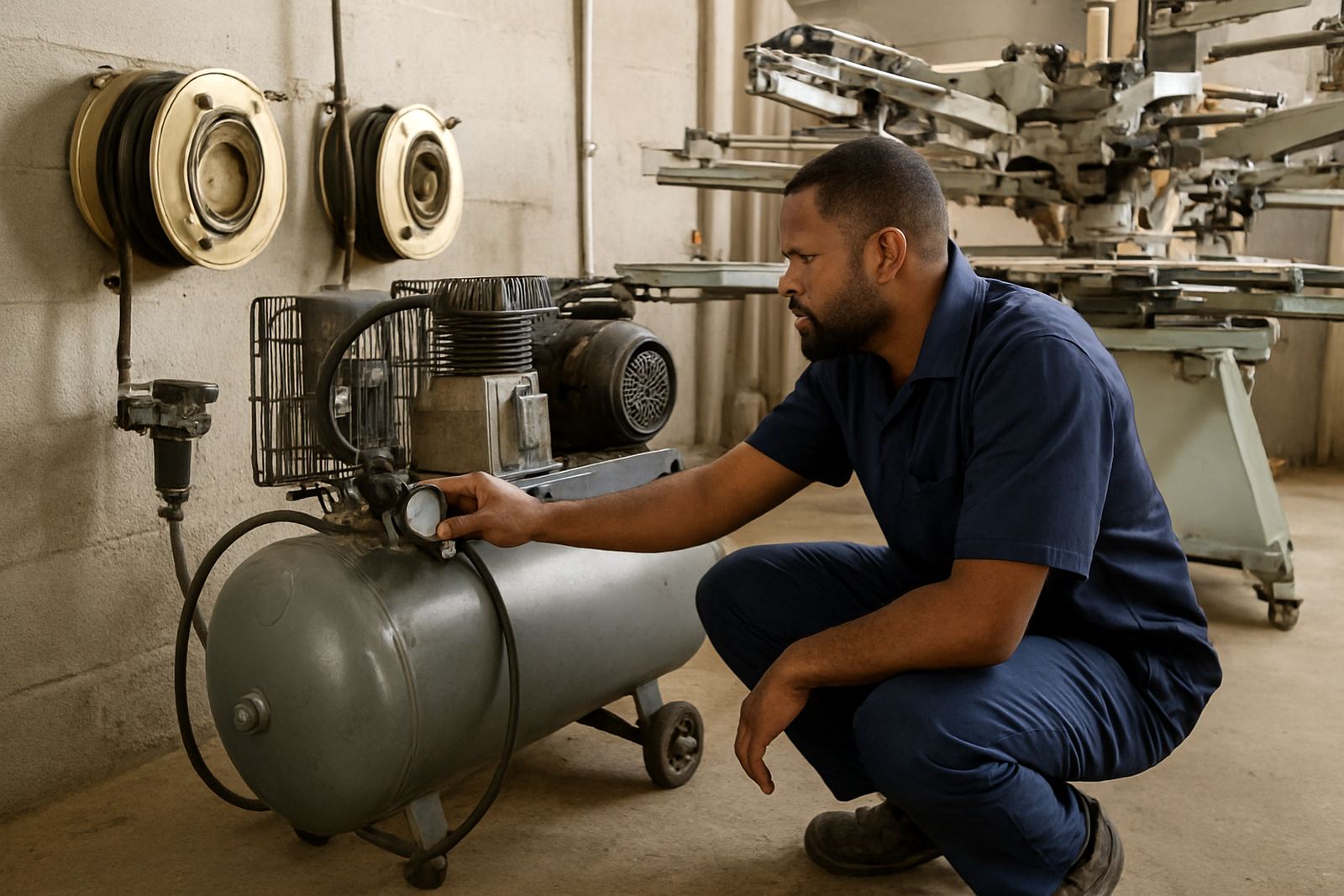
The line normally needs a stable electrical supply, level floor space and a clean area for screens, inks and finished goods. Exact power needs depend on the final configuration and whether curing or drying equipment is included. If you already have a compressor on site, we can check whether the air supply is suitable for the print speed and clamp action. If not, we can advise on the compressor size you should budget for.
Three Colour Line installations should also take account of local site rules, fire safety and ventilation. Where solvent-based inks are used, the room must have proper airflow and safe storage for consumables. If your premises are in an industrial park or municipal zone with operating restrictions, it is best to confirm those before delivery so there are no surprises.
Keeping print quality steady over time
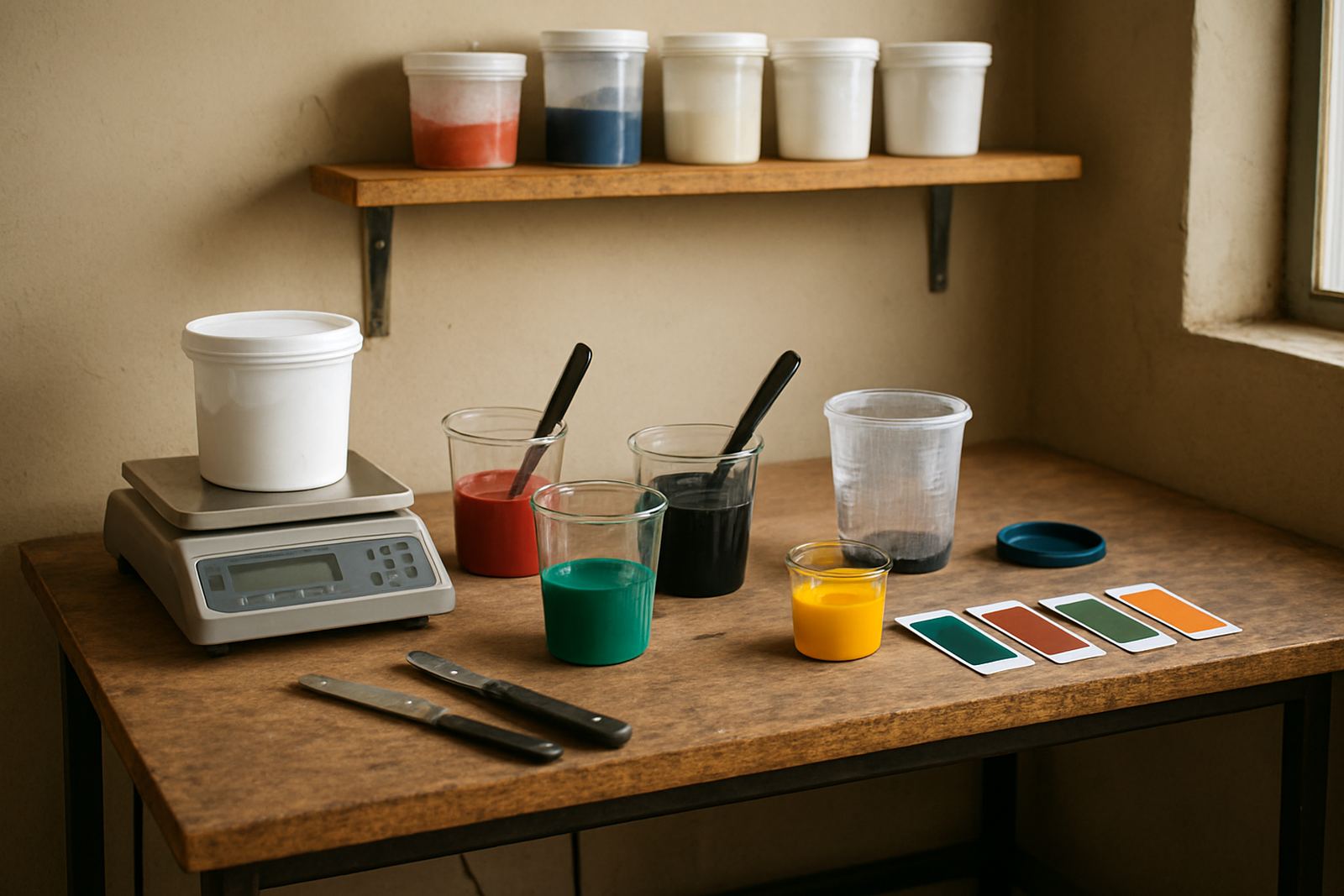
A three-station line will only hold registration well if the machine is kept clean and adjusted regularly. Screens should be reclaimed properly after use, and mesh tension must be checked when image quality starts to drift. Small faults like worn squeegees, loose clamps or inconsistent product loading can show up fast on a three-colour job.
Preventive maintenance is worth planning into the production week, not only when something breaks. We supply preventive maintenance, breakdown repairs, spares supply and screen making support to keep the line moving. For customers running daily jobs, a simple service schedule cuts down on unplanned stops and helps protect print consistency.
- Clean the machine after each shift to prevent ink build-up
- Inspect registration points before colour changes
- Keep spare screens and consumables on hand for busy weeks
- Store inks and screens away from heat and moisture
- Book servicing before peak season, not after a fault appears
Where operators are new, training makes a clear difference. Farieda Jacobs handles production training, while the technical team can help with setup questions and fault finding. That combination saves time and reduces spoiled stock, especially during the first few weeks after installation.
What to confirm before you place an order
Before ordering a Three Colour Line, check the product sizes you print most often, the number of colours required on your standard artwork and the expected daily output. It is also important to confirm the bottle or tube material, because print settings vary between plastic, glass and coated containers. If your packaging changes often, make sure the machine can handle quick changeovers without long stoppages.
You should also confirm screen frame size, curing method, power availability and whether compressed air is already available on site. If you need the line to work in a production cell with other equipment, measure the available floor area and leave enough room for loading, inspection and packing. A few missing metres in the layout can slow down the whole job.
For quote requests, include the artwork size, container diameter, height, material and the town where the install will happen. That lets us advise on the right setup and whether any extras are needed for your site. If you are unsure, Johan van der Merwe can help work through the options before purchase.
Contact Bottle Screen Printers at our contact form for specification advice, installation planning and support from our Aeroton, Johannesburg base.
Key facts
| Machine type | Three-station cylindrical screen-printing line |
|---|---|
| Print count | Three colours |
| Suitable products | Bottles, cups and tubes |
| Typical use | Branded packaging and decorative printing |
| Installation | Nationwide, from Aeroton, Johannesburg |
| Support | Training, servicing, spares and breakdown repairs |