Why Water Bottles Need the Right Print Method
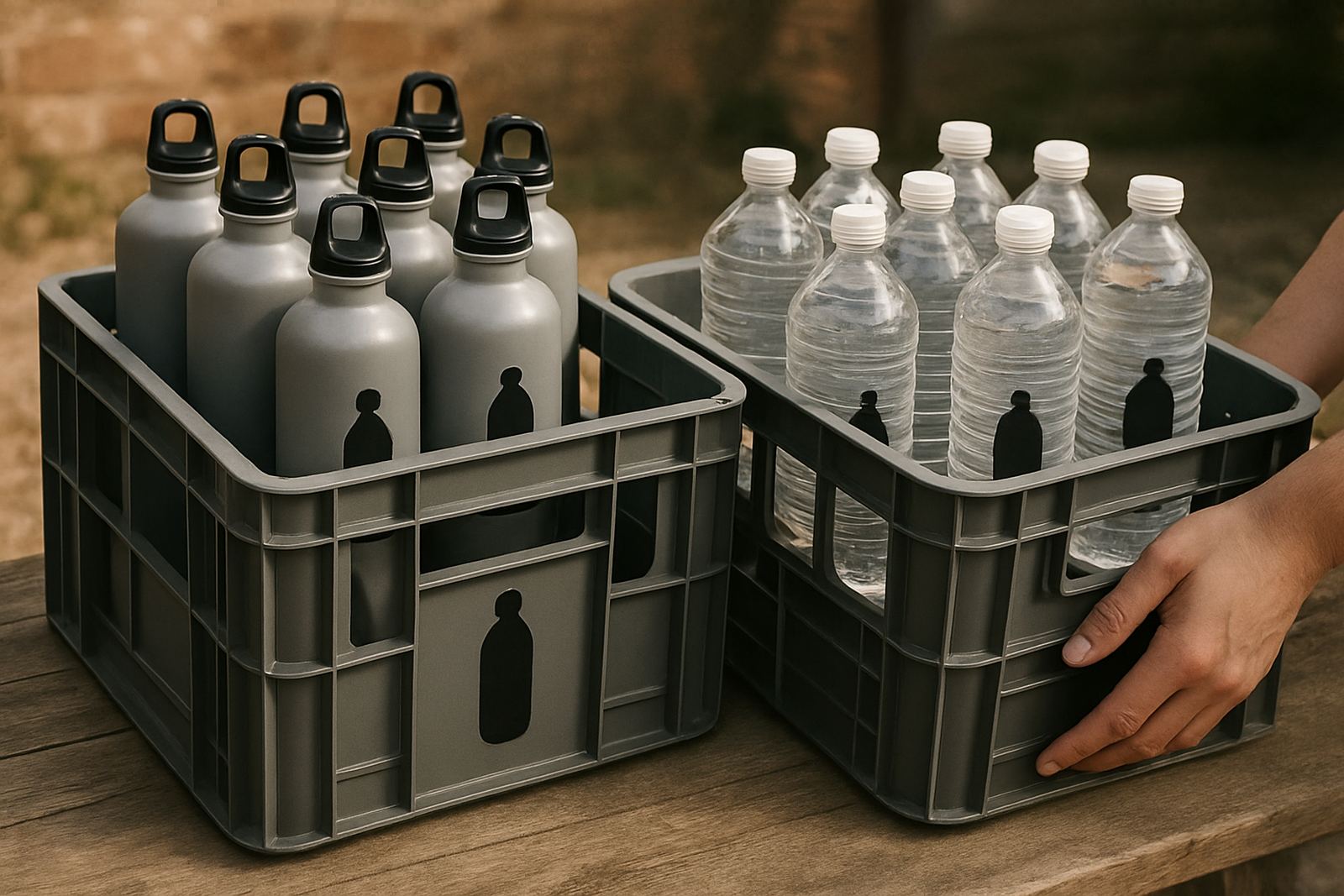
Water bottles are handled all day, packed into crates, carried to events and often washed many times. That means the print has to bond well to curved surfaces and still look clean after use, whether you are branding 500 ml sport bottles, 1 litre refillables or slim promotional packs.
For many South African businesses the challenge is not only getting a sharp logo, it is keeping registration steady on a round or tapered bottle. A good cylindrical screen-printing setup helps with solid colour laydown, good opacity on tinted bottles and repeatable results over a full shift.
If you are in Johannesburg, Pretoria, Durban or Cape Town, we usually look first at your bottle shape, the ink system you use and how many units you want to print per day. That gives a practical starting point for the right machine size and screen spec.
Typical Equipment Set for Bottle Printing
A water bottle setup normally starts with a cylindrical screen-printing machine matched to the bottle diameter and length. From there, the screen and squeegee set-up need to suit the artwork, ink thickness and curing method. If the line is running plastic bottles, glass bottles or coated aluminium bottles, the prep changes a bit.
- One cylindrical screen-printing machine for the bottle size range
- Custom screens prepared for the artwork and repeat size
- Jigs or holders for different bottle diameters
- Drying or curing support for the chosen ink system
- Basic colour setup tools for logos, text and warning marks
For higher output, some clients also add extra screens so they can run more than one design without stopping to reclaim and remake every time. That saves hours over a month, especially when orders change often.
Planning the Layout in a Small or Busy Workshop
Most bottle decoration spaces in South Africa are tight, so the machine layout must suit the floor, power supply and movement around the line. We often plan around a simple workflow: incoming bottles, printing, drying, inspection and packing. If the workshop has load-shedding, the plan should also include backup power for the essential part of the line.
Keep the print station away from dust, open doors and high foot traffic. On the coast, humidity can affect drying and screen storage, so screens should be kept properly sealed and the room must not be damp. In inland areas like Gauteng, heat and dust can still create trouble if bottles are not cleaned before printing.
Good planning also means thinking about municipal rules for ventilation, solvent handling and waste disposal where needed. A neat, measured layout usually gives better output than a crowded room with too many bottle movements.
Common Mistakes That Hurt Bottle Graphics
We see a few problems often. The first is trying to print on bottles that are not clean enough. Finger marks, mould release and dust can spoil adhesion fast. The second is choosing a screen or mesh that does not match the ink and artwork, which leads to weak colour or blurred fine text.
Another issue is ignoring bottle variation. Some refillable bottles are not perfectly round, and many packaged water bottles have slight taper. If the machine is not adjusted for that shape, the logo can drift or the print can look stretched. That is where proper setup and operator training pays off.
- Using one setup for all bottle sizes without testing
- Skipping adhesion checks before a large run
- Not allowing enough drying time before packing
- Keeping old screens too long instead of reclaiming them properly
- Running production without a spare screen for urgent reprints
Budget Ranges for Water Bottle Printing Equipment
Budgets vary a lot depending on output, automation and how many bottle sizes you need to handle. A smaller entry setup for a local brand or contract printer may start from about R180 000 to R350 000, depending on configuration and extras. A more productive line with stronger output, more accurate registration and added accessories can move into the R400 000 to R900 000 range.
It also makes sense to budget for screens, spares, maintenance and training, not only the machine itself. On a busy line, a missed day because of a small fault can cost more than the service call, so preventive maintenance is worth planning from the start. For many clients, the real saving comes from reduced rework and better print consistency.
If you are quoting for a launch run or a national bottle contract, ask for a setup that includes the expected daily count and bottle sizes. That makes the machine choice far more accurate and avoids overspending on features you will never use.
Installation, Training and Ongoing Support Nationwide
We work from Aeroton, Johannesburg and install nationwide, including Johannesburg South, Midrand, Pretoria, Durban and Cape Town. For water bottles, the support process usually starts with machine installation, site setup and a test run using your actual bottles and artwork.
Our team can assist with screen making, screen reclaiming, breakdown repairs, spares supply, colour setup help and production optimising. Farieda Jacobs handles training, while Sibusiso Nene coordinates service follow-up, so clients are not left guessing after the machine is switched on. Thabo Mokoena and the technical team also help with planning when a job needs a faster turnaround.
If your line needs to start during a busy season or before a product launch, it is better to schedule the setup early. That gives time to test the bottle finish, check print alignment and sort out any teething issues before orders land.