What the Boksburg cup order needed
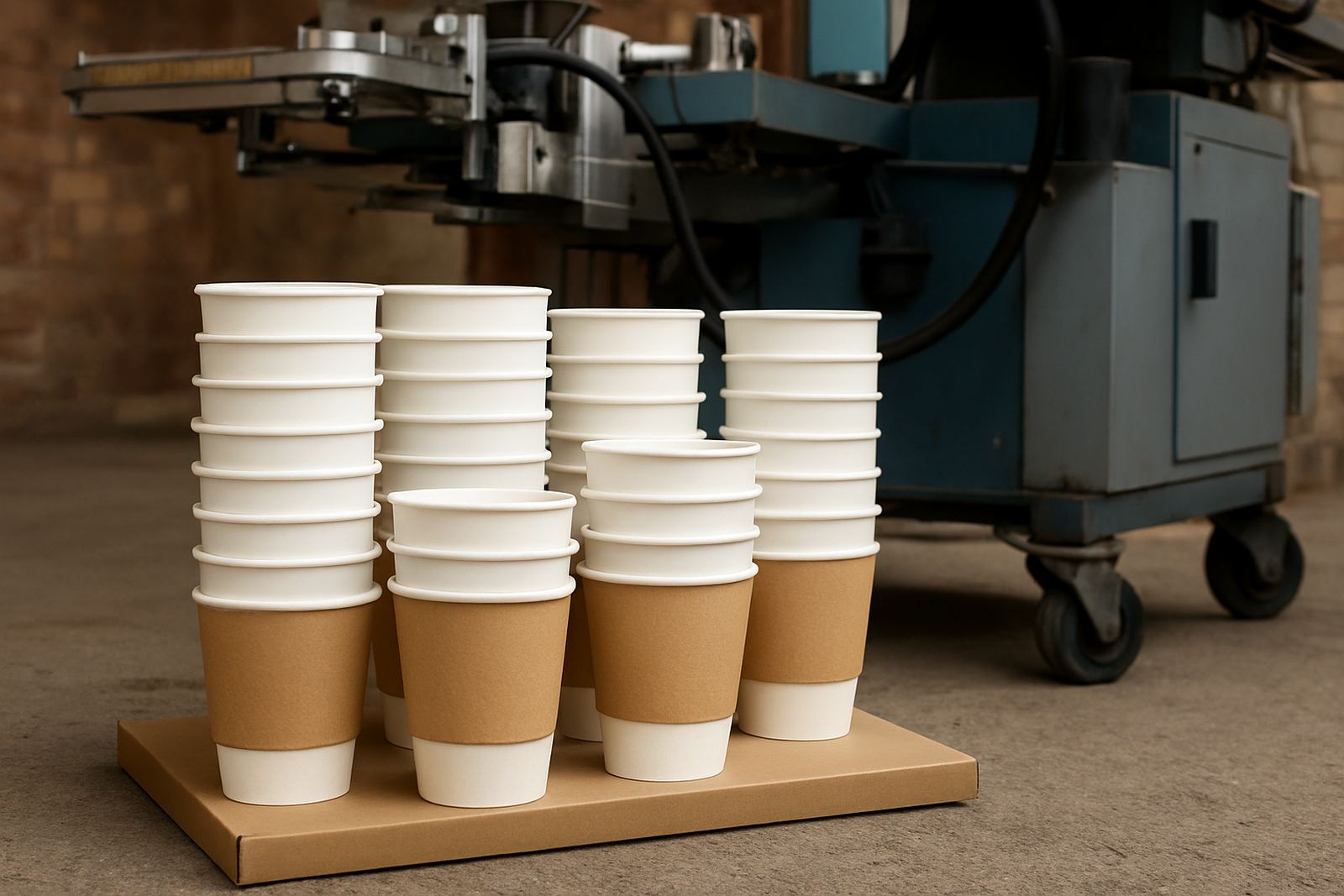
The client was a hospitality supplier in Boksburg putting together a reusable coffee cup order for cafés, offices and event use. The cups were being supplied in bulk and needed a print that looked neat on the shelf, stayed readable after washing and worked across repeated handling.
The brief was straightforward on paper but tight in practice. The cups had a curved body, a small print panel and a mixed supply timeline that left little room for rework. We were asked to prepare the screen print side of the job, advise on setup and make sure the run could be repeated if the client re-ordered later in the year.
- Product type: reusable coffee cups for hospitality supply
- Town: Boksburg, Gauteng
- Print area: narrow curved panel on the cup body
- Use case: daily serving, takeaway and promotional gifting
Print specs and setup choices
For this project we worked with cylindrical screen printing suited to a round cup body. The artwork was prepared for a single-colour brand mark, with the line weight checked to avoid fill-in on the smaller details. The cup wall was smooth, but the curve still meant the screen tension and squeegee pressure had to be set carefully.
We kept the setup practical for local production. The print height was matched to the available wrap area, registration marks were checked before the first run and the ink was chosen for adhesion on the cup surface. Because the order was for a hospitality supply chain, consistency mattered more than fancy effects, and that is where screen printing does well. The finish had to stay sharp on cup after cup, not just on the sample.
- Method: cylindrical screen printing
- Colour count: 1 solid colour
- Substrate: reusable coffee cups
- Surface check: smooth body with a curved print path
- Finish target: clean edge, even ink laydown and repeatable placement
How we handled the run
We supplied the screen making for the job, assisted with colour setup and supported the production team through the first run. The client wanted the cups moving quickly, but not at the cost of print quality. So we built the process in stages: screen prep, test prints, minor adjustment, then full batch production.
The run took place over two weeks from sign-off to final output. During that period we checked print alignment, helped the operator set the right pressure and monitored for any variation caused by the cup shape. Boksburg can get dusty on industrial sites, so keeping the work area clean was part of the process as well. A small build-up on the screen can show up fast on white or light coloured cups, so the team stayed on top of wipe-downs and checks.
- Week 1: artwork check, screen prep and test print approval
- Week 2: production run, final inspection and pack-off support
- Support included: colour setup help and operator guidance
- Checks included: repeat position, cure confidence and print clarity
Constraints we had to work around
The main constraint was the cup shape itself. On a reusable cup, even a slight taper can throw off the wrap if the machine is not set correctly. The second constraint was timing. Hospitality suppliers often need stock ready for a specific client handover date, and that means no late changes once production starts.
Load-shedding was another practical factor. We planned the run so the most sensitive steps were handled when power was stable, and the team could pause without losing the job if needed. That kind of planning saves a lot of stress, especially when there are multiple cartons already marked for delivery. The client also wanted a result that would hold up in washing and transport, so we did not push the ink film too thick. It needed to look good and last, not just look bold on day one.
- Curved cup body required careful alignment
- Delivery deadline meant limited room for retries
- Power planning was needed around load-shedding periods
- Print durability had to suit repeated handling and washing
Results on the cups
The printed cups came out with clean edges, steady colour and consistent placement across the batch. The client wanted a product that looked ready for retail and could also be handed straight into a hospitality pack, and that is how the finished order presented. The print sat well on the cup body and gave the supplier a neat branded product they could move out without extra finishing.
We also left them with a better process for future orders. Once the screen settings were confirmed, the client could repeat the run with less set-up time next time around. That saves labour and keeps the margin better on smaller hospitality orders. The team reported fewer stops during the run and less rework than they had expected, which was the main measure that mattered here.
- Neat, repeatable print across the batch
- Improved turnaround for future repeat orders
- Less rework during the production run
- Ready for hospitality supply and packing
What we would do again
For a project like this, we would follow the same approach again. Early screen prep, proper test prints and a short production pilot make a big difference on cups, especially when the order is headed for hospitality use and the client wants a reliable finish. We would also keep the colour and pressure settings documented from the start so the next run can start quicker.
If the same customer comes back with a larger Boksburg or Johannesburg order, we would suggest planning the print slot around the delivery window and the local power schedule. That keeps the job moving and helps avoid last-minute pressure. It is simple work, but simple work done properly is what keeps repeat business coming back. A good cup print has to be plain and exact, not overworked.
- Keep the setup notes from the first run for repeat work
- Allow time for a small pilot before full production
- Plan around delivery dates and power availability
- Use the same screen and colour reference for consistency
Key facts
| Project | Reusable coffee cup branding for hospitality supply |
|---|---|
| Town | Boksburg, Gauteng |
| Print method | Cylindrical screen printing |
| Colour count | 1 colour |
| Timeline | 2 weeks from setup to completion |
| Services used | Screen making, colour setup help, production support and operator guidance |