Why air size matters on cylindrical printing lines
Pneumatic cylindrical printing equipment relies on steady air pressure for movement, clamping and repeat cycles. When the compressor cannot keep up, the machine may still run but the pressure drops at the wrong time, and that shows up as poor registration, slow stroke speed or parts that do not hold firmly enough.
For bottle, cup and tube printing, the issue is not only peak pressure. It is also how much air the compressor can deliver over time, measured as free air delivery. A small unit may build pressure quickly then fall behind once production starts. That is where many sites in Johannesburg South and Midrand get caught out, especially when more than one machine or air tool shares the same line.
Start with the machine air draw, not the tank size
A big tank can give you a short buffer, but it does not solve low air output. What matters most is how much air the equipment consumes per cycle and how often those cycles happen. A machine that prints short runs on 250 ml bottles may use less air than one handling long tubes or heavier clamps, but the total load still rises once the shift gets busy.
Ask for the air requirement in litres per minute at the working pressure, then add headroom for real shop conditions. In practice, you want spare capacity for load-shedding recovery, air leaks, future machines and the odd blow-off gun being used on the same compressor line. A system that sits at its limit will age quicker and cost more in repairs.
- Check the air draw at working pressure, not just the maximum pressure rating.
- Allow spare capacity for 20% to 30% above normal use.
- Keep in mind that longer pipe runs, filters and dryers all affect delivery.
- If you print in a hot area or a humid coastal city, performance can shift during the day.
Simple sizing rules that work in real shops
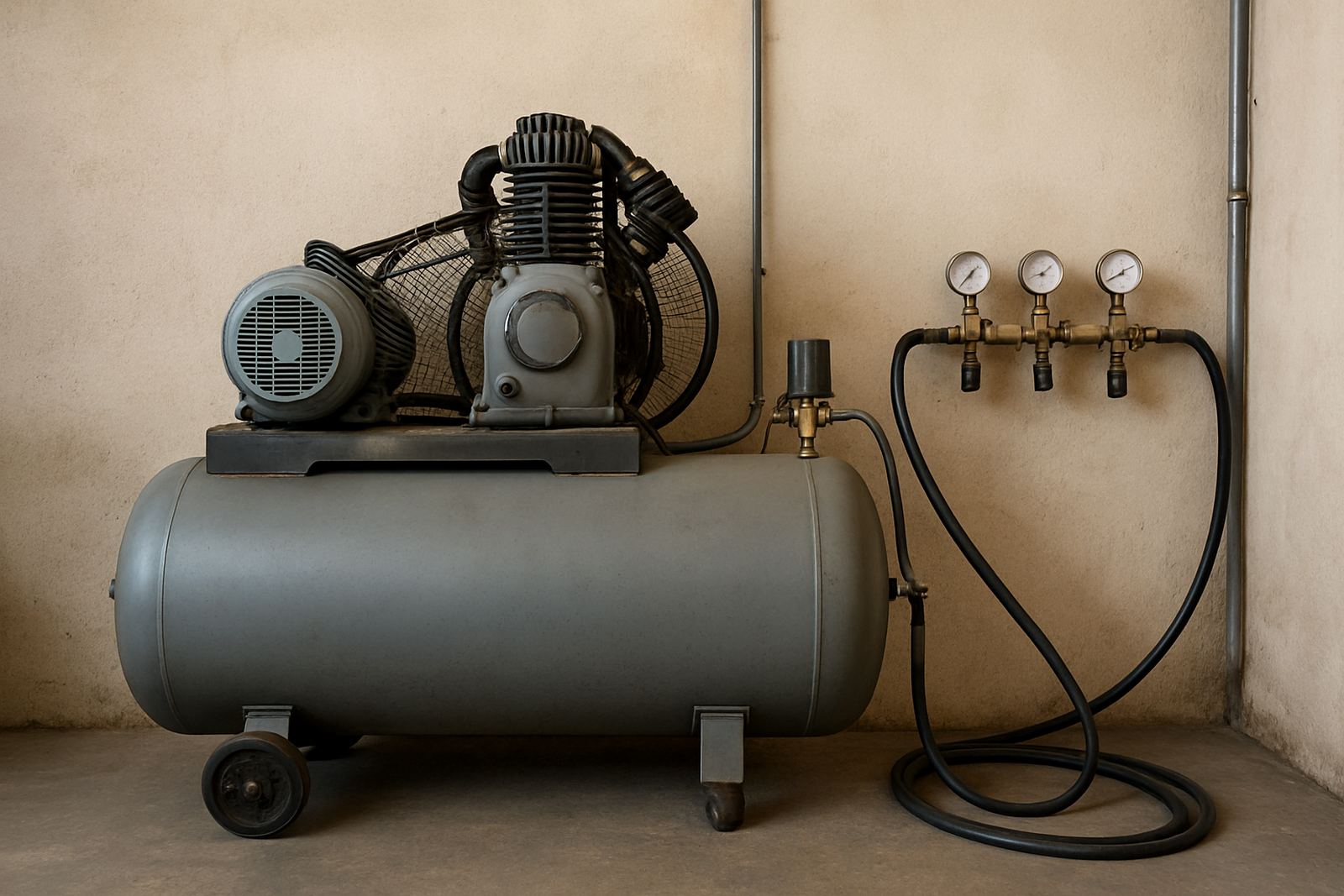
For a single pneumatic cylindrical printing machine, a modest compressor may be enough if the cycle is light and the operator is not running extra tools from the same supply. For a small production line, the safer choice is usually a larger unit with a receiver tank that can absorb short peaks. That reduces cycling and helps the pressure stay steady.
A useful rule is to match the compressor to the job with margin, not to the absolute minimum on paper. If your machine needs 200 litres per minute, do not buy exactly 200. Aim higher so the compressor is not flat-out all day. In real use, a machine in Aeroton can behave very differently to the same setup in Durban, where humidity and warmer air can change how the system feels under load.
- Light use: one machine, short runs, limited extras.
- Medium use: one machine with regular production and setup changes.
- Heavy use: more than one machine, frequent starts, or long shifts.
- Always check whether the compressor is oil-lubricated, oil-free or fitted with drying equipment.
Pressure, moisture and print quality on bottles and cups
Stable pressure is important because print quality depends on consistent movement. If pressure drifts, the screen may not track evenly or the clamp action may vary from one cycle to the next. That can mean wasted screens, extra setup time and more rejects, especially on small-diameter items where tolerance is tighter.
Moisture is another issue many sites underestimate. In coastal areas like Durban and Cape Town, humid air can put more water into the line and that can affect screens, ink handling and machine reliability. A filter and moisture trap are useful, and in busier shops a dryer can be worth the extra spend. It is cheaper than clearing water out of hoses after the fact.
For shops near the coast, or for businesses working through winter mornings in Gauteng, it helps to drain the tank daily and check for water in the line. Small habits save a lot of downtime.
What to plan for during load-shedding and power cuts
Power interruptions can be hard on compressed air systems. When power returns, the compressor may restart under load and draw a high current. If the unit is undersized or the supply is weak, that restart can trip breakers or delay production longer than expected.
In many Johannesburg and Pretoria workshops, the practical answer is to choose a compressor that recovers quickly and does not run at full stretch during normal operation. If you have backup power, make sure the compressor start-up demand fits the inverter, generator or changeover setup. The air system should be part of the backup plan, not an afterthought.
- Test how long the tank holds pressure during a short outage.
- Check the restart load on your electrical supply.
- Keep spare filters and belts on hand if the unit uses them.
- Plan production around the most stable power periods where possible.
A Johannesburg example from a growing print shop
Say a shop in Aeroton prints cylindrical containers for a cosmetics packer and starts with one machine on a single day shift. At first, a small compressor appears to do the job. Then orders rise, a second setup is added, and operators start using air tools at the same station. The compressor now runs flat-out, heat builds up, and pressure dips during longer runs.
The fix is rarely to squeeze more out of the same unit. More often it is to move up to a compressor with better free air delivery, a larger receiver tank and proper line filtration. That gives the operator steadier pressure, quieter running and less interruption when the business has to push through month-end or a sudden rush order.
We see the same pattern in Midrand, Durban and Cape Town: once production becomes regular, the air system needs to be treated like part of the machine line, not just a workshop extra.
The checks to make before you buy
Before ordering, confirm the machine requirements, your daily hours, the number of operators and whether other equipment shares the same air line. Also measure the distance from the compressor to the machine because long lines can cause pressure loss. If the unit sits in a separate room, ventilation matters too, otherwise heat builds up and output drops.
It is worth asking for help with installation and setup rather than guessing. Correct pipe sizing, good drainage points and proper regulator settings make a real difference. A slightly larger compressor, installed well, can outlast a cheaper one that is constantly strained.
For many print shops, the right choice is not the biggest compressor on the quote, but the one that gives steady air every day, even when the weather turns, the shift runs late or the power blips for a few minutes.