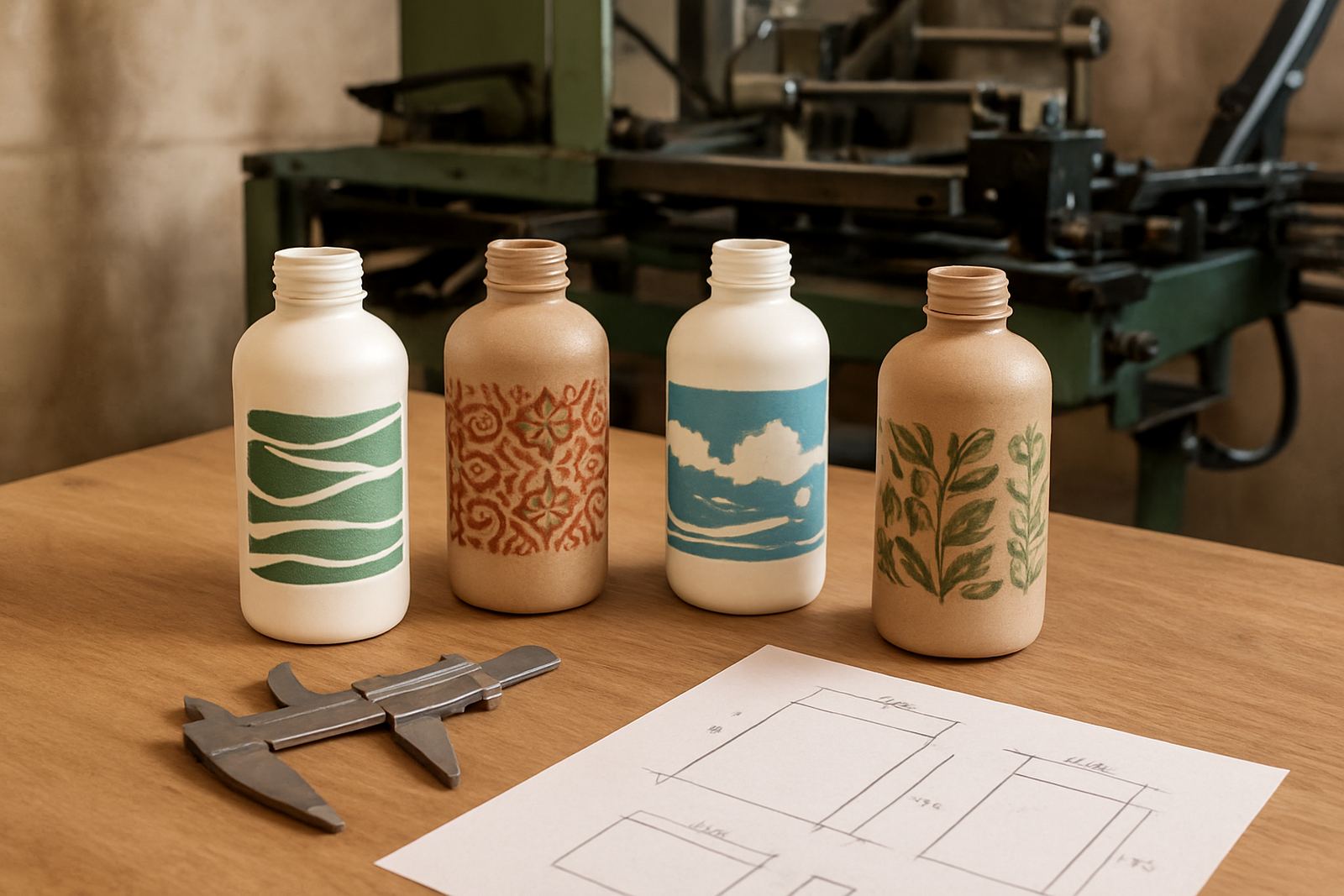
Start With the Substrate, Not the Artwork
On cylindrical products, poor adhesion is often blamed on the ink when the real issue is the surface itself. PET, coated aluminium, powder-coated cups, glass and laminated tubes all behave differently, so the first step is to identify exactly what the item is made of and how it was finished. A glossy surface can look clean but still carry mould release, polishing residue or fine dust from packing and transport.
For suppliers in Johannesburg, Pretoria and Durban, we often see issues caused by handling during busy shifts. Operators touch the print area, cartons open in dusty stores, and some materials pick up static during dry weather. In winter the air in Gauteng can be very dry, while coastal humidity in Durban can add its own problems. Both conditions affect bonding if the line is not set up carefully.
- Check the material type before setting ink or screen mesh
- Wipe off dust, oils and handling marks before printing
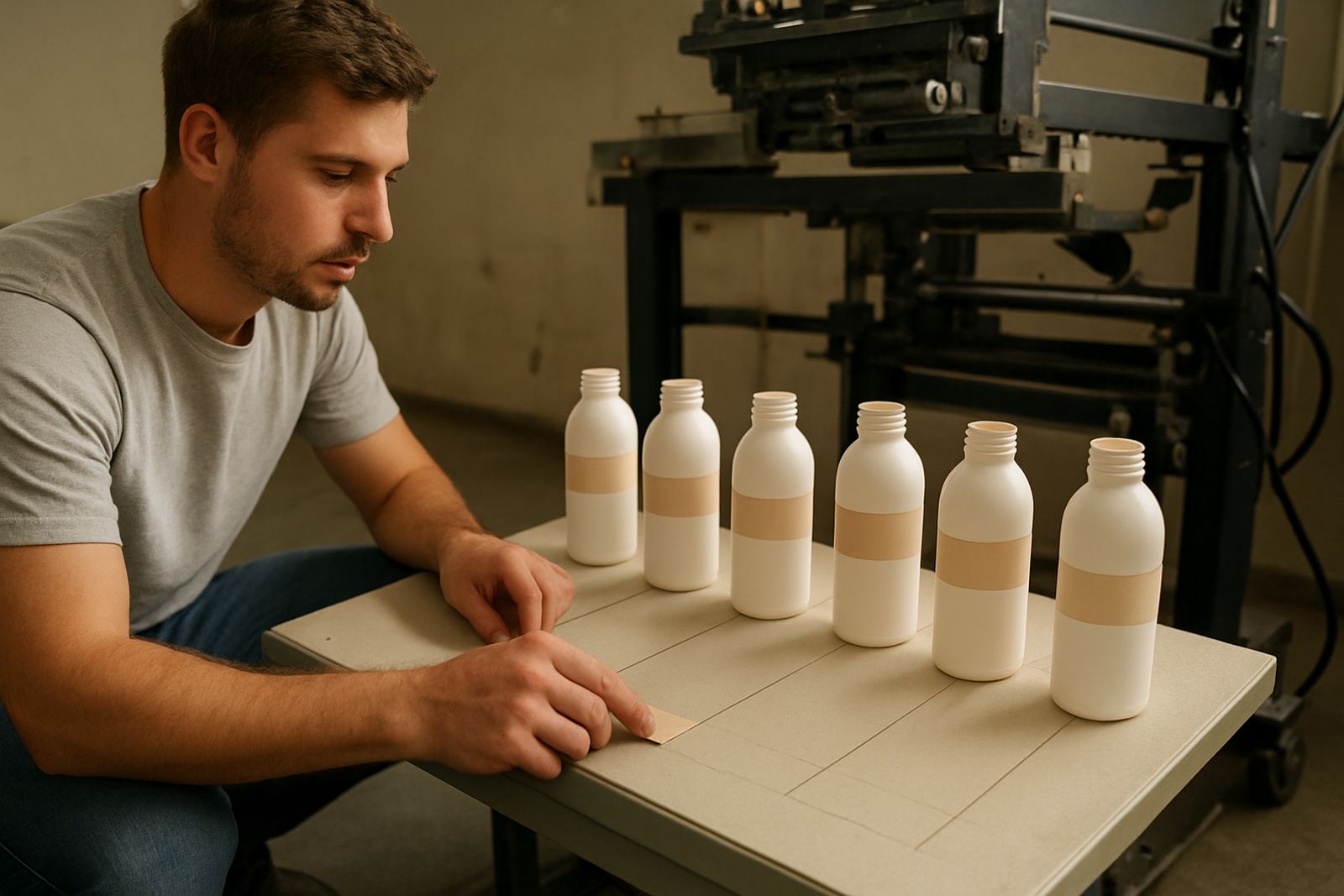
- Keep a sample from each batch for quick comparison
- Do a small adhesion test before full production starts
Cleaning and Pre-Treatment Make the Biggest Difference
A clean surface is only the starting point. Many cylindrical substrates need a pre-treatment step to help the ink key into the surface properly. Depending on the product, that may mean flame treatment, corona treatment, or a controlled wipe with the correct cleaning solution. The aim is to improve surface energy so the ink wets out properly instead of sitting on top and flaking later.
For bottle and cup work, consistency matters more than speed. If one item is treated well and the next one is skipped, the print result will vary across the same run. That is where complaints start, especially when products are being shipped to retailers or packed for promotion campaigns where every piece must match.
- Use the same cleaning method for every shift
- Allow treated parts to cool before printing
- Keep cleaning cloths fresh and lint free
- Do not over-handle the product after treatment
For sites in industrial areas like Aeroton or Midrand, where production spaces can get warm and dusty, it helps to set up a simple cleaning station close to the machine. That cuts down on contamination and saves time too.
Match the Ink System to the Product and Cure Method
Ink adhesion depends on the full system, not just the colour on the screen. The ink must suit the substrate, the drying method and the final use of the item. A cup that will be hand-washed at home has different demands from a tube that must survive squeezing, rubbing and transport in cartons. If the wrong ink type is used, the print may look good on day one but fail after a few uses.
Curing is another point where production lines lose quality. Under-cure leaves the print soft and weak. Over-cure can make the ink brittle or change the finish. On smaller cylindrical items, heat can also distort the part if the setup is not balanced. That is why it helps to test cure settings on actual production items rather than relying on guesswork.
- Choose ink that suits the substrate and end use
- Confirm cure time with a proper production test
- Check that the print feels dry and fully bonded
- Avoid rushing parts off the line before curing is complete
Screen Setup and Mesh Choice Affect Bond Strength
Good adhesion is not only about chemistry. Mechanical factors in the print setup matter too. If the screen mesh is too coarse, too much ink can sit on the surface and cure unevenly. If it is too fine, the deposit may be too thin to build a durable print. Squeegee pressure, flood speed and off-contact settings all change how the ink transfers onto curved products.
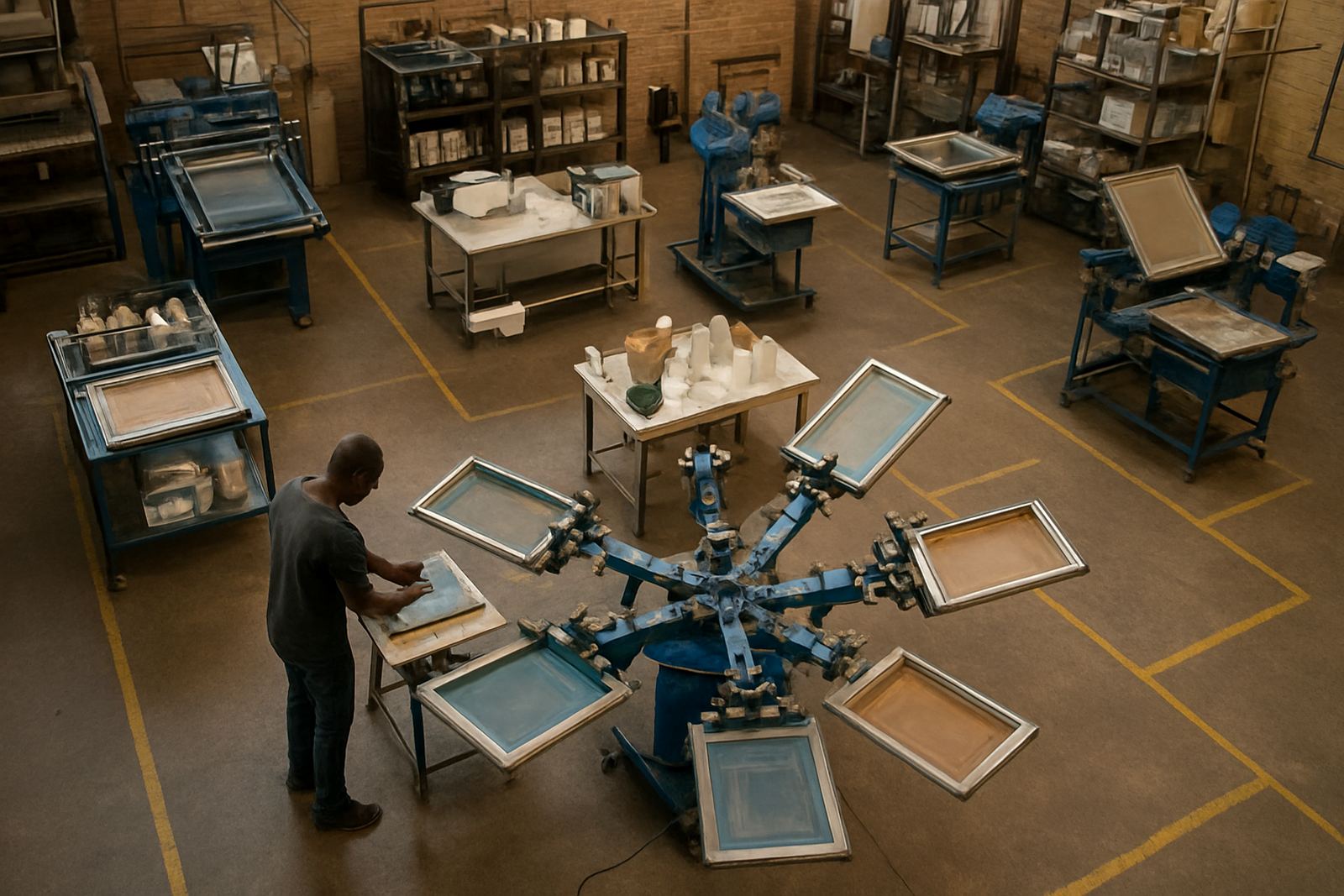
On cylindrical machines, stable registration and repeatable rotation are important. If the item shifts during the print stroke, the ink layer becomes uneven and weak points appear. That can happen on bottles with tapered shoulders, cups with textured sides or tubes that flex under pressure. A proper screen making process helps, but the machine setup has to support it as well.
- Set mesh to suit the ink deposit required
- Keep squeegee angle and pressure consistent
- Check rotation speed against the product shape
- Test tapered or flexible items before a full run
Preventive Maintenance Protects Print Quality
Many adhesion problems begin with a machine that is almost right but not quite. Worn bearings, loose fixtures, dirty guides and inconsistent pressure all affect print transfer. If the machine hesitates or the screen rides unevenly, the print can look acceptable at a glance but fail when rubbed or washed. On busy lines, these small faults build up over time.
A simple maintenance routine saves a lot of rework. Clean the machine daily, check moving parts weekly and keep spare wear items on hand. In load-shedding periods, it also helps to restart with a quick test print after power returns. Motors, heaters and control settings may not come back in the same state they were before the outage.
- Inspect guides, clamps and rotation parts regularly
- Keep a clean area around the machine to limit dust
- Record faults early before they affect a whole batch
- Test setup again after power interruptions
For production teams in Cape Town or Durban, coastal moisture can also affect stored parts and screens. Dry storage and good housekeeping reduce surprises when the line starts up again.
A Johannesburg Example: Fixing Lift on Promotional Bottles
A drinks promotion run in Johannesburg South was producing bottles with print that lifted after filling and packing. The artwork was correct, but the bond was weak. After checking the job, the issue turned out to be a mix of poor surface cleaning, inconsistent treatment and a cure setting that was too low for the ink load being used. The bottles looked fine in the pressroom, but the first distribution test showed rubbing at the corners of the cartons.
Once the team standardised the cleaning step, improved the treatment process and adjusted the cure to suit the line speed, the rejection rate dropped sharply. The fix was not one single change, it was three small changes working together. That is typical in production. Adhesion usually improves when the whole system is tightened up, not when just one setting is changed and left at that.
For businesses in Gauteng, this is often the difference between reprints and dependable output. A few extra minutes on setup can save a full day of wasted stock.