Why a small spares stock saves a full production day
When a cylindrical printing line stops, the loss is rarely just one hour. You lose setup time, waiting time, the next batch in the queue and sometimes the drying or packing team too. That is why most busy sites keep a small maintenance spares list for the parts that wear out first.
For bottle, cup and tube work, the best spares are the ones that fail often enough to matter but are simple enough to replace in-house. A press team in Johannesburg South may get away with a day or two of delay. A coastal plant in Durban dealing with humidity and sticky ink conditions usually cannot. The point is not to hoard parts, it is to keep production moving when the pressure is on.
On a well-run line, spares planning also helps with clean audits and less panic buying. You know what is on site, what must be ordered and what needs to be checked after every service.
The core spares every supported line should keep
Some items are worth keeping on hand for almost every supported production line. These are the parts that take the most handling, get contaminated by ink or solvent, or wear through normal daily use.
- Screen mesh and replacement screens for fast changeovers
- Squeegee blades and flood bars
- Ink cups, seals and small gaskets
- Belts, rollers and drive rollers where fitted
- Limit switches, sensors and basic electrical fuses
- Air fittings, tubing and connectors for pneumatic machines
- Bearings and guide blocks on high-use stations
- Cleaning cloths, screen wash and reclaim chemicals
These items do not take much room, but they can save a shift. In Midrand or Pretoria, where many plants run mixed product sizes, the same line may need several quick adjustments in one day. Having the common wear parts on site helps operators make those changes without waiting for delivery.
What fails first on cylindrical printing equipment
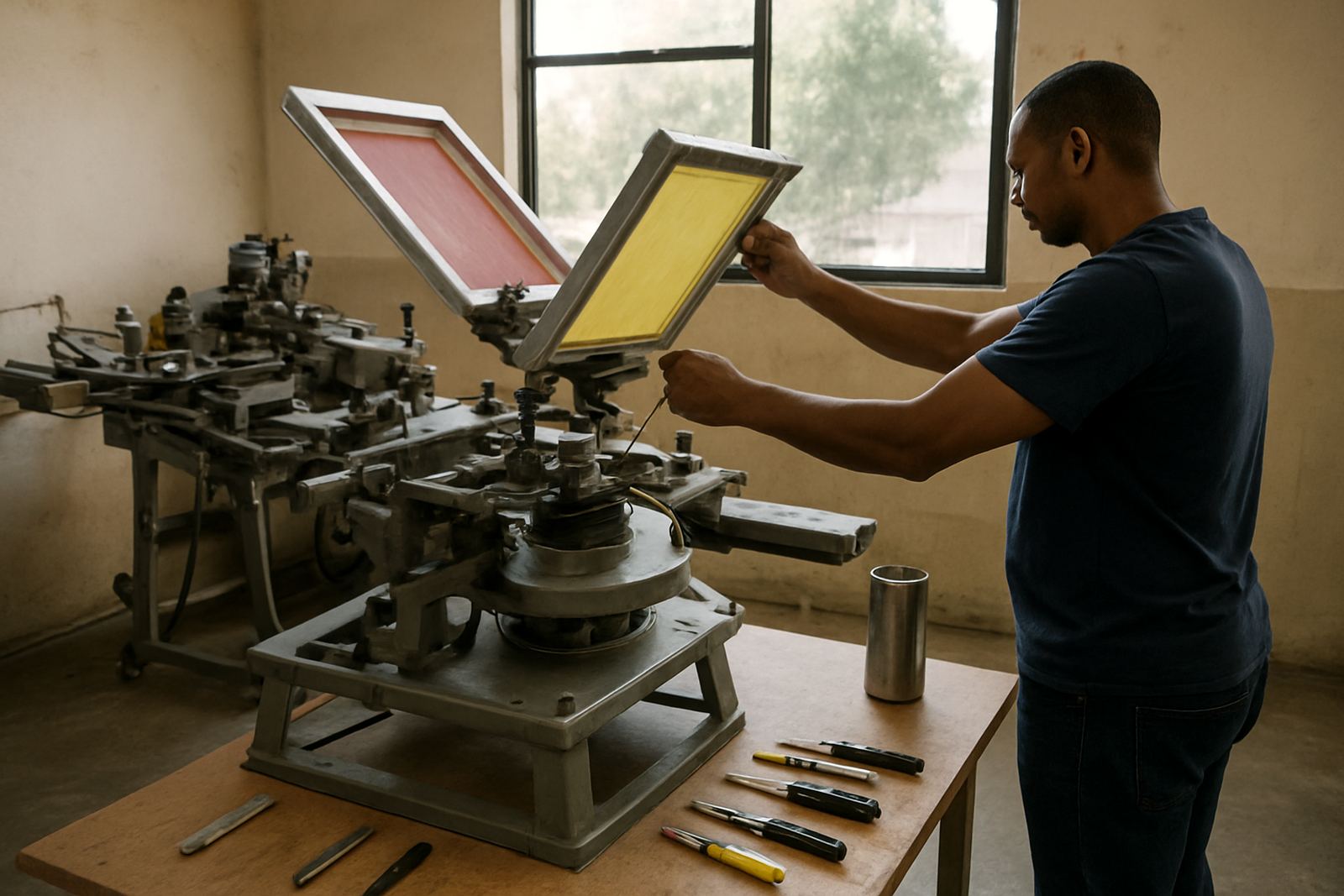
Cylindrical screen-printing machines usually show wear in a few predictable places. The print quality may still look acceptable at first, then you start seeing small faults like uneven ink transfer, missed registration or a noisy motion point. Those signs often point to a part that is near the end of its life.
The most common early replacements are consumable parts, motion parts and air system parts. Consumables are easy to spot because they touch the product directly. Motion parts take strain every cycle. Air system parts are often overlooked until a cylinder moves slowly or not at all.
If you are running cups and bottles with mixed diameters, check the guide points and fittings more often. A line that handles 330 ml bottles in the morning and wide cups after lunch will show wear quicker than a single-size line.
- Worn squeegee edges that leave patchy print
- Seals that allow ink leaks or drying out
- Guide parts that cause vibration or wobble
- Air leaks that slow down clamp action
- Loose electrical contacts from repeated movement
How to match spares to the real running conditions
South African production sites do not all work under the same conditions. A plant in Aeroton may face dust and power interruptions, while a coastal site must deal with humidity and slower drying times. Your maintenance spares list should reflect those realities.
For sites affected by load-shedding, keep spare fuses, contactors and control items that are known to fail during repeated restarts. For humid areas, keep extra cleaning materials, moisture-sensitive consumables and replacement seals. For busy plants with long runs, keep more of the items that wear through contact, such as blades and guide parts.
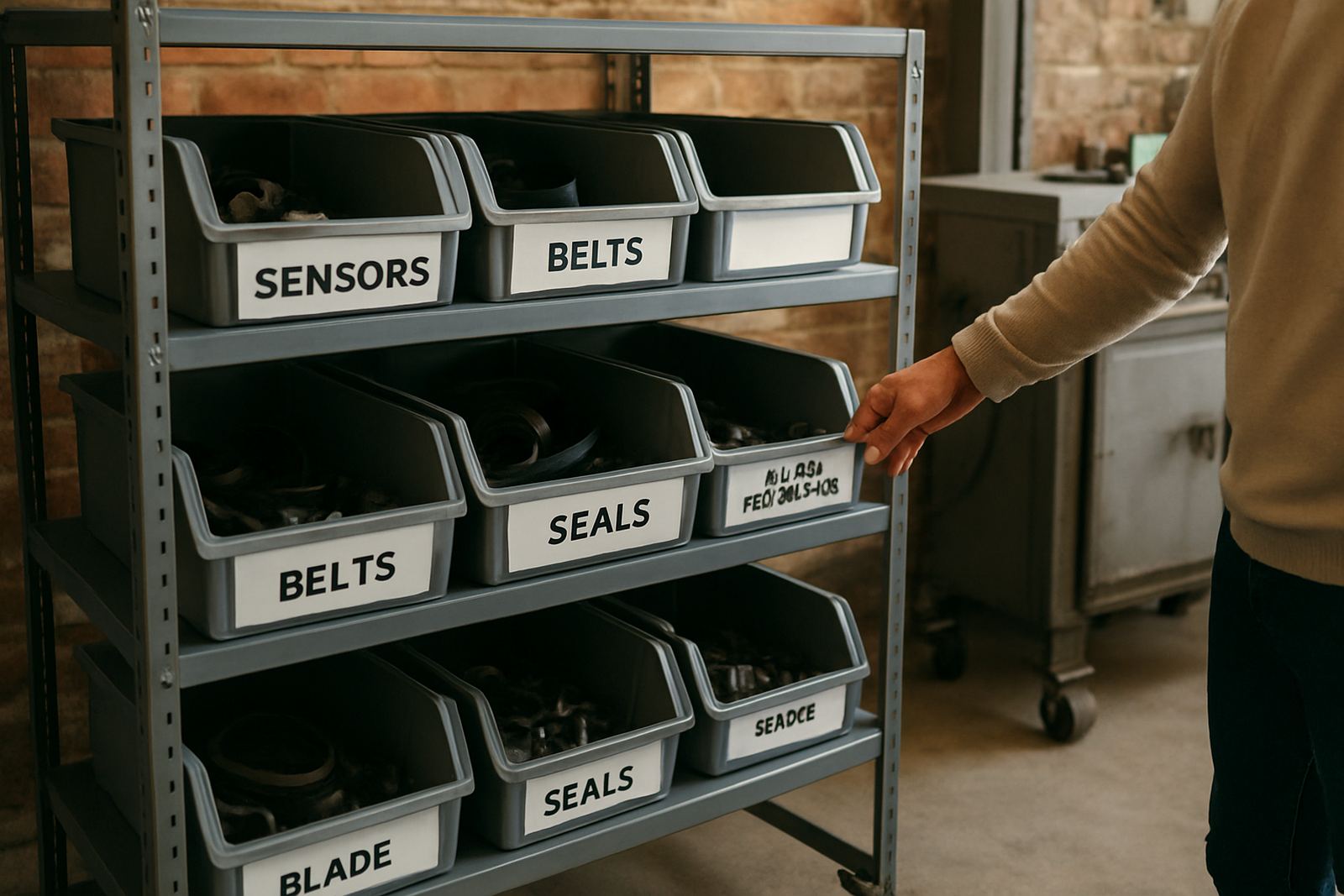
This is also where site layout matters. If the spares shelf is across the factory, operators will delay repairs. Keep the fast-moving parts close to the line and the slower items in a controlled store. Label everything clearly, especially if more than one machine type is in use.
A practical monthly check for the spares shelf
A spares shelf only helps if the parts are still usable. Once a month, check each item against your service log. Look for expiry dates, cracked packaging, warped rubber parts and anything that has gone missing without being recorded.
- Count fast-moving items and compare with last month
- Check seals, blades and hoses for drying or cracking
- Review what was used during breakdown repairs
- Mark items that must be reordered before month end
- Separate good stock from damaged or opened stock
It helps to assign one person to sign off the shelf. That could be an operations manager, service coordinator or senior operator, depending on the size of the site. Without one owner, small shortages tend to go unnoticed until a machine stops and everyone is looking for the same part.
Local support and spares planning for South African sites
For businesses in Johannesburg South, Midrand, Pretoria, Durban or Cape Town, the real test is not whether a spare exists somewhere in the country. It is whether the part can be matched correctly, supplied quickly and fitted properly. That is why spare planning should sit next to installation, operator training and preventive maintenance.
At Bottle Screen Printers in Aeroton, the team works with supported production lines across South Africa to help identify the spares that matter most for each site. Thabo Mokoena and the team, including technical sales, installation, training and service support, can help shape a list around actual usage rather than guesswork. If your line handles bottles, cups or tubes, ask which items should be kept on site before the next busy period.
That way, when a clamp wears out or a seal starts leaking, the fix is already planned. No drama, just less downtime and steadier output.