Why a firm grip matters on round parts
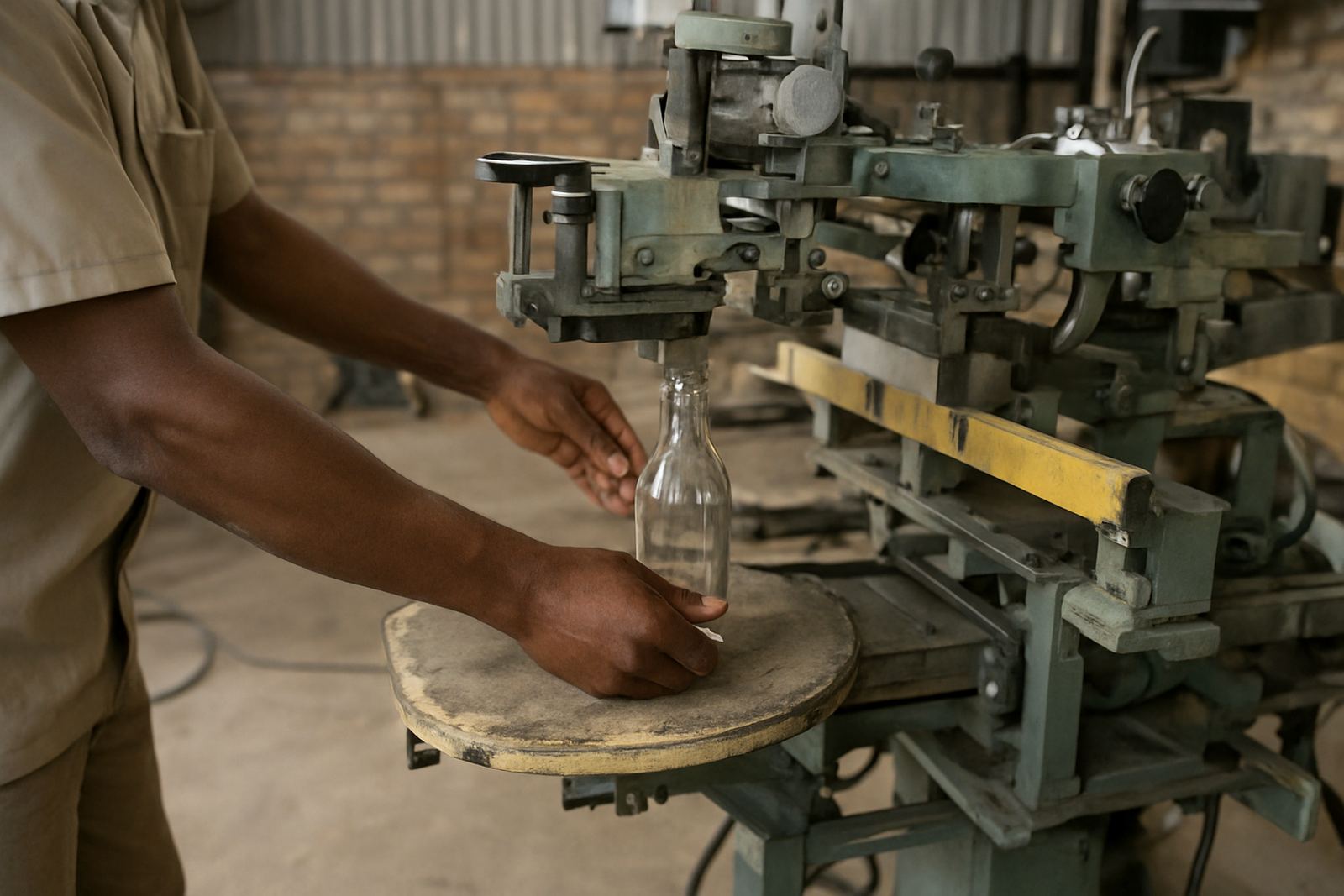
Rotating cylindrical tooling depends on one simple thing: the part must stay in the same position from the first print to the last. When a bottle or tube slips in the fixture, the print head and rotation no longer meet at the same point, so your logo starts drifting, colours overlap badly or one side of the artwork prints light. On short runs that might look like a small fault. On a full shift it becomes scrap, rework and a lot of frustration for the operator.
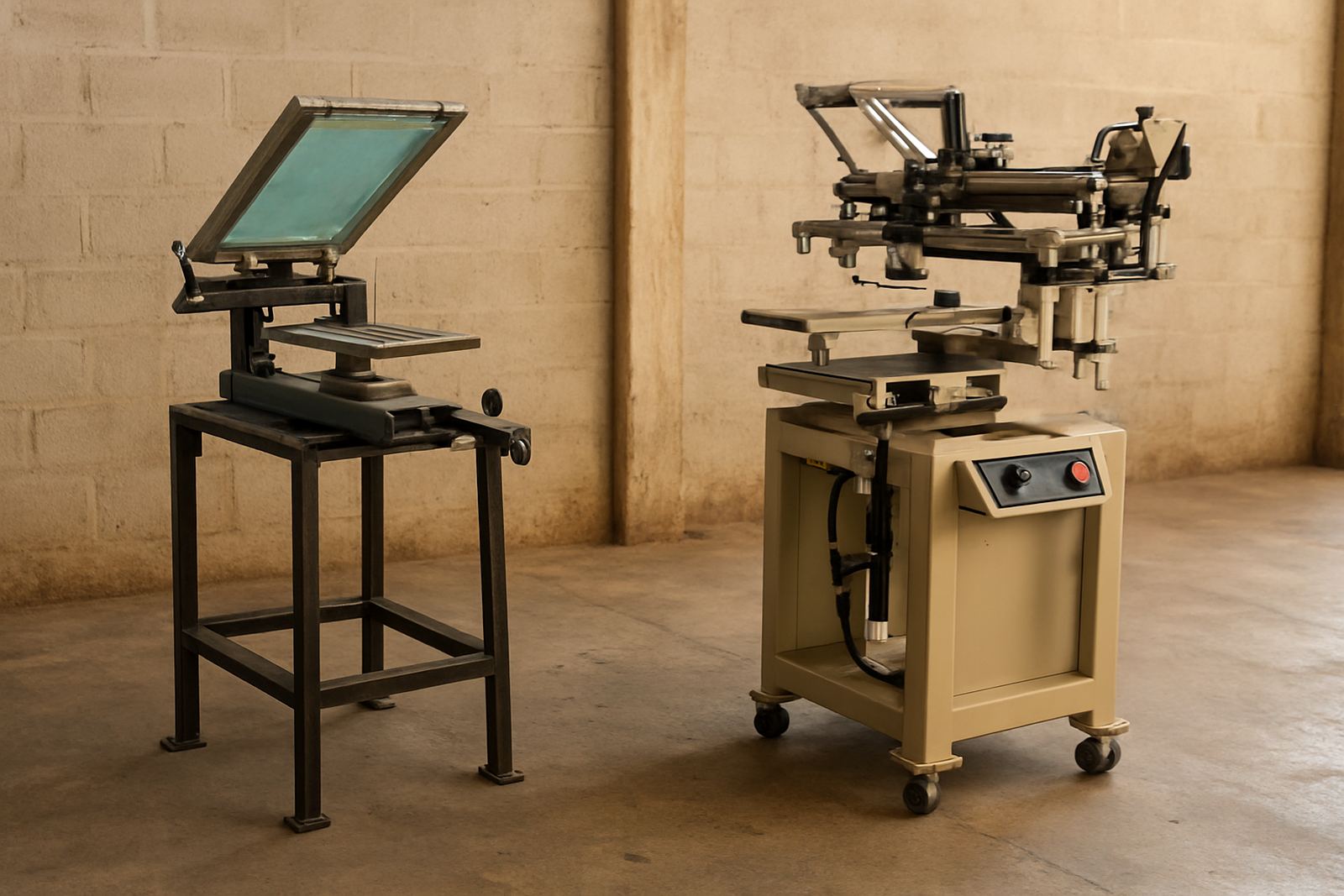
In Johannesburg factories, especially where teams are pushing through fast orders after load-shedding or trying to recover lost time, fixture slip often gets blamed on the screen, the ink or the machine speed. Very often the real issue is simpler. The gripping surface is worn, the clamp pressure is wrong, or the product shape just does not match the tooling properly. A clean, well set fixture gives you repeatability, and repeatability is what keeps cylindrical decoration profitable.
Common signs that the fixture is slipping
Slip does not always show up as a dramatic failure. More often, it appears as small changes from one print to the next. The first bottle may look perfect, the next one 2 mm out, and by the end of the batch the artwork is drifting visibly. Operators sometimes compensate by adjusting the screen off centre, but that only hides the problem for a while.
- Artwork shifts from left to right across the print area
- Repeated prints do not line up on the same start point
- Ink smudges appear near the start or end of rotation
- Bottles or cups feel loose in the fixture before printing
- Some parts print well and others fail, even with the same setup
On tubes, slip can show up as a slight twist that causes text to tilt. On cups and bottles, you may see a logo that looks fine on the front but out of position on the back seam. If you are getting mixed results across the batch, the fixture grip should be checked before changing the whole production setup.
What causes poor gripping in cylindrical tooling
There are a few usual suspects. Worn rubber, dust on the contact surfaces, incorrect fixture sizing and poor pressure settings are at the top of the list. If the gripping pads have gone shiny or hard with age, they lose friction. In a humid coastal environment like Durban or Cape Town, moisture can also change how a bottle or cup sits in the holder, especially on smooth plastic or coated surfaces.
Product variation matters too. Two bottles from the same supplier may not have exactly the same outside diameter. That small change is enough to create movement if the fixture is set too loose. On heavier glass containers, the issue can be different, because the weight pulls down during rotation and causes a slight shift if the support points are not matched correctly. A fixture that works on a 250 ml bottle may struggle on a taller 1 litre shape without adjustment.
Sometimes the cause is operator practice. If the loading sequence changes between shifts, or if the clamp is closed before the product is seated fully, repeatability suffers. It is not unusual to find that the machine itself is fine, but the part is being loaded at a slight angle every time.
A practical setup checklist before a run
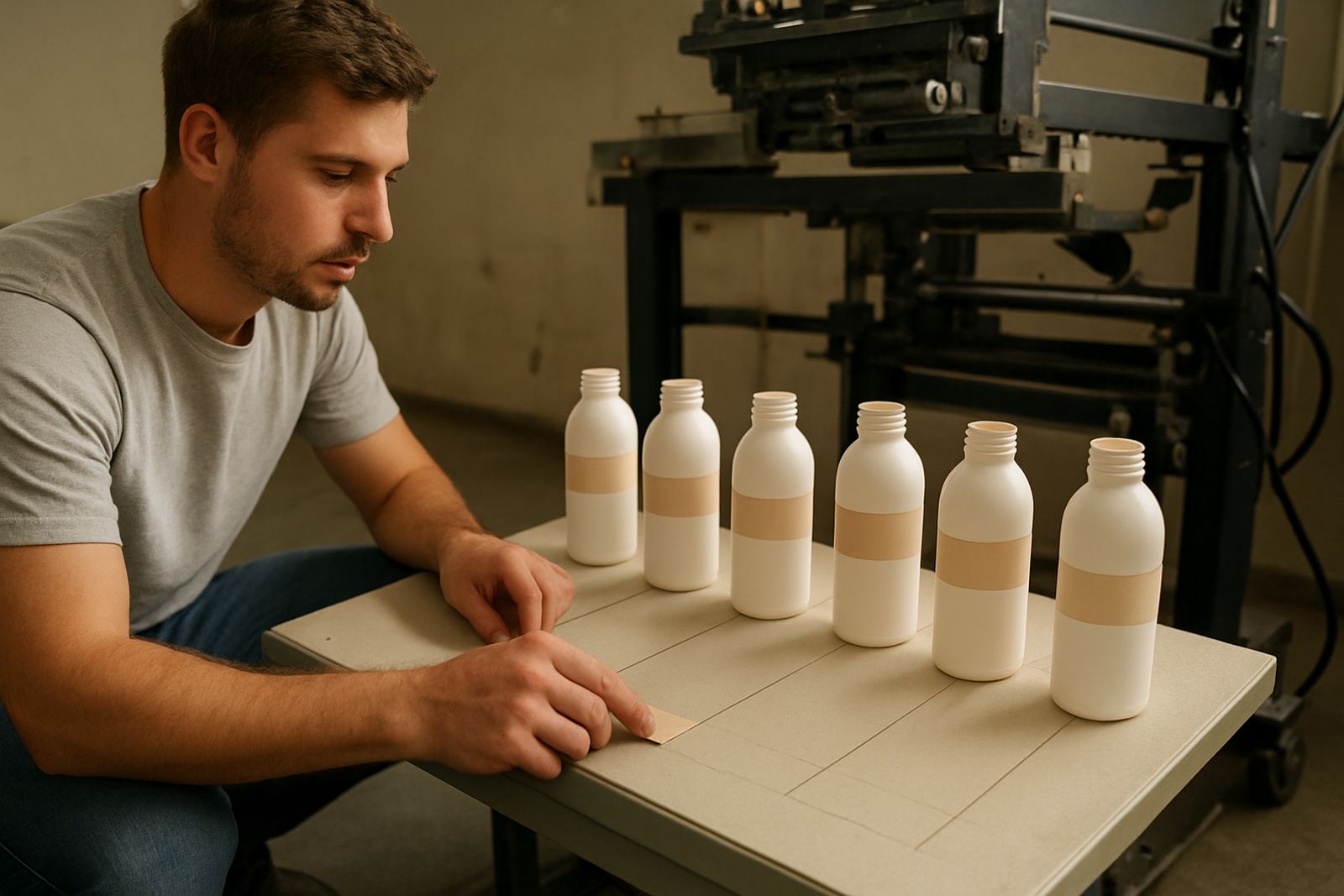
Before starting production, do a quick physical check. It takes minutes and can save a full tray of rejects. The goal is to make sure the part sits consistently, the grip is even and the rotation is smooth from start to finish. If there is any wobble by hand, there will be a print issue later on.
- Clean the fixture surfaces and remove dust, ink residue or oil
- Check gripping pads for wear, glazing or hardening
- Match the fixture size to the actual product diameter
- Test the clamp pressure with a sample part before printing
- Rotate the part manually and look for any shift or bounce
- Confirm that the load position is the same on every cycle
If you are running mixed jobs, label the tooling clearly so the operator does not mix up similar sizes. That matters in busy plants where one team may be doing bottles in the morning and cups in the afternoon. A neat changeover routine helps keep pressure settings and loading positions consistent.
How slippage affects print quality and output
When a cylindrical part slips, the print quality problems multiply fast. Registration errors are the obvious one, but there are others. Ink can build up on one side and look thin on the other because the screen and part are no longer travelling together. On multi-colour jobs, the second colour may miss the first by a small amount that becomes very visible once the part turns in the light. The customer sees a bad print, even if the machine operator thinks the setup looked acceptable.
Slippage also hurts throughput. Operators slow the machine down to try and control the fault, which reduces hourly output and pushes production into overtime. In many South African workshops that means missed dispatch cut-offs, rushed packing and more load on the next shift. One small fault on the fixture can therefore affect the whole production line. It is often cheaper to service the tooling early than to keep reprinting product that should have passed first time.
Maintenance habits that keep fixtures repeatable
Good fixture grip is not a once-off setup. It needs regular maintenance. Check the gripping points during planned service intervals and replace worn pads before they start affecting every job. Keep the moving parts free of dried ink, paper dust and polishing compound. If the machine is standing in an area with wide temperature changes, recheck clamp settings after the first warm-up run, because materials can behave differently once the workshop heats up.
For businesses in Aeroton, Johannesburg South, Midrand and Pretoria, the practical approach is simple: build a short start-of-shift inspection into the daily routine. That habit is especially useful after power interruptions, when machines are restarted and everyone is trying to get back into production quickly. If the fixture grip, screen tension and rotation are checked together, you catch repeatability problems early and avoid chasing the fault from one station to another.
Where the tooling is old or the product range has changed, it may be worth reviewing the fixture design altogether. A holder that worked well on one bottle shape might need a different insert, support point or clamping method for another. The right adjustment gives better grip without crushing the container or slowing down the cycle.