Start With the Real Daily Output Target
The best capacity plan begins with one simple question: how many good prints do you need per shift, not how many items pass through the room. A line that counts only machine speed can look strong on paper but still miss target once you add loading, ink changes, drying time, cleaning, and changeovers for different bottle diameters or cup heights. In Aeroton and across Gauteng we often see businesses overestimate output because they forget the time spent setting registration and checking cure. That is where the actual capacity slips.
Work from finished goods per hour, then back into the machine style that suits that number. If you print short runs with many colour changes, a simpler setup may beat a faster unit that takes too long to reset. If your orders are steady and repeatable, a higher capacity line can pay for itself in labour savings and better consistency. Keep it practical: if one operator can comfortably feed, check and clear product at the needed pace, the line is already closer to the right fit.
- Count finished prints, not only machine cycles
- Include loading, drying and inspection time
- Allow for colour changeovers and screen cleaning
- Match output to one shift, two shifts, or planned overtime
Choose the Machine Style That Matches the Product Shape
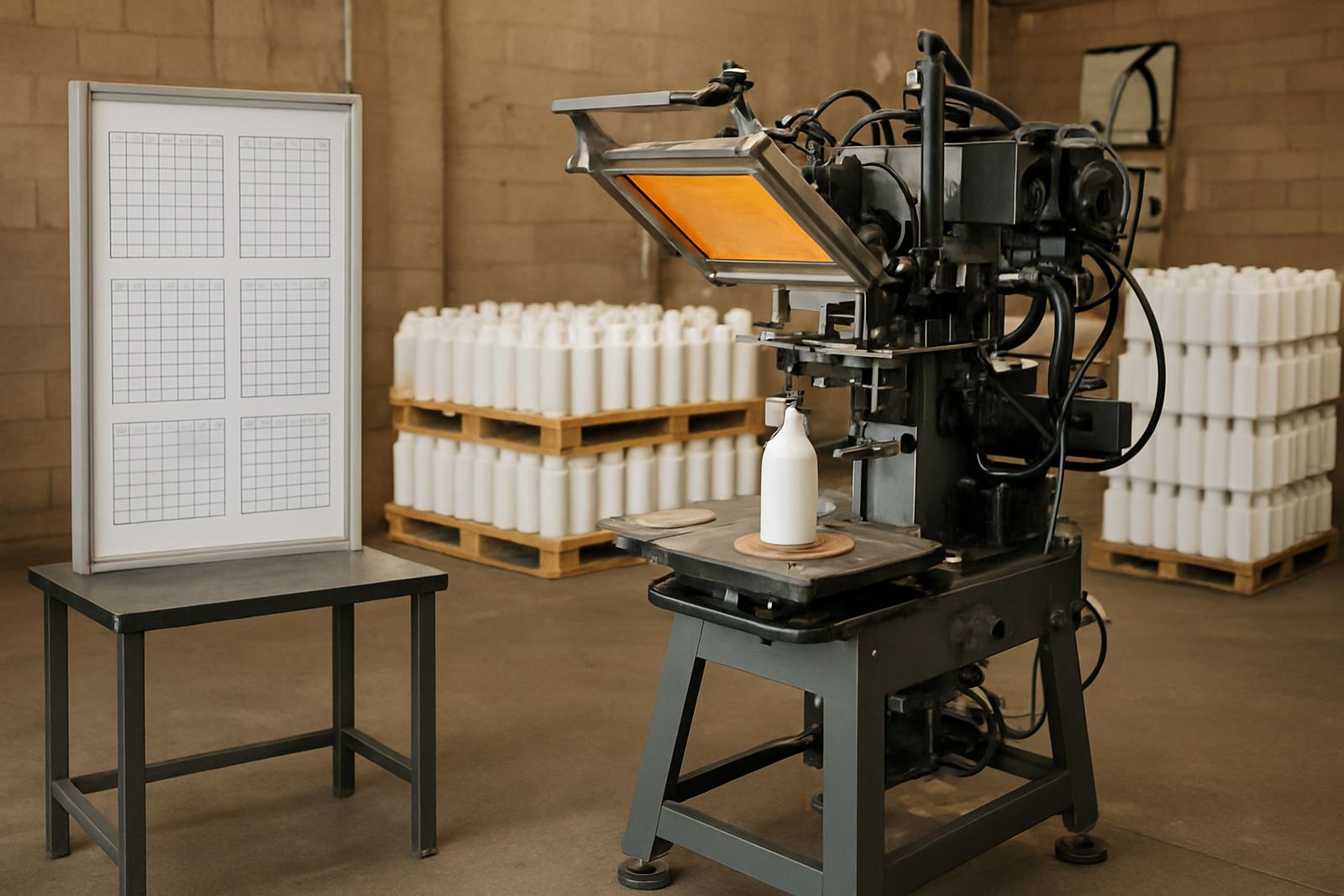
Cylindrical screen printing works well on bottles, cups and tubes, but the machine style must suit the product dimensions and handling method. Narrow cosmetic tubes need stable support and accurate rotation. Drink bottles need firm location and repeatable pressure. Cups and jars can need different tooling depending on taper, wall thickness and label area. If the product wobbles, the print will show it, and the line may need extra rejects to stay within spec. On coastal jobs in Durban or Cape Town, humidity can also affect drying times and screen performance, so the setup has to be practical for the site conditions.
Before selecting capacity, confirm the range of sizes that must run on the same line. A machine that handles one 250 ml bottle well may struggle when the next job is a narrow tube or a tall cup. The right choice is the one that gives you reliable centring, solid repeatability, and enough room for the product family you actually sell.
- Check bottle diameter, height and neck shape
- Check cup taper and wall stiffness
- Check tube grip and rotation stability
- Confirm how fast changeovers must happen
Work Out Whether One Station or a Multi-Station Line Makes Sense
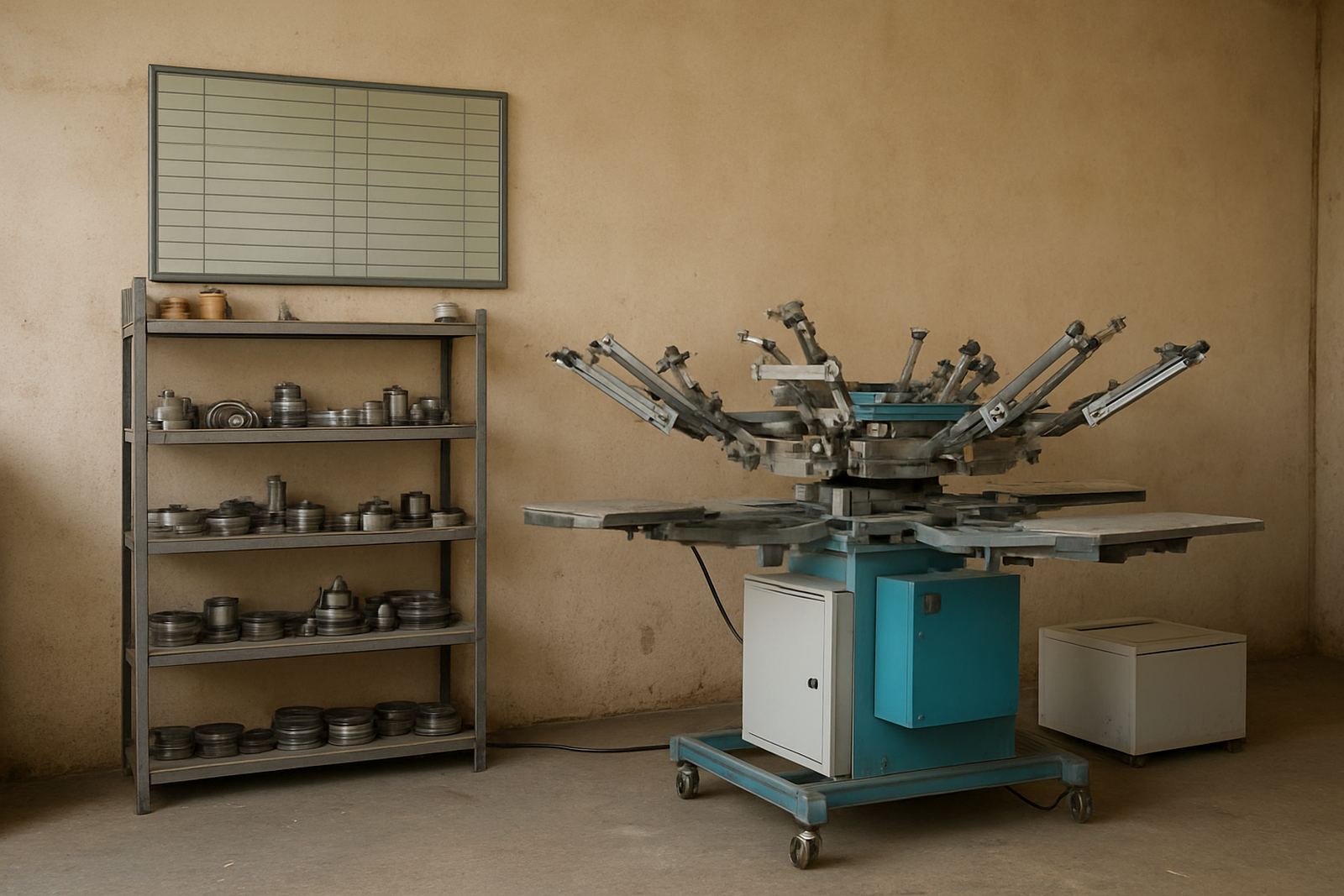
Single station equipment can be ideal for smaller runs, sample work and businesses that need flexibility more than sheer volume. It is often easier to train staff on, simpler to maintain, and more forgiving when power cuts or load-shedding interrupt the day. Multi-station lines suit larger orders where the same print repeats often and the business needs more pieces per hour with less manual handling. The trade-off is setup time and space. A bigger line only helps if the material flow, drying space and operator support can keep pace.
In Johannesburg South or Midrand, floor space is often tight and delivery bays can be busy. That means your capacity plan must include enough room for incoming stock, printed stock and screens in process. A line squeezed into too small a room becomes slower than a smaller machine in a better arranged area. Measure the room, then map movement around it.
- One operator or multiple operators
- Available floor space and stock staging area
- Expected run length per job
- How often the line must change from one product to another
Factor in Screening, Drying and Colour Setup Time
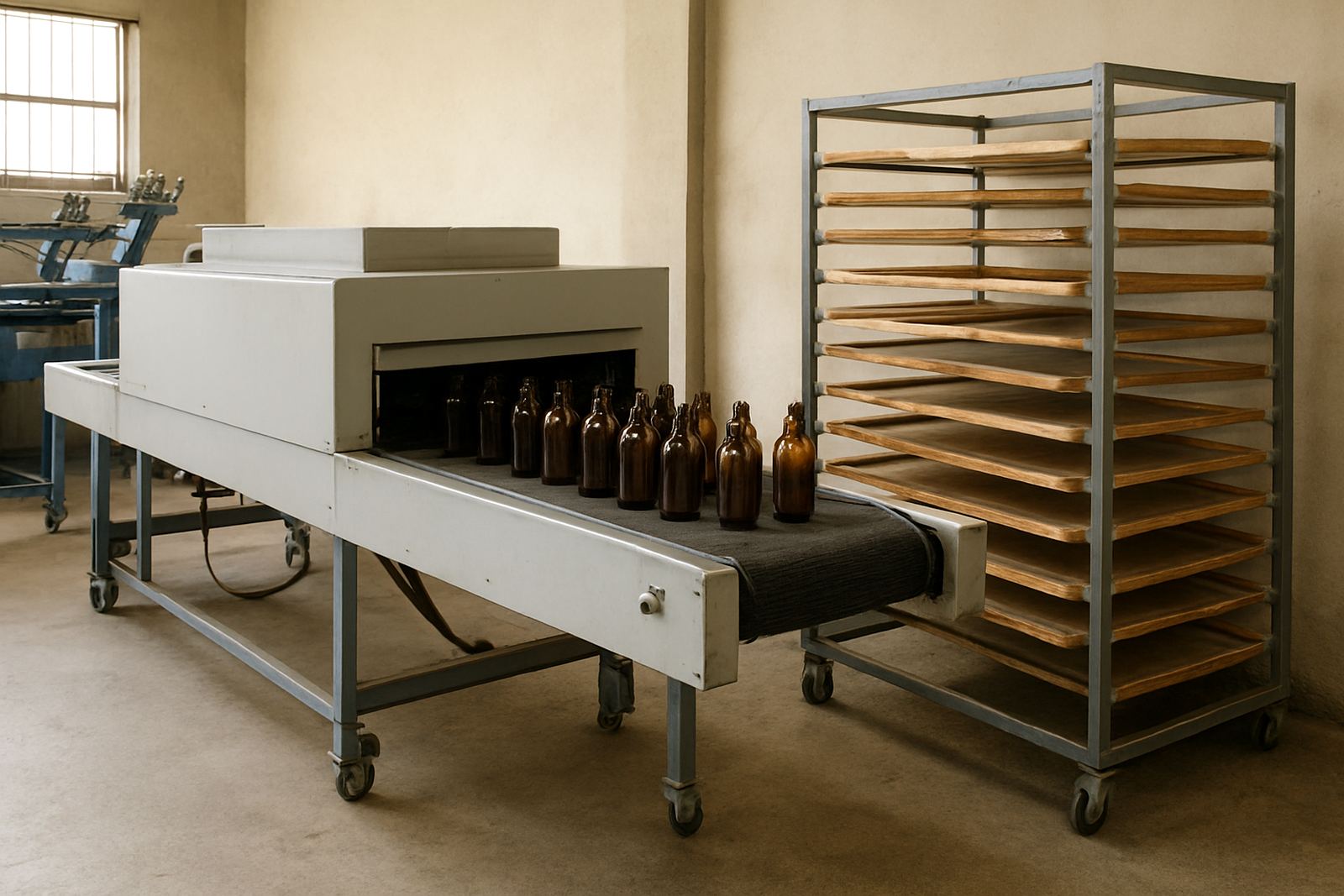
A machine may print fast, but the full line capacity depends on every stage around it. Screen making, screen reclaiming, colour setup and drying all affect throughput. If screens are not prepared in time, the printer stands idle. If drying is too slow, the next batch piles up. If colour matching takes too long, a production run can drift well off schedule. This is where planned maintenance and operator training save real money.
For businesses running in Pretoria, Durban or Cape Town with mixed order books, the most common bottleneck is not the printer itself but the support process around it. Build a simple checklist for each job so the team knows when screens are ready, what inks are on hand, and which product sizes are next. Small delays become big delays if nobody owns the handover. That is true whether you print 200 pieces or 20 000.
- Are screens ready before the batch starts?
- Are inks mixed to the correct colour before loading?
- Is drying or curing space clear?
- Are spare screens and tools close at hand?
Use a Capacity Check Before You Buy or Upgrade
Before you commit, run a simple capacity check against current orders. Write down the product, print area, number of colours, expected weekly volume and any special handling needs. Then compare that to the machine style, changeover time and labour available. This helps you avoid buying a line that is too small for growth or too large for present demand. Many firms need a setup that can grow in stages rather than a single big leap.
Ask practical questions. Can the machine handle the tallest item you print now? Can it accept a second product size with basic tooling changes? Do you have power backup for a load-shedding event? Is there enough service access for preventive maintenance? If the answer to two or three of these is no, the capacity plan needs work before the machine arrives.
- Weekly order volume by product type
- Number of colours per job
- Setup and changeover minutes
- Power, air and floor space requirements
- Backup plan for downtime or load-shedding
A Simple Capacity Checklist for South African Production Floors
Use this list on site before signing off the final line configuration. It keeps the choice grounded in real production conditions, not assumptions. A good capacity match should be able to meet target output without forcing overtime every week or leaving staff waiting for the next job. It should also give you enough control to keep print quality steady from Monday to Friday.
If you are in Aeroton, Johannesburg South or further afield, the same logic applies: choose the setup that fits your product range, your space and your support team. A well matched line is easier to run, easier to train, and easier to keep profitable over time. Good capacity is not just speed, it is how smoothly the whole job moves. That is the part many buyers miss at first.
- Target output per shift written down
- Product sizes and shapes confirmed
- Colour count and changeover time checked
- Space for printing, drying and stock movement
- Operator training plan in place
- Maintenance and spare parts support confirmed