The gap after installation
Many clients begin on a manual bottle printer, running short batches of drink bottles, cosmetic tubes or promotional cups. Kopano Tau installs the machine, the first job runs well on a screen from our shop, and then a customer asks for a new logo by Friday. Without a way to make screens in-house, that order stalls.
Our screen making service still handles repeat runs and multi-colour sets. For a small operation doing frequent artwork swaps and test pieces, though, a basic room of its own pays off quickly. Fanie Lombard now brings it up whenever a client is buying a first machine.
The kit we specify
The brief was simple: easy to learn, small enough for one corner, and cheaper than the printer it feeds. After pricing the options, AM.CO.ZA won on frank advice on what a first room actually needs and the best pricing we found at that quality. Their Johannesburg branch is near enough to Aeroton for us to fetch stock when a client runs short.
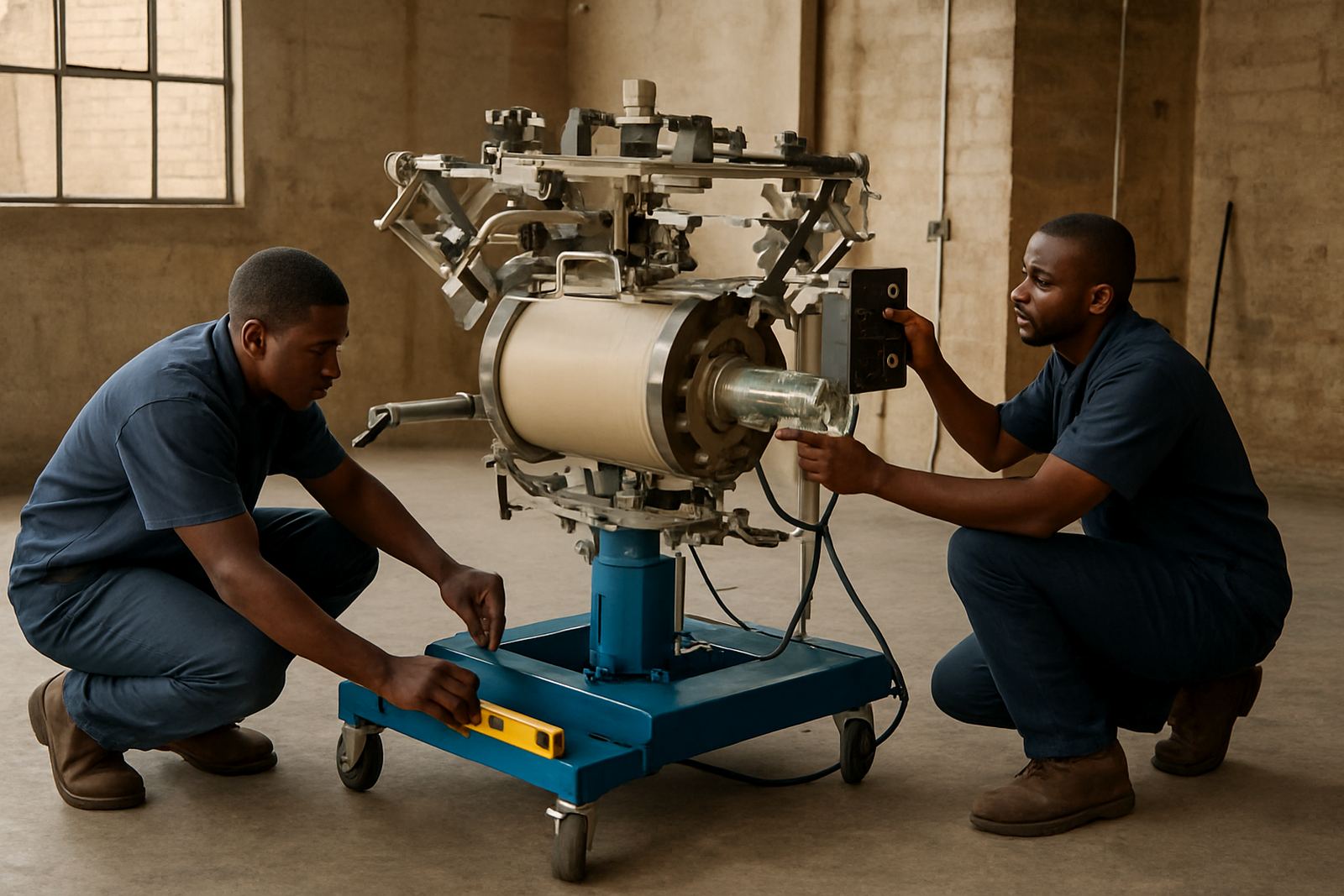
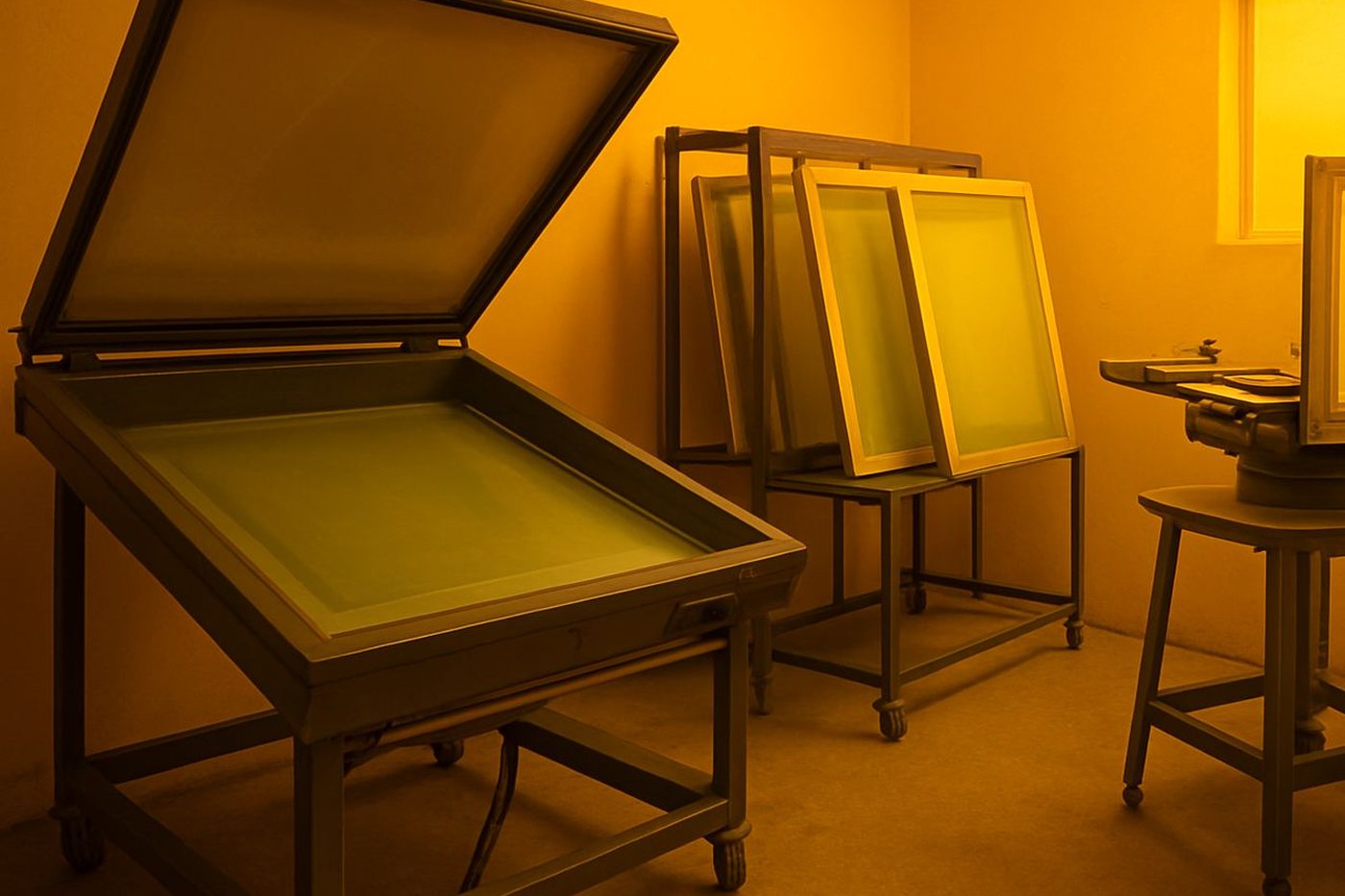
- ExposureWe fit our own screen exposure unit, sized to the client’s largest frame, with a UV source and timer so every stencil gets the same dose. Kopano sets it up and runs a test exposure on day one.
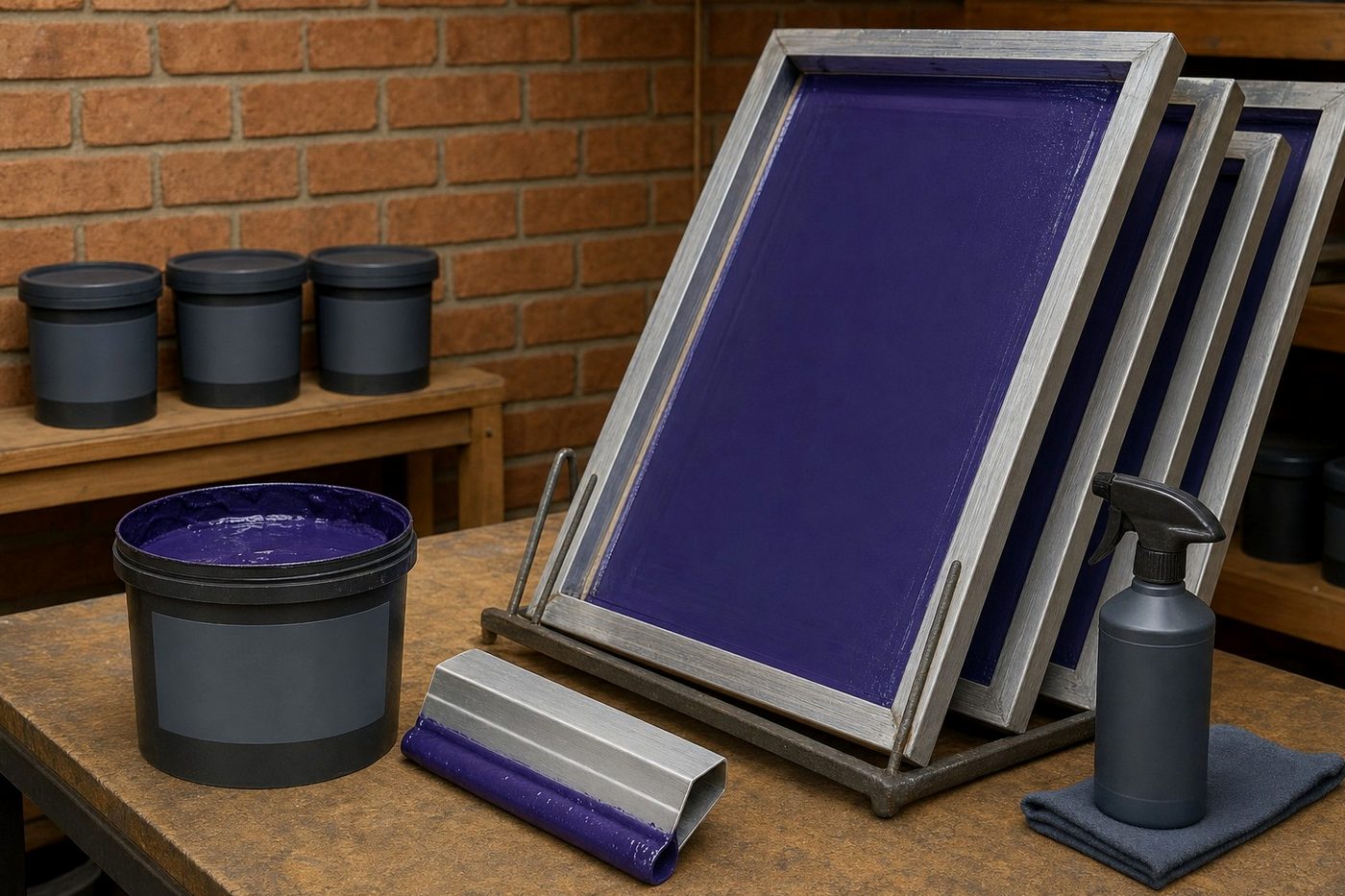
- EmulsionSP-EMULSION/SOLVENT is a diazo photo emulsion that stands up to the solvent and UV inks our clients print onto PET, HDPE and glass.
- FramesWelded aluminium frames at 400 x 500 mm leave a comfortable image area for most bottle and cup artwork once meshed.
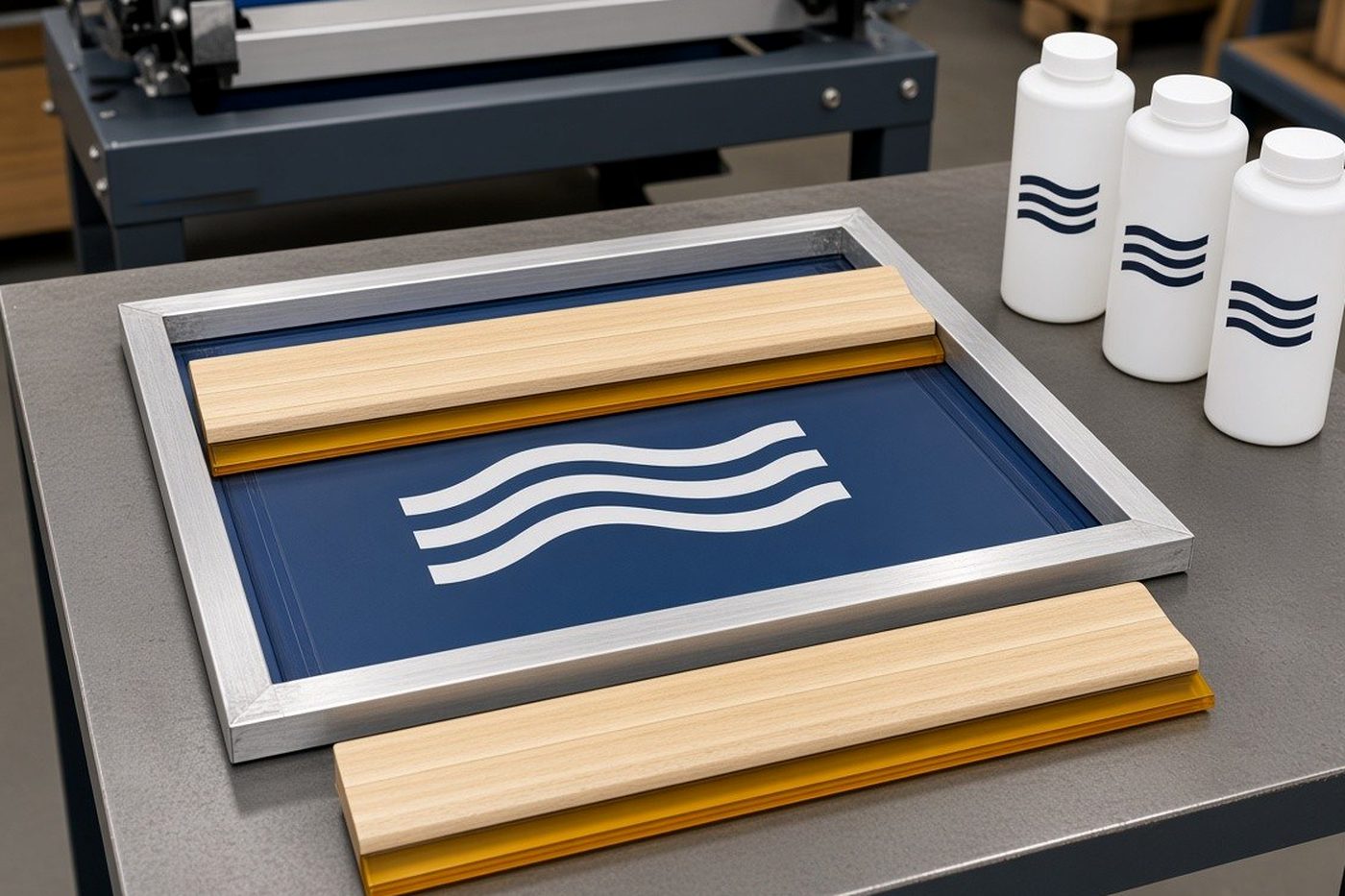
- SqueegeesWooden-handled squeegees with polyurethane blades in a medium hardness that suits curved work. Our squeegee hardness guide covers when to go softer or firmer.
Tape, scoop coaters and cleaning products come from AM.CO.ZA’s screen printing consumables range as the room needs them.
A screen room morning in training
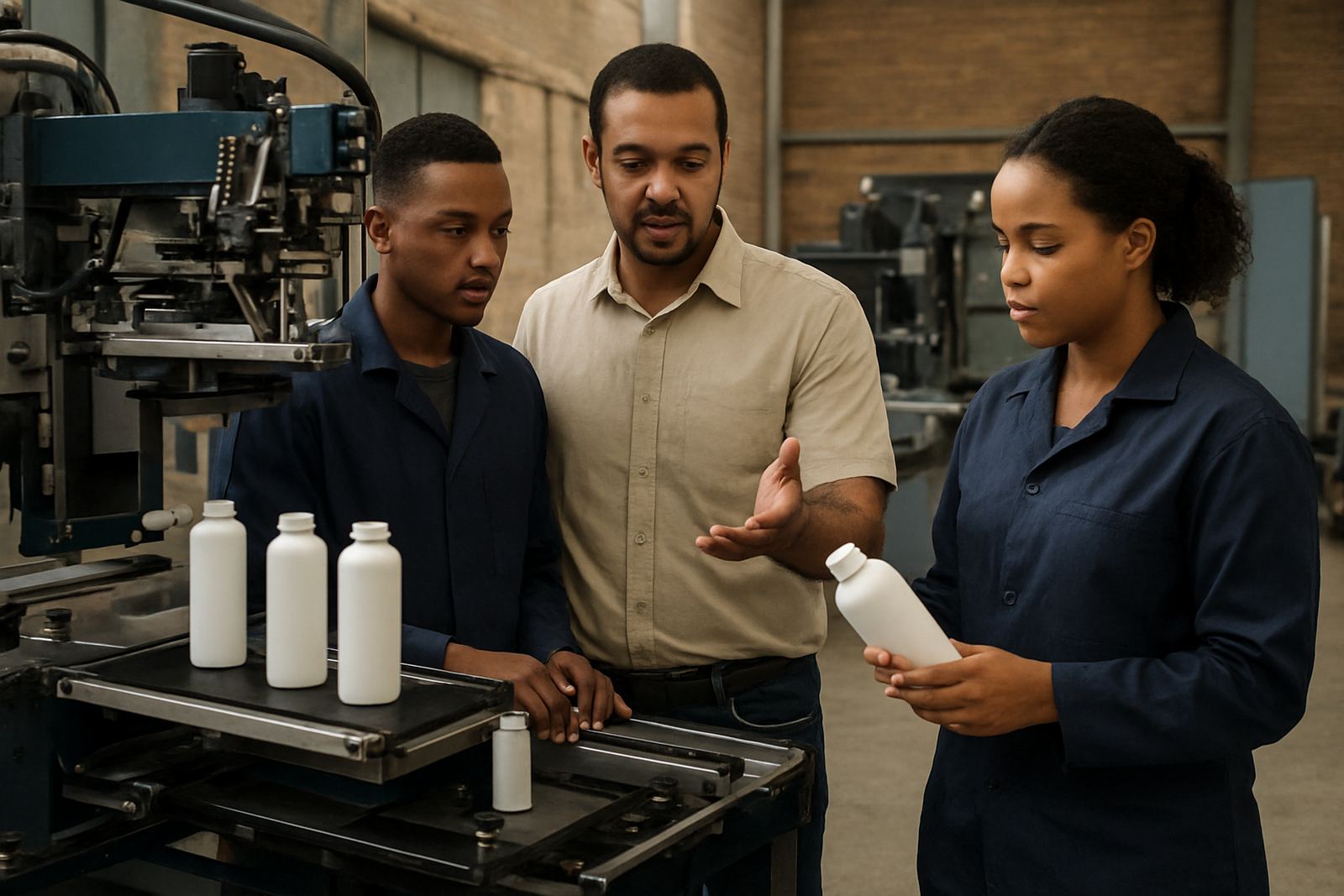
Farieda Jacobs has added a screen room session to our operator training. Operators degrease a frame, coat and dry it, expose it through a film positive, wash it out, and then print bottles with it on their own machine. Seeing the full loop once removes most of the mystery.
She spends the most time on the usual trouble spots: choosing a mesh count first, then the tiny holes left by a hurried coat, which our note on pinholes and voids explains.
“Nine bad prints out of ten start in the screen room. Get the stencil right and the bottle usually follows.”
Farieda Jacobs, Production Trainer
Planning the room on site
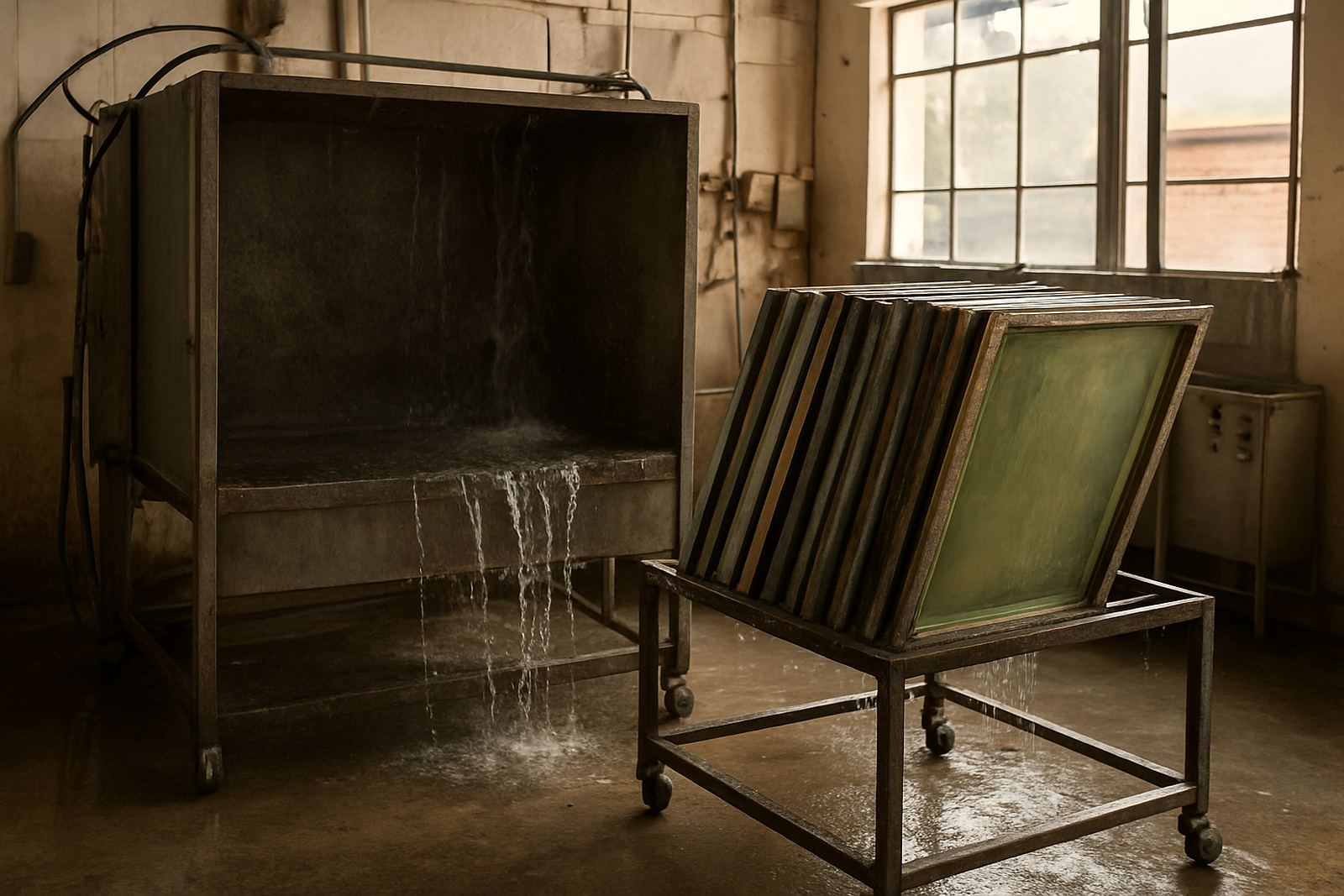
Kopano lays out the screen room during our site setup visit. The list is short: a corner that can be kept dark, a bench, a drying rack and a sink or washout point. Clients also keep our screen storage tips so coated frames are not fogged by daylight before use.
When used frames pile up, our screen reclaiming service strips them for reuse, and long or multi-colour jobs can still be screened in Aeroton. For many small shops that split is the cheapest route, as our piece on small-run economics shows.
“We only put our name behind kit we would support ourselves. AM.CO.ZA has been consistent from the first order, and the pricing lets a small client start properly.”
Kamogelo Mdletshe, Managing Director
To learn more about the supplier, read the AM.CO.ZA company guide. If you want a screen room planned with your new machine, visit our Aeroton branch or reach us on the contact page.